Old farming foe becomes friend to the 'Locust King'









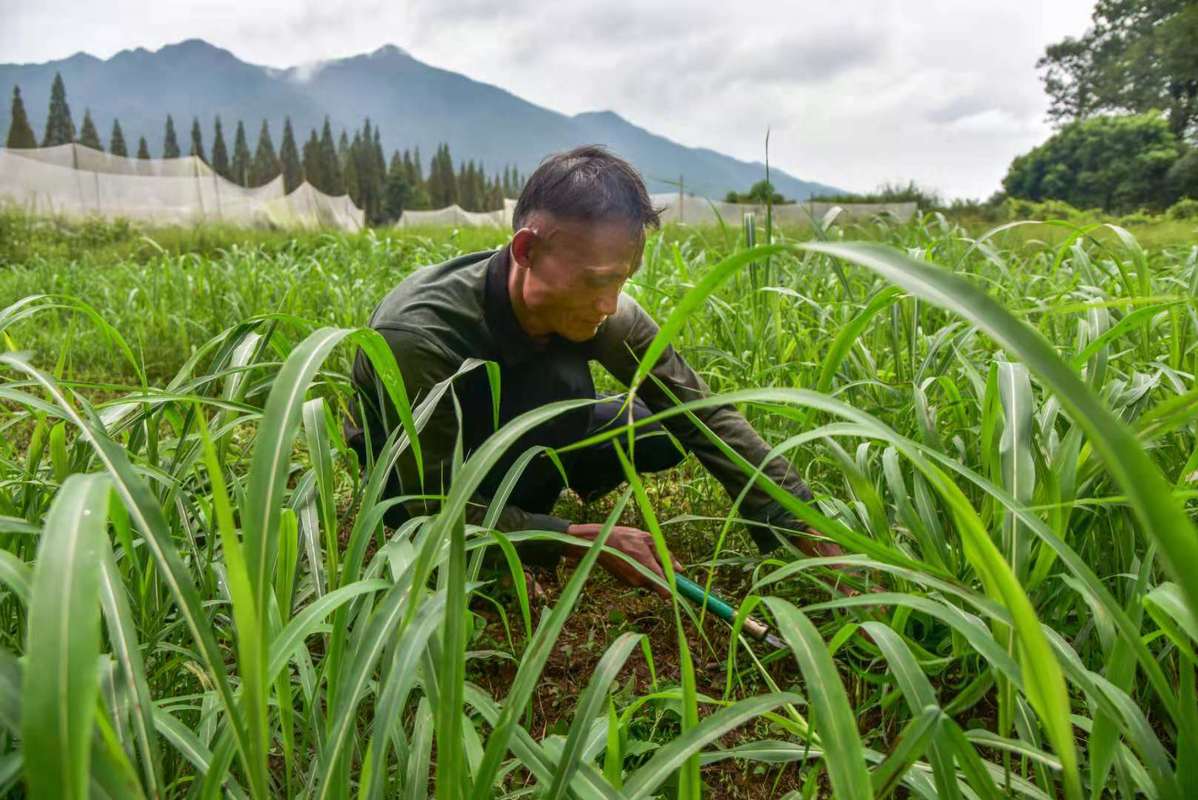
Former migrant worker waves off opposition to make a fortune from breeding the pest
Before the widespread use of pesticides, locusts were a nightmare for Chinese farmers. For Wen Fengyou, these insects-or rather the growing demand for them as deep-fried snacks-are fulfilling his dreams.
The 40-something farmer is known as the "Locust King" in Guilin, Guangxi Zhuang autonomous region, where he has made a fortune from farming the insects.
Wen struck on his business idea while working for a locust wholesaler in neighboring Guangdong province, where he saw how popular the insect had become among consumers as an organic, high-protein food.
He also figured that a large profit was possible with only a small investment, as locusts can grow to full adult size in two months by eating grass.
In 2014, Wen returned to his native Wenjia village, Guilin, and invested his life savings of 150,000 yuan ($21,600) into starting a locust farm, despite opposition from family and friends who had never heard of this type of business before.
Wen built seven greenhouses that can yield 40 kilograms of locusts in two months. The retail price for 1 kg of locusts ranged from 120 to 200 yuan, so the prospects were rosy.
However, Wen did not realize that the climate and humidity in his hometown were different from those in Guangdong and Yunnan provinces, where locust farming is a developed industry. The insects were more sensitive to the environmental differences than he had expected.
Despite going to Yunnan to learn from a successful locust keeper how to take care of the insect, after three years, Wen had lost almost all of his investment.
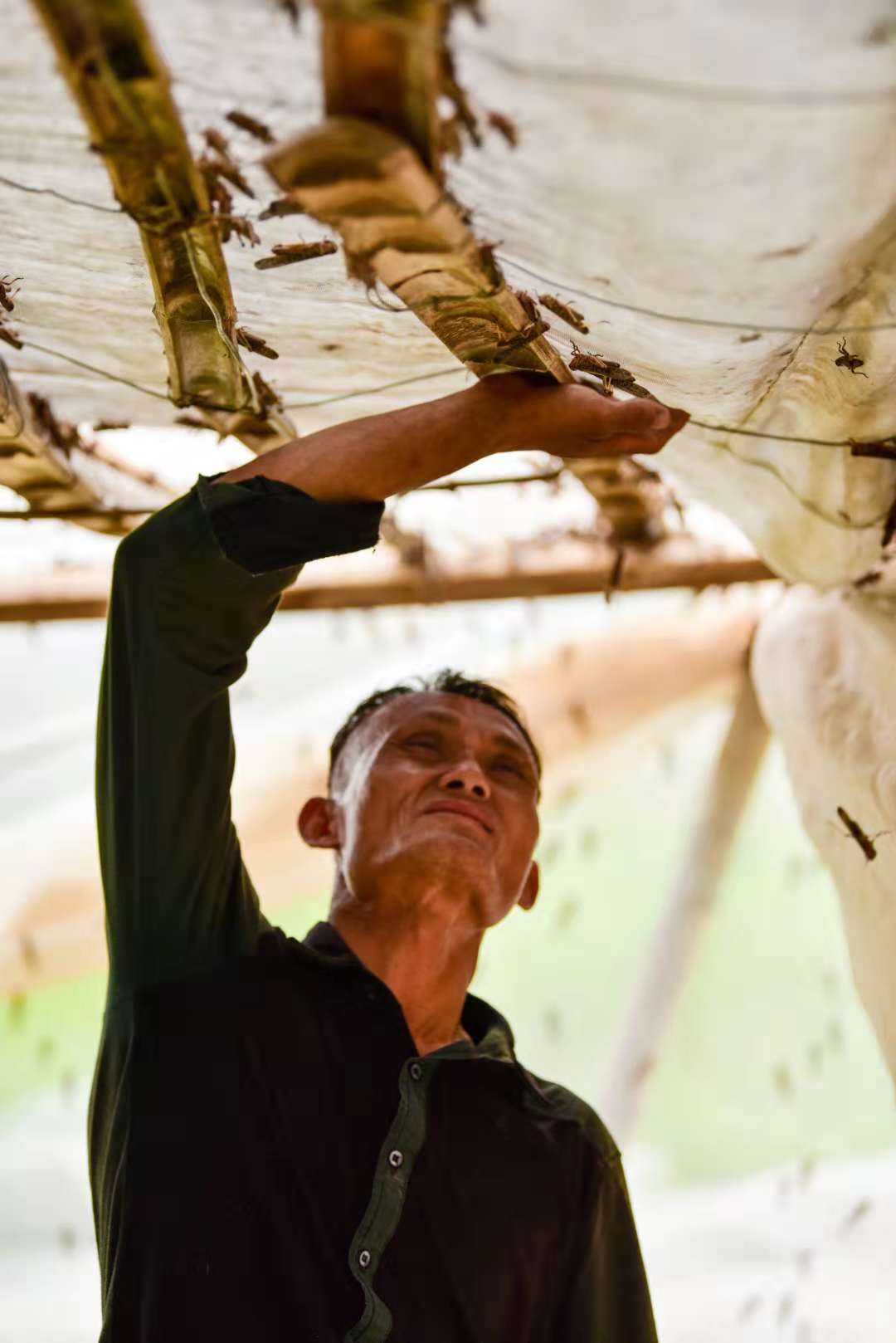
"I learned my lessons," he said. "I only paid attention to keeping the temperature between 15 C and 40 C by spraying water in the greenhouse to cool down the internal temperature. I didn't know that the rise in humidity would kill the insects even faster."
At his most difficult time, Wen pawned his watch. He was so poor he even became eligible for aid from the government's poverty alleviation program.
"Wen became a laughingstock after losing all his money on the pests," said a villager who gave only his surname, Li. "People just thought he was a nerd."
Yet Wen said he never considered giving up. "The most difficult moment was when I felt closest to success," he said.
Wen contacted a professor of agronomy at Guangxi University who provided some reading materials on locust farming and exchanged ideas with him on the phone. He said this made a big difference to his business, which by then was on the brink of bankruptcy.
With the professor's guidance, Wen dug drainage ditches in the greenhouses to keep humidity within a reasonable level, and diversified the fodder.
"I found that the insects liked eating at least seven to eight kinds of grass or vegetable leaves and that the fodder must be free of pesticides," he said.
Thanks to these changes, Wen's business took a turn for the better late last year. At the same time, another important person got involved in Wen's business: Li Guizeng, owner of the Lianhuadao tourist resort in nearby Zhongyong town.
Li allotted a scenic patch of land in the resort for Wen to build greenhouses to keep locusts. Not only did it become a tourist attraction, but also a source of green food for restaurants at the resort. "He's an honest and hardworking man. It's win-win cooperation," Li said.
The resort ensured Wen a steady demand for his insects, greatly boosting his revenue. The insects have proved to be a big success and become a local specialty. Some people visit the resort just to try its spicy, crispy oil-fried locusts.
Wen also sells his locusts to businesses in downtown Guilin, Yangshuo, Longji and Lingui as well as neighboring Guangdong, while he and Li have invited other impoverished farmers to join them in an agricultural cooperative.





- Senior Xi'an official facing probe by China's anti-corruption watchdogs
- Philippines risks creating trouble for itself: China's defense ministry
- Newborn with congenital heart disease receives life-saving surgery in Yunnan
- Hong Kong charity signs diplomatic talent deal with Beijing university
- Aircraft carrier Fujian, commissioned
- Erdos offers 10,000 yuan subsidy for families having third child