
男女羞羞视频在线观看,国产精品黄色免费,麻豆91在线视频,美女被羞羞免费软件下载,国产的一级片,亚洲熟色妇,天天操夜夜摸,一区二区三区在线电影
Henry Fok Ying-tung
Late chairman of the Henry Fok Ying Tung Group
BORN: May 10, 1923, in Hong Kong

DIED: Oct 28, 2006

CAREER:

1943: Takes over a store in Hong Kong

1954: Sets up his first real estate company

1955: Launches a new system of pre-completed flats

1962: Co-founds the development company STDM in Macao

1965: Elected as president of the Real Estate Developers Association of Hong Kong

1970-97: President of the Hong Kong Football Association

1975: President of the Badminton Asia Confederation

1977: Establishes the Fok Ying Tung Foundation

1978: Member of the FIFA executive committee

1979: Launches construction of the Zhongshan Hot Spring Resort

1980: Begins construction of the White Swan Hotel in Guangzhou, Guangdong province, which opens in 1983

1982: Honorary president of the Badminton World Federation

1984: Chairman of the Asian Xiangqi Federation and chairman of the Chinese General Chamber of Commerce, Hong Kong

1986: Invests in Orient Overseas Container Line

1990: Chairman of the Chinese General Chamber of Commerce, Hong Kong

1993: Vice-chairman of the Eighth National Committee of the Chinese People's Political Consultative Conference, and vice-chairman of the Preliminary Working Commission of the Preparatory Committee for the Hong Kong Special Administrative Region

Henry Fok Ying-tung: The man who helped build a stronger China
On Tuesday, the late Henry Fok Ying-tung, a pioneer and guiding light in construction and investment in the Chinese mainland, was posthumously awarded the Medal of Reform Pioneer
JOSEPH LI
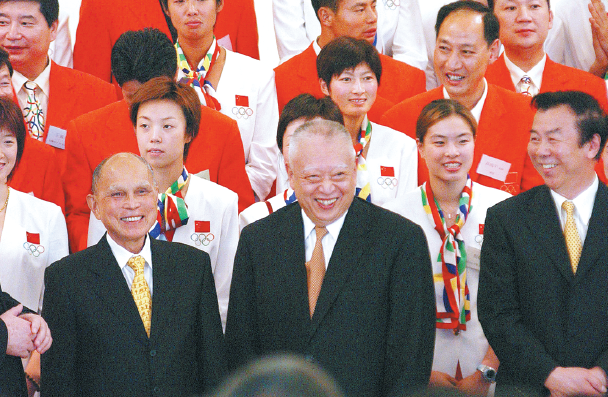
Henry Fok Ying-tung (front row, first from left) meets with a delegation of Olympic gold medalists in Hong Kong in 2004. [Wu Wansheng/For China Daily]

Growing influence

After emerging from the "cultural revolution" (1966-76), China launched the landmark reform and opening-up policy in 1978 to bring in foreign investors, modern technology, equipment, and management skills.

Henry Fok always wanted China to be strong and was keen to assist the country's development. He seized his opportunity, becoming the first entrepreneur from Hong Kong to invest in the mainland. He decided to build a modern hotel because he realized that if China were to open its doors to foreign investors and modernize, the visitors would require comfortable accommodation.

Construction of the Zhongshan Hot Spring Resort-the first hotel funded by overseas capital-in Zhongshan, Guangdong, in the west of the Pearl River Delta, began in early 1979.

At the time, China was extremely poor. The government could only afford to hire workers and buy raw materials, while Henry Fok was responsible for raising capital, supervising construction work, hotel management and staff training. He also imported a host of equipment, furniture and hotel supplies.

Aiming to have the hotel completed within a year, Henry Fok had the idea of handing out bonuses to accelerate construction. As a result, the hotel began operations on the scheduled date.

Zhongshan was relatively isolated, so to connect the city with other parts of Guangdong he suggested improving the transportation infrastructure by widening roads and building bridges. However, the provincial government was reluctant to act, fearing future maintenance costs, so he proposed the use of road tolls and bank loans to finance the work.

In 1982, Henry Fok spent a further HK$15 million (equal to about $2.6 million at the time) to build a golf course that met international standards near the resort. According to Ian Fok, the golf course was built to raise the hotel's status and attract a larger number of upmarket visitors.

Ian Fok said his father encountered a great deal of resistance and red tape in his endeavors. "Before the resort was completed, many officials and cadres were concerned that it would fail, but Chinese leader Deng Xiaoping was determined and told them, 'There's no way back.' Years later, when the luxury White Swan Hotel opened in Guangzhou, Guangdong, some cadres wept, fearing China was walking the path of capitalism," he said.

In 1978, Henry Fok proposed building the five-star White Swan Hotel on the side of a lake in Guangzhou, which had become an increasingly important city for both foreign businesspeople and tourists. The hotel was a joint venture between Henry Fok and the provincial tourism administration, and required combined investment of HK$200 million.

He insisted that the hotel should be designed by Chinese architects and managed by Chinese employees. However, mainlanders lacked experience of running luxury hotels, so he brought the management team to Hong Kong and let them stay in five-star hotels to see how they were run.

It took three years to build the White Swan Hotel, which opened in 1983. The tycoon insisted that local residents and people from outside Guangdong were allowed to enter the Zhongshan Hot Spring Resort and the White Swan Hotel, take photographs and admire the marvelous developments, despite concerns about crowd control.

"We managed the White Swan Hotel for 15 years before handing it over to the provincial authorities. My father's main aim was to contribute to the economic development of Guangdong and the country as a whole, while the money we made was used to repay bank loans and interest," Ian Fok said.

Sports enthusiast

Henry Fok, who was enthusiastic about sports, particularly soccer, strove to bring China back into the international community and promote sports development.

Before the People's Republic of China joined the UN, Taiwan took part in international sports events under the name "Republic of China".

After the civil war (1945-49) and the Korean War, many countries imposed sanctions on China in an attempt to stop the country joining international organizations. Henry Fok tirelessly lobbied international supporters to break the impasse, but many Chinese sports officials were wary of initiating contacts with organizations overseas.

In 1974, Henry Fok invited the president and secretary-general of FIFA-world soccer's governing body-to visit Beijing. However, no Chinese officials met with the guests, who were entertained by Henry Fok and his eldest son Timothy.

During his time as president of the Hong Kong Football Association from 1970 to 1997, Henry Fok worked to help China join the Asian Football Confederation. The country joined FIFA in 1975. Later, in 1979, he was delighted that his years of lobbying and hard work had paid off when the International Olympic Committee approved the entry of the Chinese Olympic Committee after 30 years in the international wilderness.

Badminton is a popular sport in China and it has always been one of the country's strong suits. However, years ago, the International Badminton Federation was dominated by the United Kingdom, which was anti-China and rebuffed the country's membership application.

In response, 19 Asian and African countries formed a new organization-the World Badminton Federation-in Hong Kong in 1978 and broke away from the IBF.

Following negotiations, the two sides signed a merger agreement in May 1981, which allowed China to join the IBF. The organization was later renamed the Badminton World Federation, and Henry Fok was appointed honorary president in recognition of his huge contribution to the sport.


|<< Previous 1 2   
Henry Fok Ying-tung
Late chairman of the Henry Fok Ying Tung Group
BORN: May 10, 1923, in Hong Kong

DIED: Oct 28, 2006

CAREER:

1943: Takes over a store in Hong Kong

1954: Sets up his first real estate company

1955: Launches a new system of pre-completed flats

1962: Co-founds the development company STDM in Macao

1965: Elected as president of the Real Estate Developers Association of Hong Kong

1970-97: President of the Hong Kong Football Association

1975: President of the Badminton Asia Confederation

1977: Establishes the Fok Ying Tung Foundation

1978: Member of the FIFA executive committee

1979: Launches construction of the Zhongshan Hot Spring Resort

1980: Begins construction of the White Swan Hotel in Guangzhou, Guangdong province, which opens in 1983

1982: Honorary president of the Badminton World Federation

1984: Chairman of the Asian Xiangqi Federation and chairman of the Chinese General Chamber of Commerce, Hong Kong

1986: Invests in Orient Overseas Container Line

1990: Chairman of the Chinese General Chamber of Commerce, Hong Kong

1993: Vice-chairman of the Eighth National Committee of the Chinese People's Political Consultative Conference, and vice-chairman of the Preliminary Working Commission of the Preparatory Committee for the Hong Kong Special Administrative Region

Henry Fok Ying-tung: The man who helped build a stronger China

On Tuesday, the late Henry Fok Ying-tung, a pioneer and guiding light in construction and investment in the Chinese mainland, was posthumously awarded the Medal of Reform Pioneer
JOSEPH LI
Henry Fok Ying-tung (front row, first from left) meets with a delegation of Olympic gold medalists in Hong Kong in 2004. [Wu Wansheng/For China Daily]

Growing influence

After emerging from the "cultural revolution" (1966-76), China launched the landmark reform and opening-up policy in 1978 to bring in foreign investors, modern technology, equipment, and management skills.

Henry Fok always wanted China to be strong and was keen to assist the country's development. He seized his opportunity, becoming the first entrepreneur from Hong Kong to invest in the mainland. He decided to build a modern hotel because he realized that if China were to open its doors to foreign investors and modernize, the visitors would require comfortable accommodation.

Construction of the Zhongshan Hot Spring Resort-the first hotel funded by overseas capital-in Zhongshan, Guangdong, in the west of the Pearl River Delta, began in early 1979.

At the time, China was extremely poor. The government could only afford to hire workers and buy raw materials, while Henry Fok was responsible for raising capital, supervising construction work, hotel management and staff training. He also imported a host of equipment, furniture and hotel supplies.

Aiming to have the hotel completed within a year, Henry Fok had the idea of handing out bonuses to accelerate construction. As a result, the hotel began operations on the scheduled date.

Zhongshan was relatively isolated, so to connect the city with other parts of Guangdong he suggested improving the transportation infrastructure by widening roads and building bridges. However, the provincial government was reluctant to act, fearing future maintenance costs, so he proposed the use of road tolls and bank loans to finance the work.

In 1982, Henry Fok spent a further HK$15 million (equal to about $2.6 million at the time) to build a golf course that met international standards near the resort. According to Ian Fok, the golf course was built to raise the hotel's status and attract a larger number of upmarket visitors.

Ian Fok said his father encountered a great deal of resistance and red tape in his endeavors. "Before the resort was completed, many officials and cadres were concerned that it would fail, but Chinese leader Deng Xiaoping was determined and told them, 'There's no way back.' Years later, when the luxury White Swan Hotel opened in Guangzhou, Guangdong, some cadres wept, fearing China was walking the path of capitalism," he said.

In 1978, Henry Fok proposed building the five-star White Swan Hotel on the side of a lake in Guangzhou, which had become an increasingly important city for both foreign businesspeople and tourists. The hotel was a joint venture between Henry Fok and the provincial tourism administration, and required combined investment of HK$200 million.

He insisted that the hotel should be designed by Chinese architects and managed by Chinese employees. However, mainlanders lacked experience of running luxury hotels, so he brought the management team to Hong Kong and let them stay in five-star hotels to see how they were run.

It took three years to build the White Swan Hotel, which opened in 1983. The tycoon insisted that local residents and people from outside Guangdong were allowed to enter the Zhongshan Hot Spring Resort and the White Swan Hotel, take photographs and admire the marvelous developments, despite concerns about crowd control.

"We managed the White Swan Hotel for 15 years before handing it over to the provincial authorities. My father's main aim was to contribute to the economic development of Guangdong and the country as a whole, while the money we made was used to repay bank loans and interest," Ian Fok said.

Sports enthusiast

Henry Fok, who was enthusiastic about sports, particularly soccer, strove to bring China back into the international community and promote sports development.

Before the People's Republic of China joined the UN, Taiwan took part in international sports events under the name "Republic of China".

After the civil war (1945-49) and the Korean War, many countries imposed sanctions on China in an attempt to stop the country joining international organizations. Henry Fok tirelessly lobbied international supporters to break the impasse, but many Chinese sports officials were wary of initiating contacts with organizations overseas.

In 1974, Henry Fok invited the president and secretary-general of FIFA-world soccer's governing body-to visit Beijing. However, no Chinese officials met with the guests, who were entertained by Henry Fok and his eldest son Timothy.

During his time as president of the Hong Kong Football Association from 1970 to 1997, Henry Fok worked to help China join the Asian Football Confederation. The country joined FIFA in 1975. Later, in 1979, he was delighted that his years of lobbying and hard work had paid off when the International Olympic Committee approved the entry of the Chinese Olympic Committee after 30 years in the international wilderness.

Badminton is a popular sport in China and it has always been one of the country's strong suits. However, years ago, the International Badminton Federation was dominated by the United Kingdom, which was anti-China and rebuffed the country's membership application.

In response, 19 Asian and African countries formed a new organization-the World Badminton Federation-in Hong Kong in 1978 and broke away from the IBF.

Following negotiations, the two sides signed a merger agreement in May 1981, which allowed China to join the IBF. The organization was later renamed the Badminton World Federation, and Henry Fok was appointed honorary president in recognition of his huge contribution to the sport.

主站蜘蛛池模板: 涟水县| 阿拉善盟| 东兰县| 西峡县| 务川| 丰都县| 玛多县| 闽侯县| 康定县| 潜江市| 龙口市| 浮梁县| 宝山区| 永平县| 太康县| 武汉市| 板桥市| 玉林市| 呼伦贝尔市| 灌南县| 兴安县| 嵊泗县| 平远县| 荔波县| 阿瓦提县| 喀喇沁旗| 遂昌县| 溧水县| 阿巴嘎旗| 铁岭市| 莲花县| 永泰县| 武宁县| 珲春市| 建昌县| 保德县| 离岛区| 普格县| 贵溪市| 昂仁县| 涡阳县| 天镇县| 茂名市| 墨玉县| 分宜县| 长宁县| 南投县| 中阳县| 南阳市| 始兴县| 惠来县| 马山县| 宜宾市| 色达县| 碌曲县| 乐亭县| 革吉县| 江口县| 泗阳县| 汾西县| 贵南县| 南召县| 南皮县| 都匀市| 白城市| 镇安县| 灵宝市| 西贡区| 建宁县| 阳西县| 昔阳县| 鹰潭市| 东安县| 贵州省| 明星| 五原县| 扶余县| 新昌县| 怀宁县| 兴和县| 甘孜县| 巴东县|