
男女羞羞视频在线观看,国产精品黄色免费,麻豆91在线视频,美女被羞羞免费软件下载,国产的一级片,亚洲熟色妇,天天操夜夜摸,一区二区三区在线电影
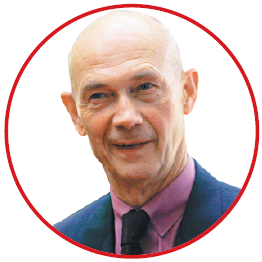
Pascal Lamy
Former director-general of the World Trade Organization
BORN:

April 8, 1947 in Levallois-Perret, France

CAREER:

1981-83: Adviser to French Economics and Finance Minister Jacques Delors

1983-84: Deputy chief of staff, Office of the Prime Minister

1985-94: Chief of staff and representative of European Commission President Jacques Delors

1994-99: Member of the executive committee, then director-general, Credit Lyonnais

1999-2004: European trade commissioner, Brussels

2005-13: Director-general, World Trade Organization

2016-present: President, French committee of the Pacific Economic Cooperation Council

2018-present: Distinguished professor, China Europe International Business School

How reform path led to China's WTO entry
Pascal Lamy sees challenges ahead but believes world can avoid descent into protectionism
ANDREW MOODY
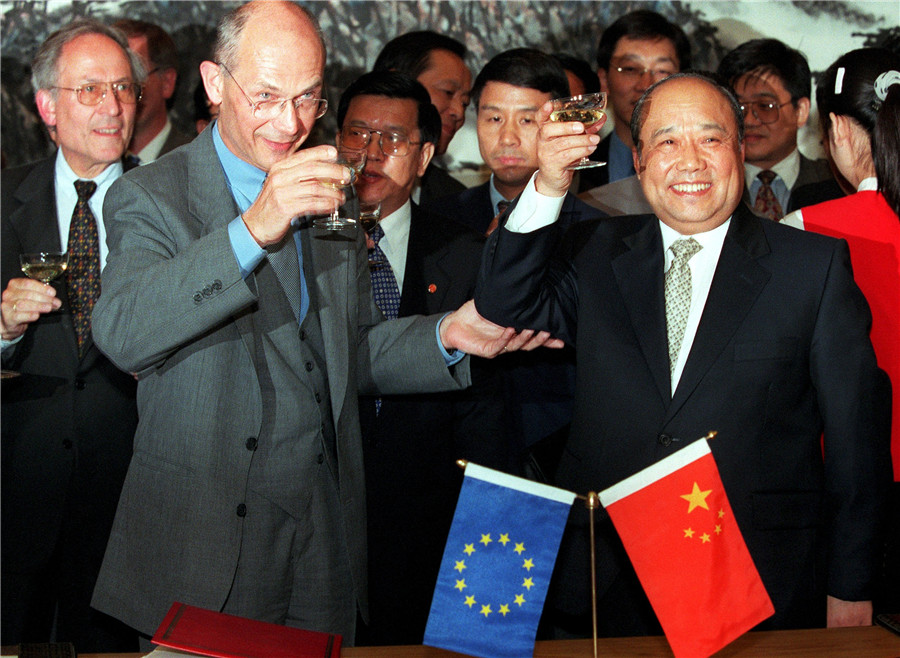
Lamy proposes a toast to Shi Guangsheng, China's foreign trade minister, after they signed the Agreement of China's Accession to the WTO in Beijing on May 19, 2000. [ALAIN BUU/GAMMA-RAPHO/GETTY IMAGES]

Lamy has consistently called for WTO reform, even while head of the organization, but he argues that the central issues are complex.

"Agreeing on WTO reform is one thing, but agreeing on what you should put in that box called reform is another," he said. "China has to compromise in some areas, the US will have to compromise on others. What the EU and, to some extent, Japan are trying to do for the moment is talk to the US, talk to China, so at the end of the day everybody is around the same table."

Despite the current trade turbulence, Lamy said he does not believe the world will descend into 1930s style protectionism.

"We have reached the stage of globalization which makes deglobalization extremely unlikely. Globalization exists because it is efficient. Deglobalization would be inefficient. Part of the Western population believes globalization hasn't worked for them. Does this mean that deglobalization is the way? I don't think so," he said.

Lamy, who makes three or four trips to China each year, said he was delighted to take up his role as distinguished professor at CEIBS, where he will work on projects fostering greater understanding between China and Europe during his three-year tenure. Other holders of the title include former French prime ministers Jean-Pierre Raffarin and Dominique de Villepin, and renowned economist Wu Jinglian.

"This was one of the reasons I accepted the role," Lamy said. "I am also not too arrogant to think that as well as teaching young students and the faculty I can still learn something every day. Teaching is a good way to learn and interact with these Chinese people. So it is a good trade-off for me."

As for reform and opening-up, Lamy said he believes China still faces challenges, particularly in the opening of its financial sector, which was particularly problematic for other Asian countries during the financial crisis of the late '90s.

"A financial system is very fragile and something which needs a lot of care. You have only got to look back to the global financial crisis in the US, which contaminated the rest of the world," he said. "China can't manipulate its financial system like it was socks or soy. There are some fragilities in the system that need a cautious approach."

After 40 years of change, Lamy sometimes finds it hard to reconcile the China he first visited in 1986 with the one today.

"It's more than a contrast. It is a totally different country. Each time I come here, I find it's a different country. There is no doubt the main asset of the Chinese success is to do with growth. No other country on this planet has been successful in growing its economy at such speed for such a long time. This is something that is atypical to China."

Lamy acknowledged that there remains ongoing debate as to what particular aspects of reform and opening-up have delivered success.

"Whether it is because China borrowed Western recipes, as some say, or whether it is because China has remained China with its Chinese characteristics, is an extremely interesting but very open question," he said. "Even in China."


|<< Previous 1 2 3   
Pascal Lamy
Former director-general of the World Trade Organization
BORN:

April 8, 1947 in Levallois-Perret, France

CAREER:

1981-83: Adviser to French Economics and Finance Minister Jacques Delors

1983-84: Deputy chief of staff, Office of the Prime Minister

1985-94: Chief of staff and representative of European Commission President Jacques Delors

1994-99: Member of the executive committee, then director-general, Credit Lyonnais

1999-2004: European trade commissioner, Brussels

2005-13: Director-general, World Trade Organization

2016-present: President, French committee of the Pacific Economic Cooperation Council

2018-present: Distinguished professor, China Europe International Business School

How reform path led to China's WTO entry

Pascal Lamy sees challenges ahead but believes world can avoid descent into protectionism
ANDREW MOODY
Lamy proposes a toast to Shi Guangsheng, China's foreign trade minister, after they signed the Agreement of China's Accession to the WTO in Beijing on May 19, 2000. [ALAIN BUU/GAMMA-RAPHO/GETTY IMAGES]

Lamy has consistently called for WTO reform, even while head of the organization, but he argues that the central issues are complex.

"Agreeing on WTO reform is one thing, but agreeing on what you should put in that box called reform is another," he said. "China has to compromise in some areas, the US will have to compromise on others. What the EU and, to some extent, Japan are trying to do for the moment is talk to the US, talk to China, so at the end of the day everybody is around the same table."

Despite the current trade turbulence, Lamy said he does not believe the world will descend into 1930s style protectionism.

"We have reached the stage of globalization which makes deglobalization extremely unlikely. Globalization exists because it is efficient. Deglobalization would be inefficient. Part of the Western population believes globalization hasn't worked for them. Does this mean that deglobalization is the way? I don't think so," he said.

Lamy, who makes three or four trips to China each year, said he was delighted to take up his role as distinguished professor at CEIBS, where he will work on projects fostering greater understanding between China and Europe during his three-year tenure. Other holders of the title include former French prime ministers Jean-Pierre Raffarin and Dominique de Villepin, and renowned economist Wu Jinglian.

"This was one of the reasons I accepted the role," Lamy said. "I am also not too arrogant to think that as well as teaching young students and the faculty I can still learn something every day. Teaching is a good way to learn and interact with these Chinese people. So it is a good trade-off for me."

As for reform and opening-up, Lamy said he believes China still faces challenges, particularly in the opening of its financial sector, which was particularly problematic for other Asian countries during the financial crisis of the late '90s.

"A financial system is very fragile and something which needs a lot of care. You have only got to look back to the global financial crisis in the US, which contaminated the rest of the world," he said. "China can't manipulate its financial system like it was socks or soy. There are some fragilities in the system that need a cautious approach."

After 40 years of change, Lamy sometimes finds it hard to reconcile the China he first visited in 1986 with the one today.

"It's more than a contrast. It is a totally different country. Each time I come here, I find it's a different country. There is no doubt the main asset of the Chinese success is to do with growth. No other country on this planet has been successful in growing its economy at such speed for such a long time. This is something that is atypical to China."

Lamy acknowledged that there remains ongoing debate as to what particular aspects of reform and opening-up have delivered success.

"Whether it is because China borrowed Western recipes, as some say, or whether it is because China has remained China with its Chinese characteristics, is an extremely interesting but very open question," he said. "Even in China."

主站蜘蛛池模板: 太康县| 鹤壁市| 来宾市| 株洲市| 安阳市| 胶州市| 恭城| 天等县| 嘉禾县| 大洼县| 湖南省| 吕梁市| 赣州市| 都匀市| 八宿县| 永顺县| 图片| 文化| 兰考县| 永清县| 金溪县| 台东县| 南漳县| 天镇县| 合阳县| 孟村| 庐江县| 和平县| 广东省| 龙南县| 东明县| 布拖县| 安阳市| 昌平区| 黄梅县| 乐亭县| 元阳县| 民乐县| 开平市| 蛟河市| 南木林县| 长治市| 安国市| 鄂尔多斯市| 昭觉县| 香港 | 乳山市| 永胜县| 乌鲁木齐市| 新郑市| 周口市| 娄烦县| 静宁县| 禹州市| 天等县| 阿巴嘎旗| 左权县| 加查县| 涡阳县| 长子县| 夏津县| 旺苍县| 万山特区| 施甸县| 卢氏县| 会同县| 三明市| 原阳县| 阜城县| 社会| 朝阳县| 中西区| 筠连县| 肇东市| 紫金县| 肥乡县| 霸州市| 集贤县| 永城市| 拉萨市| 潜江市| 竹山县|