


Cultural institutions honor contributions to relics' protection









All three artworks are now among top artifacts housed at the Palace Museum.
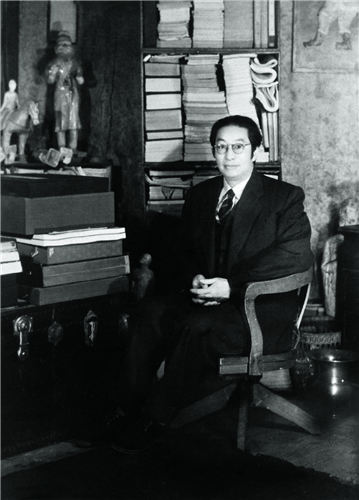
Zheng's contributions went beyond.
"He has left abundant legacies for us to consolidate cultural relic-related work today," Shan Jixiang, director of the Palace Museum, said at the memorial seminar.
"He pushed for a legal system to protect the cultural relics. He started training others to protect them. Many of his theories still guide our everyday work."
Zheng opened the first training class in New China on ancient-book restoration in the 1950s. He wanted the Palace Museum to do more than just collect royal artifacts, by building a comprehensive collection of different artworks and educating museum visitors about the history of cultural relics.
"These ideas were pioneering in his time," says Gu Yucai, deputy director of the National Cultural Heritage Administration. "We are working on them today."
During the War of Resistance Against Japanese Aggression (1931-1945), he saved many ancient books to prevent them from being lost.
Zheng got into debt buying some 600 ancient pottery figurines in 1947 and '48, during the civil war. However, he donated all the figurines to the country's cultural institutions after taking his official position at the heritage administration. Many of the figurines are regularly displayed in the sculpture gallery of the Palace Museum.
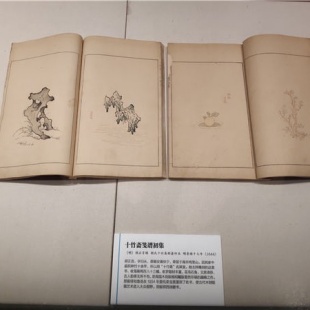
And after his death, Zheng's wife donated some 7,000 copies of ancient books to the National Library of China, following his will. Some items from this donation are displayed at an exhibition that opened on Wednesday at the same library as a tribute to him. A catalog of his ancient book collection was also published on the same day for academic studies.
"The exhibition is not only to show Zheng's marvelous collection," says Zhang Zhiqing, deputy director of the national library, "but also to remind people of his legacy."
Zheng advocated that archaeologists and relics researchers should not collect or buy antiques as personal belongings. In 1997, this idea was listed by the National Cultural Heritage Administration among professional ethics for workers in the field of cultural relics.
Born in Wenzhou, Zhejiang province, Zheng once taught in top higher-education institutions, such as Yenching University (now part of Peking University) and Tsinghua University in Beijing, and Fudan University in Shanghai. He also worked on history, traditional Chinese folklore and literature.
As a translator, he introduced Indian Nobel laureate Rabindranath Tagore's Stray Birds in China, and did many comparative studies between Chinese and Western cultures.
Zheng died in a plane crash in 1958.