China's BRI boosts Nepal's shift from land-locked to world-linked









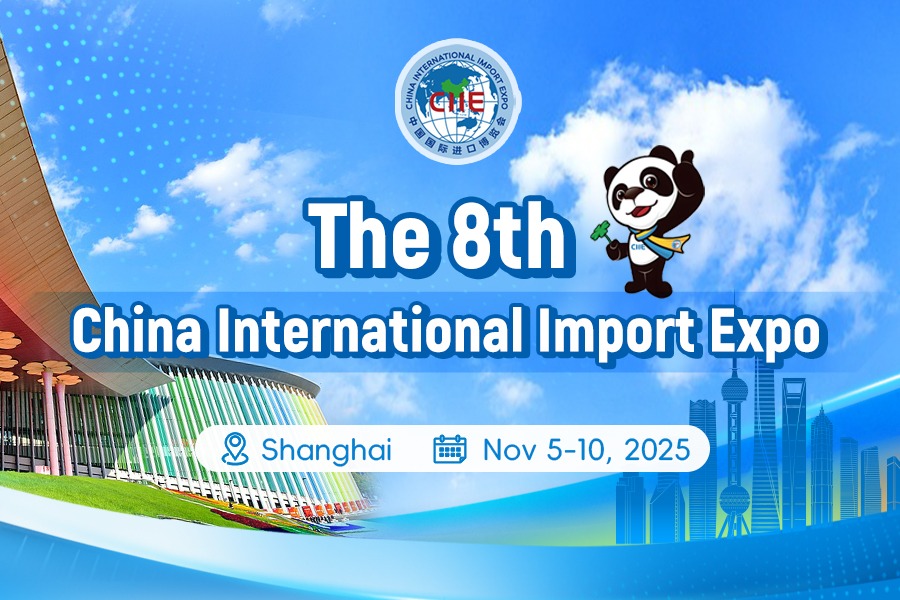
At the first China International Import Expo (CIIE) in Shanghai in November, flocks of visitors and investors were intrigued by the exotic products showcased in the Nepali pavilions, such as metal crafts, pashmina, ceramics and Buddhist statues.
"The expo is a great opportunity for Nepal," said Ratnesh Shashi, an official with Investment Board Nepal, adding that the expo would boost Nepal's exports and help reduce the swelling trade deficit that has become a serious concern for the Himalayan country.
Nepal registered a staggering $10.55 billion trade deficit in the 2017-18 fiscal year, official data show, more than doubled in just five years. The CIIE in Shanghai was thus an opportune event for Nepal to promote its exports to China, the world's second largest consumer market.
The two countries signed a transit transport agreement in last September, allowing Nepal access to four harbors and three land ports in China to trade with other countries, a landmark deal hailed in Kathmandu as it will help facilitate Nepal's trade with Japan, South Korea and some Southeast Asian nations.
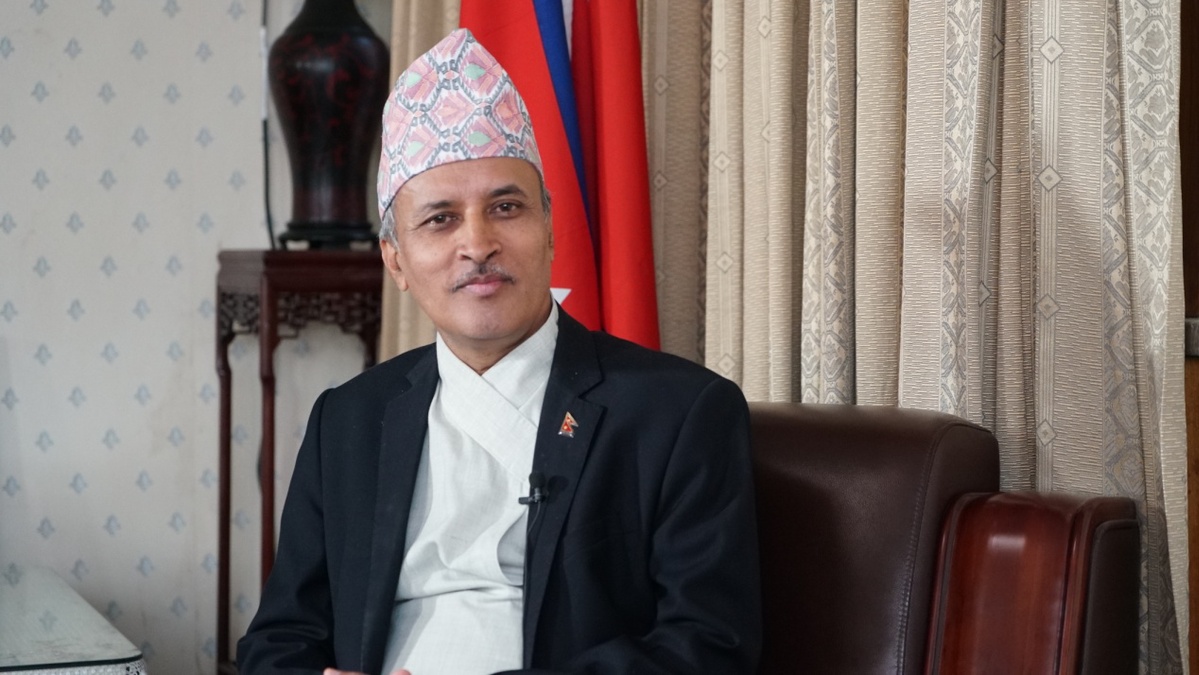
"Being a land-locked country, we have been relying on only India for the earlier transit facility," Nepal's Ambassador to China Leela Mani Paudyal said in a recent interview with China Daily. "Now we are getting that facility from China as well, we can be a land-linked country."
In March 2016, Nepalese Prime Minister KP Sharma Oli visited China for a full week, securing a wide range of infrastructure deals as well as an initial agreement on transport. Later that year, the Chinese-built 50-MW Upper Marsyangdi power plant started producing electricity in western Nepal, alleviating the country's power shortages.
Ever since 2013, Nepal has been a resolute supporter and beneficiary of the China-proposed Belt and Road Initiative (BRI) that seeks to build a trade and infrastructure network connecting Asia with Europe and Africa.
"It respects the sovereign independence of the country, and it is a win-win collaboration with mutual efforts and mutual sharing of benefits," Paudyal said.
A major investment under the BRI framework was the Pokhara International Airport, so far the largest China-assisted project in Nepal.
Pokhara, Nepal's second largest city, is situated in a valley about 200 kilometers west of Kathmandu and is exalted as a "paradise for trekking." Tourists all around the world flock there for its tranquil scenery. However, the transportation to and from that remote corner poses a big problem. Nepal has only one international airport, in its capital. While the flight from Kathmandu to Pokhara takes only 20 minutes, the old Pokhara Airport, with its outdated facilities and pint-sized 1,400-meter runway, can hardly meet the surging demand. The only alternative is a six-hour mountainous ordeal by car, scarcely more accommodating.
The Nepalese government was advocating for a new international airport in Pokhara as early as 1969 and deemed it a "national pride project." It was, however, postponed repeatedly for lack of funds and technology, until China came forth. The construction contract, with loans from the Export-Import Bank of China, was awarded to China CAMC Engineering Co Ltd, a State-owned enterprise (SOE).
In July 2017, thousands of locals came to the construction site in Pokhara, singing and dancing in celebration of the project's launch. The new airport will boast a 2,5oo-meter runway where even a Boeing 737 could take off and land.
"Besides the runway length, the standard we've adopted for its concrete runway is also world-class," Chen Jianguo, a China CAMC manager and chief engineer of the project, said proudly.
Scheduled for completion in 2021, the new Pokhara airport will be a huge boost to the development of Nepal's aviation and tourism industries. Nearly one million foreign tourists visited the Himalayan country last year, a figure that will certainly grow.
The two countries signed a memorandum of understanding in May, 2017 to further enhance bilateral cooperation under the BRI framework, which Nepalese Foreign Minister Prakash Sharan Mahat said was a great step in the relationship between the two countries.
"It will bring Nepal and China closer through road connectivity and bring home the Chinese investment," said Mahat.
According to Nepal's Department of Industry, China has been the largest contributor to Nepal's foreign direct investment (FDI) for the last three years. In the fiscal year 2017-18 that concluded in mid-July, 2018, Chinese investments in Nepal reached $427 million, or 84 percent of its total FDI. The mainstay of those investments is China's ever powerful SOEs, like China CAMC Engineering, or the Power Construction Corporation of China which built the Upper Marsyangdi power plant.
These Chinese SOEs have seen decades of stellar growth thanks to the country's reform and opening-up policy. Under the supervision of the State-owned Assets Supervision and Administration Commission of the State Council, China's cabinet, they are becoming increasingly active overseas, including in Nepal.
Last June, Oli's six-day visit to China was by all measures a huge success, resulting in a dozen deals worth $2.4 billion, including a cross-border railway through the arduous Himalayan terrain that will link China's Lhasa with Kathmandu. The railroad, once completed, will be a crucial part of the trans-Himalayan transport network, further enhancing Nepal's connectivity with the outside world.
"I am happy to share that my recent visit to China has contributed to trust, goodwill and friendship between the two countries," Oli said. "I believe that this has created a cooperation framework for the long-term partnership between the two countries, thus taking our ties to a new high."