All the tools for tackling climate issue are at hand









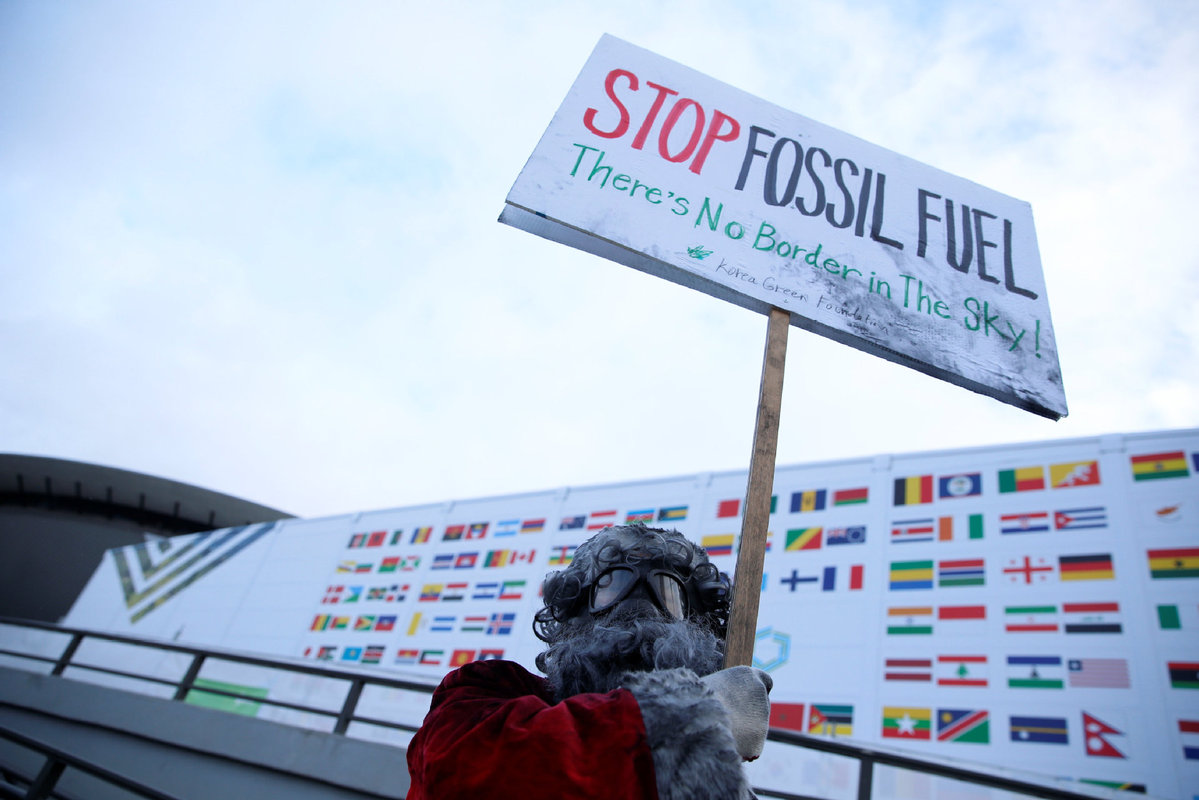
Climate change is the defining global challenge of our time. It is real, and it is happening now.
The past three years have been the warmest on record-one of many signs of climate change, which poses exceptional challenges on a global scale. More worrisome, climate change is running faster than our actions to stop the current global warming trajectory of 3 C.
The recent Special Report by the Intergovernmental Panel on Climate Change confirms that natural disasters will increase in frequency and severity, including floods and storms, with resulting declines in food security and prosperity.
Competition over scarce resources-such as water-could lead to more conflicts. Around the world, we can already see how devastating such situations can be.
For example, on a recent visit to Nigeria, my home country, I saw firsthand the impact that climate change and environmental mismanagement can have. Lake Chad, the beating heart of life in the region I grew up in, has shrunk by more than 90 percent since the 1960s, leading to increased competition over scarce resources. As a result, the economy has suffered, leading to massive declines in livelihoods. This has, in turn, helped create a fertile ground for extremist groups such as Boko Haram.
The violence caused by such conflicts hits the most vulnerable the hardest. Communities in the region have had to deal with political, economic and environmental challenges for years. Without accelerated climate action, we will see increases in the number and intensity of such conflicts.
This brings us to another point, which is that we will need innovative solutions for climate action at all levels-in universities, homes, cities and businesses.
The good news is that we are not starting from scratch. We have all the mechanisms we need to tackle climate change.
Nations of the world pledged to collectively address climate change in the early 1990s through the establishment of the UN Framework Convention on Climate
Change and, most recently, through the signing of the Paris Agreement and the 2030 Agenda for Sustainable Development, Goals 13 to 15.
By signing the Climate Convention and the Paris Agreement, nations of the world committed to lowering their emissions and creating a more sustainable and resilient future through Nationally Determined Contributions.
The potential of the Paris Agreement, however, has yet to be fully unleashed by implementing the NDCs.
Based on the emissions reductions that countries have pledged so far, we are still on a trajectory to reach at least 3 C of global warming. And that would lead to nothing less than global destabilization, with disastrous and irreversible consequences.
China is not exempt from the impacts of climate change.
Rising sea levels are already threatening coastlines in China, for example in cities such as Shanghai, Tianjin and Guangzhou. If sea levels rise by 1 meter, more than 92,000 square kilometers of China's coast could be flooded. This could potentially displace 67 million people. Almost two-thirds of the ice in Asia's glaciers could vanish if average global temperatures rise beyond 1.5 C by the end of the century.
The good news is that countries such as China are clearly on board for strong leadership. For example, within the past five years, China has deployed more solar and wind capacity than any other country in the world. It is-also the largest clean energy investor in the world-spending some $130 billion on renewable energy in recent years.
The development of electric vehicles is particularly inspiring in China. More than 50 percent of electric vehicles in the world are sold in the country. China is also supporting infrastructure development in other countries. This offers the opportunity to leapfrog outdated technologies and ensure that newly built infrastructure is sustainable in the long term.
China has also pioneered an increasingly prominent policy through promoting a model of the circular economy, going beyond the current linear pattern of take-make-dispose.
In conclusion, there is no more urgent time to solve climate change, and we have all the tools we need to create a new reality. In particular, I call on all young people to take a stand and advocate for more ambitious climate action and sustainable living. Let us join hands and use this as an opportunity to strive for a healthy, prosperous and sustainable future for all.