New twist in cryptocurrency tale









PBOC is among some central banks that are pondering e-cash of their own, fresh regulations and standards
"In Mesopotamia at least metal currency that didn't physically exist was used ... In a sense, this imagined form of money, used to facilitate real exchanges, was a virtual currency. So, when people tell you that today's economy is very different to the economy of the past, citing the virtual payments made possible by digital technologies, tell them that is nothing new; that virtual money has existed ever since the economy was invented, following the agricultural revolution twelve thousand years ago and the creation of the first surplus."
- Yanis Varoufakis, former Greek finance minister, in his book Talking to My Daughter about the Economy - A Brief History of Capitalism
Call them virtual money, digital fiat or cryptocurrencies, alternative measures of exchange value have always posed challenges to official cash.
From the first paper money that was used in China to various cryptocurrencies now vying to usher in a cashless world, almost 10 centuries have sped by.
And, wiser after the 2008 global financial crisis, central banks the world over, including the People's Bank of China, are determined to preempt any potential trouble.
That's not all. The PBOC is among the central banks that are considering issuing digital currencies of their own, besides exploring new regulations and standards to streamline and control the emerging field.
To understand their rationale, it is important to review the key developments of the last decade that marked the global monetary system.
The first decade post the GFC saw the emergence of e-money that, in turn, led to numerous electronic payment providers offering specialized services.
The trend reduced the use of official cash, spawned for-profit trade in virtual currencies, and spooked regulators with the specter of investment frauds and a destabilized financial system.
But now, experts are divided on whether fresh measures to rein in cryptocurrencies are already a bit late in the day, while others argue there is a strong case for more rules and regulations.
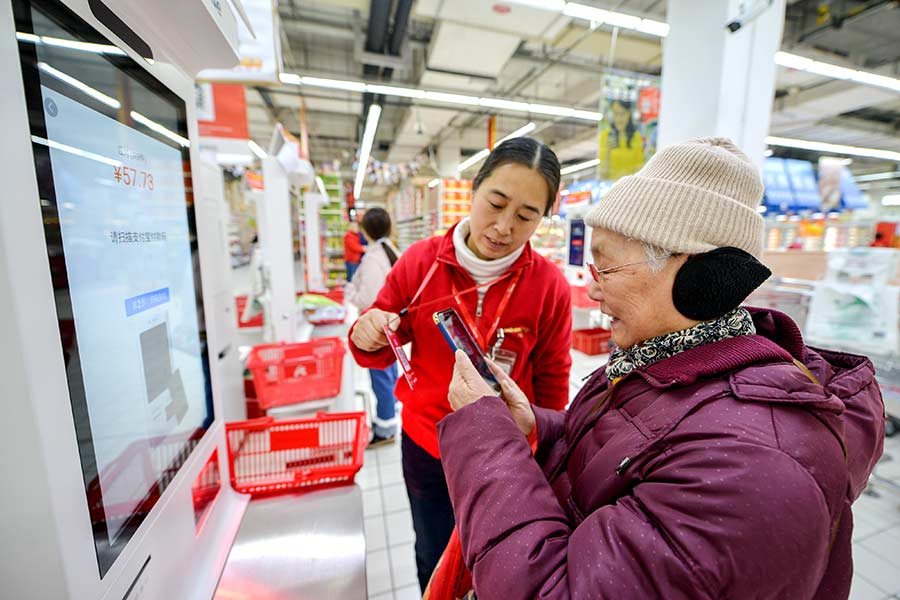
Everyone, however, agrees that digital money has enabled innovative modes of payment. New payment providers, such as AliPay and WeChat in China, have already restructured the market and changed the way people use money.
And they did so in a way that Satoshi Nakamoto, whose real identity remains unknown, could not have imagined a decade ago. Around the time the world was convulsing through the GFC, Nakamoto published an article titled Bitcoin - A Peer-to-Peer Electronic Cash System. The article introduced the concept of an electronic payment system free of any credit intermediary.
The idea caught on like wildfire. In the media, headlines screamed terms and phrases like "blockchain", "decentralization" and "distributed ledger".
"It changed the internet-age public's perceptions, making people believe that everything could be decentralized, and that the currency is no exception," said Zhang Yutong, a researcher with JD Finance.
Bitcoin's rise in 2009, the subsequent frenzy over its trading (which was marked by unrealistic prices and obscene returns), and the potential threat they posed to conventional cash led to denouncements that digital currencies are a fraud, outright bubbles.
Now, the focus is shifting. Academics and policymakers are discussing issues ranging from the technical features of a digital currency's design to concerns over the political economy.
In a sense, the advent of cryptocurrencies, and the attendant technological innovations, are reshaping traditional financial institutions, experts said.
A growing number of banks and other financial institutions are forming joint ventures with, or investing in, more established and large-scale third-party online platforms, some of which are associated with large technology companies such as Alibaba, Tencent, and Baidu.
A Nielsen survey indicated that third-party e-payments have much larger user penetration in China than the rest of the world.
It showed that 86 percent of respondents in China have paid for online purchases via third-party payment systems, much more than 38 percent in North America, 56 percent in Western Europe and 37 percent in Southeast Asia and the Pacific.
Zhou Xiaochuan, former governor of the PBOC, said recently that around half of the financial services in the country have been re-packaged or transformed by high technology into fintech, a sector that now includes electronic payment providers.
Some advocates say e-money can support payments without the need to designate a third-party that controls the currency or payment instruments - "decentralization".
Since the rise of electronic payments also challenges central banks' status as the sole issuers of State-backed currency, discussions now center on whether the future payment model should be decentralized as distributed ledgers technology "are still needed", said Zhou, at a forum in November. "That could be the key issue that money issuers are concerned about the most.
"The future is still uncertain. Multiple development plans for digital currencies and electronic payments are paralleled, challenging the central banks and financial regulatory bodies."