Multi-skilled talent in demand on BRI










China's surging number of Belt and Road Initiative projects in overseas markets have spurred big demand for multi-disciplinary specialists, experts said.
Wang Yiwei, professor of international relations at the Renmin University of China, said that the BRI aims at building a global community with a shared future, and that goal requires industry people to have not just domain expertise but a thorough understanding of languages, cultures, and many other aspects.
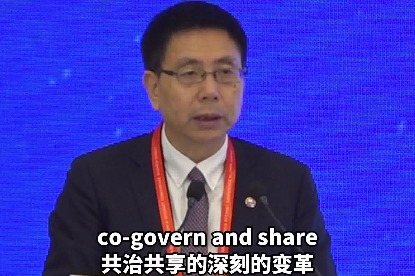
Wang made his comments in a congratulatory letter to the third Belt and Road Higher Education Research Conference, an industry event featuring discussions on talent training for Chinese companies in their overseas BRI projects, and those that have the need to hire local employees.
With growing number of Chinese companies setting up branches overseas, the need for multi-skilled professionals is on the rise.
A recent industry report revealed that over 70 percent of central State-owned enterprises or SOEs think a shortage of multi-skilled professionals has hampered their overseas business operations, affecting performance.
The report was co-published by the State-owned Assets Supervision and Administration Commission of the State Council and the Chinese Academy of Social Sciences.
"Today many industrial leaders are talking about talent gap. They need people that can help solve problems regarding cross-cultural communications, legal issues, language barriers, and many others," said Zhong Hongwu, division chief for corporate social responsibility research at the CASS.
However, compared with hiring more staff, those companies prefer to see their overseas staff, mostly industry experts and engineers, equipping themselves with multi-disciplinary skills for the sake of reduced operational costs, Zhong said.
Zhong's view is borne out by the fact that about 96 percent of central SOEs have scheduled training sessions before sending their staff overseas. Such training covers aspects related to local culture and legal systems, language, security, and anti-corruption policy.
Despite differences in their business operations, most companies surveyed have similar preferences on topics for staff training.
According to the report, over 90 percent of central SOEs prioritize training in local legal systems for their staff. About 74 percent of central SOEs impart training in local environmental protection, and 68 percent of central SOEs have initiated other measures to strengthen their staff's awareness of energy-saving measures, emission reduction, and protection of ecological habitats.
"Although lacking emphasis in our report, it is worth noticing that cross-cultural communications are a challenge to most of companies that have set up branches in overseas markets, as cultural differences can impact their international business performance," Zhong said.
Successful cross-cultural communications require multiple attempts from companies to negotiate and mediate cultural differences in their overseas operations.
Many, according to Zhong, have made tremendous CSR efforts to build up good relations with local communities, and set up organizational communication mechanisms to promote interpersonal communications within the corporate concerned.
Power Construction Corp of China, or PowerChina, is one of the central SOEs that has made great efforts in strengthening relationships with local communities.
The group has helped renovate local churches, schools, roads and many other infrastructural facilities in Karuma of Uganda, where it has set up a hydropower plant.
"We felt important to bond with local communities for a win-win outcome and those moves are an integral part of our efforts to build up a community with a shared future," said Zhou Jianping, chief engineer of PowerChina.
Despite good outcomes of their CSR efforts, Zhou said that the issue of cultural gap is challenging, and the company welcomes professionals with cross-cultural backgrounds.
"We hope there will be third-party agencies that can offer training to our staff in cross-cultural communications," Zhou said.
Local staff account for about 90 percent of the employees in some companies' overseas branches. Many have set up their communications team for the first time, Zhou said.