


Tusi Sites









Category of Site: Cultural site
Brief introduction
Located in the mountainous areas of southwest China, this property encompasses the remains of several tribal domains whose chiefs were appointed by the central government as "Tusi", and hereditary rulers from the 13th to the early 20th century. The Tusi system arose from the ethnic minorities' dynastic systems of government dating back to the 3rd century BC. Its purpose was to unify national administration, while allowing ethnic minorities to retain their customs and way of life. The sites Laosicheng, Tangya and Hailongtun Fortress that make up the site bear exceptional testimony to this form of governance, which derived from the Chinese civilizations of the Yuan and Ming periods.
This property was added to the World Cultural Heritage List in 2015.
Cultural heritage
Distributed around the mountainous areas of southwest China are the remains of tribal domains whose leaders were appointed by the central government as "Tusi", hereditary rulers of their regions from the 13th to the early 20th century. This system of administrative government was aimed at unifying national administration while simultaneously allowing ethnic minorities to retain their customs and way of life.
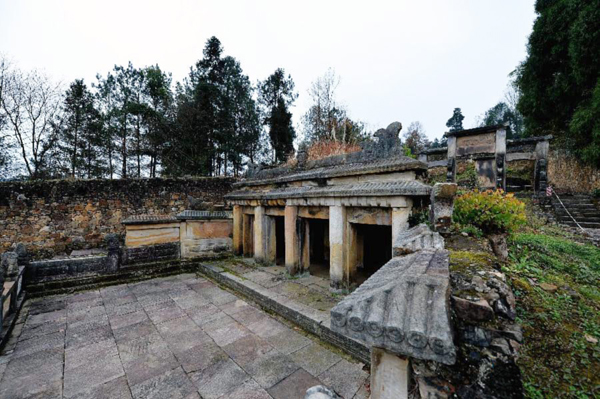
The three sites Laosicheng, Tangya and the Hailongtun Fortress combine as a serial property to represent this system of governance. The archaeological sites and standing remains of Laosicheng Tusi Domain and Hailongtun Fortress represent domains of highest ranking Tusi. The Memorial Archway and remains of the Administration Area, boundary walls, drainage ditches and tombs at Tangya Tusi Domain represent the domain of a lower ranking Tusi. Their combinations of local ethnic and central Chinese features exhibit a combination of values and testify to imperial Chinese administrative methods, while retaining their association with the living cultural traditions of the ethnic minority groups represented by the cultural traditions and practices of the Tujia communities at Laosicheng.
The site, located in Xianfeng county of central China's Hubei province, covering more than 100 hectares, is about the size of 140 football fields and even bigger than the Forbidden City in Beijing. The fortress was first built in the early Yuan Dynasty (1271-1368), before its future owners expanded it.
Tusi regime
The Tusi system was a political regime adopted by feudal Chinese emperors to govern ethnic minority regions. Tusi was a tribal leader appointed as an imperial official by the central government. Chieftains ruling the Tangya Tusi territory were surnamed Qin, who handed down their power to 18 generations in more than 460 years, until the Qing Dynasty (1636-1912), when chieftainship was abolished and the fortress was abandoned.