Chinese New Year now has a dubious 'kitchen god'









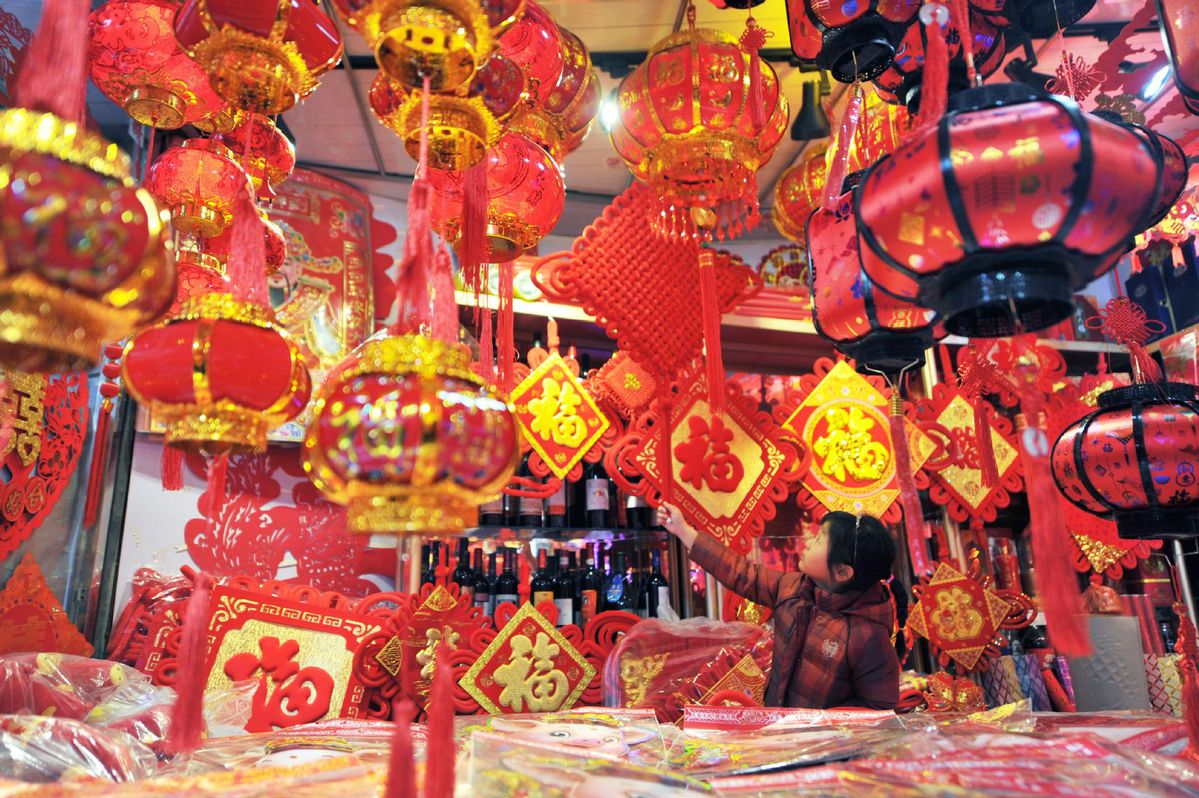
Today, the 24th day of the last lunar month, is observed among millions of Chinese and Asian Americans as a mini festival, better known as xiao nian in Chinese.
It also marks a prelude to the upcoming Spring Festival — the most celebrated carnival among Chinese-speaking populations around the world — which falls on Feb 5 in 2019 and will feature serial celebrations, including the New Year's Eve, the New Year's Day and the Lantern Festival.
Folklores and Chinese customs have it that it's the time for the kitchen god in each household to leave his shrine temporarily for the heavens and give a comprehensive report on the annual performance of each family.
In awe and anticipating good omen, housewives coat lips of the kitchen god, usually a solemn-looking statue, with honey or melted sugar to increase the likelihood that only nice and sweet anecdotes would be reported to the ruling authority.
Sounds intriguing and exotic, full of Eastern wisdom? Probably only a native Chinese with extensive knowledge of ancient culture, legend and civilization could explicitly articulate the inception and evolution of xiao nian.
Wrong.
Actually, the aforementioned kitchen god ritual was emailed to me by one of my Caucasian friends who works at a commercial real estate company in San Francisco that has a considerable amount of Chinese clients.
"Don't forget to offer a set of sacrifices to your kitchen god tonight at 7 pm," he wrote, providing me a list of necessities. "That should include three hot dishes and three appetizers, plus a bowl of beans of five different colors."
Putting aside my curiosity about how he could be so adept at Chinese culture, I can't help wonder why the Chinese New Year has sparked so much joy and curiosity.
Over the years, adoption of the Chinese New Year concept and an enthusiasm for absorbing its cultural embodiment have become increasingly popular around the globe.
From Downing Street to the White House, from the Sydney Opera House to the Machu Picchu, it's a common scene during the Chinese New Year that lions and dragons hop to the resounding beat of drums and gongs, while red lanterns hang high on streets, red couplets adorn doors, and window panes are decorated with red paper-cuts depicting prosperity and good fortune.
"Chinese New Year is a time when people celebrate harmony, peace, harvest and happiness," said Xiao Xiayong, the culture consul at the Chinese Consulate General in San Francisco, who started in the post six years ago and spreads the significance of the Spring Festival by extending festive invitations to other cultures and ethnic groups.
Thanks to the "relentless efforts and diligence" of generations of overseas Chinese, some of the core values and customs of the Chinese New Year are well preserved, Xiao said.
In the United States, for example, "the first group of Chinese laborers brought with them the deep-rooted culture of their homeland, including how China and Chinese people observe important holidays, when they landed on the West Coast about 150 years ago", he added.
"After a whole year of tedious work, we need to take a break, have fun and set new goals for the future. Nobody would refuse to participate into a festival that emphasizes joy and harmony, and nobody should," Xiao continued.
For me, I'd better check my mom's recipe now to have the sacrifices ready for the kitchen god.
Contact the writer at junechang@chinadailyusa.com





- China launches satellite to aid in early extreme weather detection
- Report on mining accident that killed 6 suggests accountability for 42 individuals
- Law aimed at bolstering standard Chinese language education passed
- Connecting cities, changing lives
- World's longest expressway tunnel opens to traffic
- Taiwan lawmakers vote to pass motion to impeach Lai