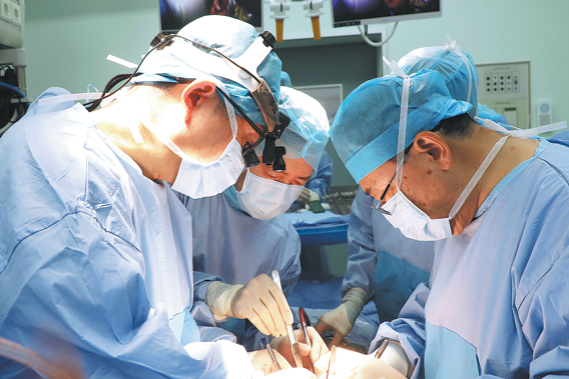
Chinese scientists develop early diagnosis of liver cancer for hepatitis B carriers










BEIJING -- Chinese scientists have designed a new screening method for hepatitis B carriers, to detect early-stage hepatocellular carcinoma (HCC), the most common type of primary liver cancer.
The new method was developed by researchers from Cancer Hospital, Chinese Academy of Medical Sciences and Genetron Health, a biomedical company. Through a liquid biopsy that detects cell-free DNA somatic mutations in combination with protein markers, researchers can efficiently identify early-stage HCC cases of less than 3 cm.
According to Yan Hai, one of the researchers, the method showed 100 percent sensitivity, 94 percent specificity and 17 percent positive predictive value in the validation cohort, proving it a feasible approach to identify early stage HCC.
The research team will optimize this screening method through systematic research in a multi-center, large prospective cohort study, Yan said.
After rigorous clinical validation, this method is expected to become a more convenient, non-invasive and standardized early screening program for liver cancer.
The research was published in the US journal Proceedings of the National Academy of Sciences.





- China's defense ministry calls for united efforts to contain Japan's militarism revival
- Qinghai-Xizang Railway sets passenger record during 14th FYP period
- China-UAE joint air force training enhances practical cooperation
- Japan's offensive space policy is extremely dangerous: spokesman
- New beetle discovered in Potala Palace structures
- Investigators dismantle 200 professional criminal gangs, uncovering $4b illegal funds