



China Focus: China to regulate online products as virtual market thrives









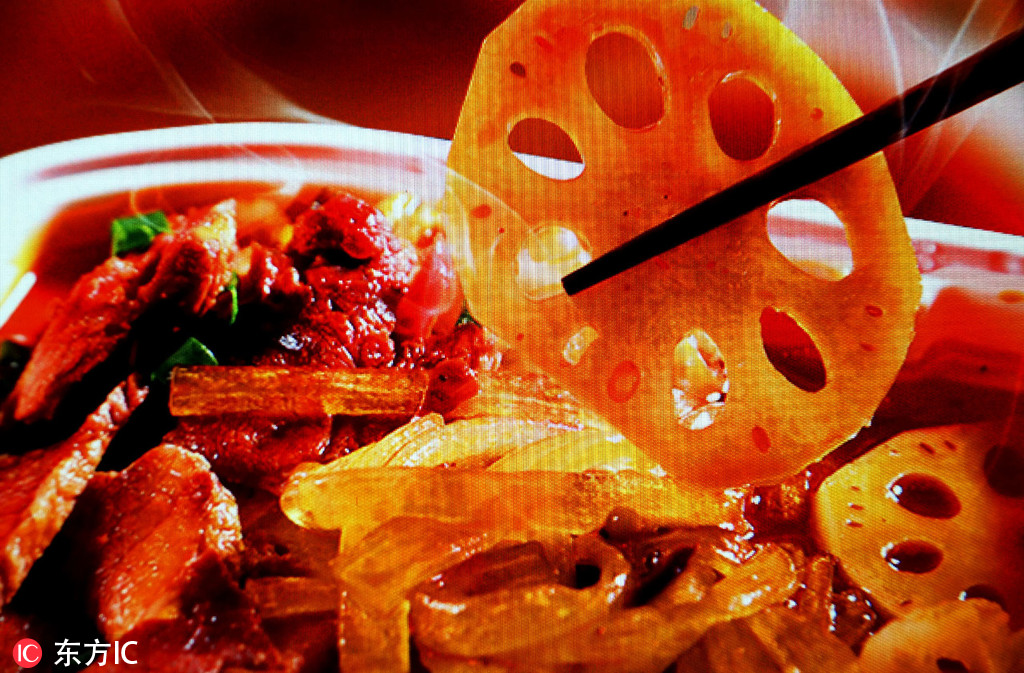
SHANGHAI -- Living alone and working hard in Shanghai, Wang Qian, used to buy a dozen self-heating instant hotpots every month, but is now more cautious about them.
A hit on e-commerce platforms, the small bento-box dish, which costs no more than 50 yuan (7.4 US dollars), became extremely popular among young Chinese white-collar workers.
The small bento-box instant hotpot is composed of an inner layer holding half-cooked vegetables and meat and an outer layer with heating materials at the bottom, which can release heat after combining with cold water. A mini hotpot can be prepared within 10 minutes.
A total of 4.53 million packages were sold during last year's Single's Day online shopping carnival, nearly triple compared with the same period in 2017. Some even sold out at local convenience stores.
However, the instant hotpot products might be delicious and convenient, but they been proven unsafe.
A recent test on 20 different such products revealed that inflammable gas can be released during the heating process and the plastic outer or inner layers can distorted because of the heat.
Shanghai Consumer Council, the test conductor, called for the setting of national and industry standards, suggesting careful use of the hotpot in open areas and sorted disposal of the self-heating materials.
Just like the instant hotpot, online best-selling products often go viral on social networks by precisely satisfying the needs of young customers, said Lao Guoling, head of the research center for e-commerce with Shanghai University of Finance and Economics.
According to the China Consumers Association, most customer concerns last year were internet-related, including the quality of online goods, safety of online ride-hailing, mobile payment and personal information protection.
Chinese online shoppers and regulatory authorities are facing bigger challenges as the virtual marketplace booms with popular products emerging one after another, said Lao, noting that such products and services might not be covered by existing industry standard constraints.
China's first e-commerce law took effect on Jan. 1. It bans vendors from unscrupulous practices like deleting shopper reviews, and cancelling orders.
Wang Yunxia, instructor of Zhejiang Gongshang University, said the law could help promote the healthy development of e-commerce and better protect the rights of online consumers.
Starting in 1999, China's e-commerce market has been expanding at break-neck pace, with emerging players, even individuals, joining industry giants like Alibaba and JD in mining the country's consumption potential.
E-commerce platforms has also played their part in protecting consumer rights.
In 2018, China's e-commerce giant Alibaba applied new technologies such as semantic and emotional analysis of online comments, panoramic view of online stores and live streaming monitoring system to discover problematic products and sellers.
Alibaba's online shopping platform Tmall rolled out a slew of return and refund policies concerning trending products. For example, consumers are entitled to claim refunds for cosmetics and diapers that cause allergic reactions, and alcohol that is damaged during transportation.
Alibaba said it aided police in catching 1,953 suspects involved in counterfeiting related crimes in 2018. The cases solved were worth about 7.9 billion yuan (1.17 billion US dollars).
China's authorities also have improved their measures of consumer protection online. The "12315" online consumer protecting platforms now can be reached for help through personal computers and several mobile applications or mini-applications 24 hours a day.
Statistics show that these online platforms were visited nearly 39 million times in 2018.
Wang Qian said she would still buy instant hotpot, but be more cautious and pay more attention to information released by local authorities on online products.



















