Coveted 'fuzz tip' is the peak for connoisseurs










Huangshan maofeng is one of the most pricey and sought-after green tea varieties in China. Despite its name, which literally means fuzz tip from Yellow Mountain, a mountain range with an area of 160 square kilometers in East China's Anhui province, it remains a controversy which part of the mountain, characterized by its oddly-shaped peaks, pines and clouds, boasts the best produced example of the tea.
The most common consensus, agreed by both local tea-makers and tea connoisseurs around the country, is that a small town in the southern part of the mountains, called Fuxi, is the birthplace of the tea.
The tender, needle-like infusion is believed to have originated in the late 19th century, when a local merchant tried to make a living in a remote village after becoming a war refugee. By creating a unique tea baking technique, the merchant, Xie Zhengan, managed to turn the leaves of an obscure plant into a beverage coveted in big cities like Shanghai, which even now still takes five hours to reach by road.
The success of Xie in popularizing the tea in Shanghai has been so great, that Caoxi Road in Shanghai was named after Xie's hometown.
But Wu Weiguo, a local tea expert who has been studying the plantation and the history of the tea variety for nearly three decades, attributed the charm of the drink, which features a subtle floral tone, to its ecology rather than its processing technique. That's why the tea can be only labeled as Huangshan maofeng when its raw leaves are produced in the region, regardless of how they are picked, baked or dried.
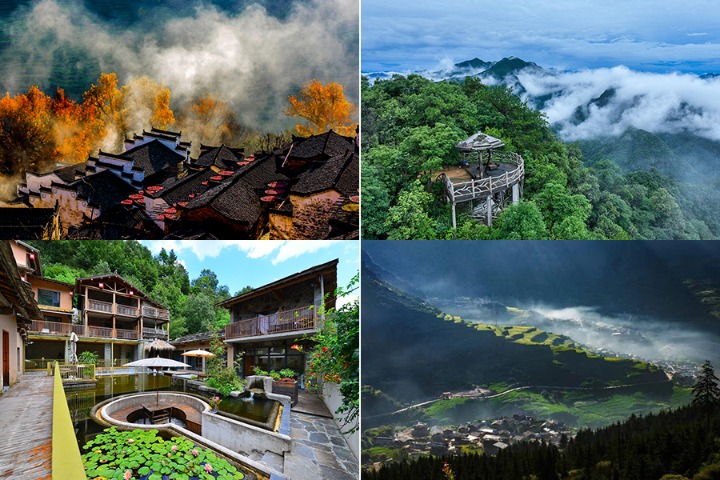
The moist clouds ringing the mountain have eroded the granite - which is the major composition of the mountain - into 88 peaks of up to 1,900 meters. The magic hand of nature has turned some of the peaks into sculptures, seemingly carved painstakingly by human hands. It has made the area one of the most famous natural landscapes in China, attracting millions of hikers.
On the other hand, the clouds are also believed to form a natural layer of shelter, blocking the sunlight and allowing the tea leaves to produce more nitrogen content and their distinctive aroma.
Though, Wu admitted, it might be difficult for average drinkers to tell the difference between native maofeng tea leaves and "transplanted ones" in other regions.
Official tea picking season this year is scheduled to begin on April 8 and will kick off with a special ceremony.
More than just an event on a local agricultural calendar, tea picking has also grown into an added attraction for tourists to travel and visit the mountain in springtime, as there is a reignited interest in the traditional beverage, which already boasts thousands of years of history in China.
As melted snow refills the creeks and brings waterfalls back to life, and budding flowers paint a colorful contrast against Hui-style architecture, - one of the most celebrated building styles in China - Huangshan in spring has always been in favor among tourists. The newly curated experiences of tea picking and processing have provided tourists another reason to stay for a couple of days more, according to officials of the local tourism bureau.
For those who want to increase their tea trivia and knowledge of the local leaf, a museum run by the sixth-generation descendants of Xie is a fascinating place to visit. First opened in 2006 and later expanded to a whopping 7,000 square meters, supplemented by a tea garden, the museum offers a detailed review of the cultivation of maofeng and how it grew to become one of the top national tea varieties over course of the last century.
Related:
Tea tourists infuse new life into rural China