



McKinsey: China driving shifts in global trade









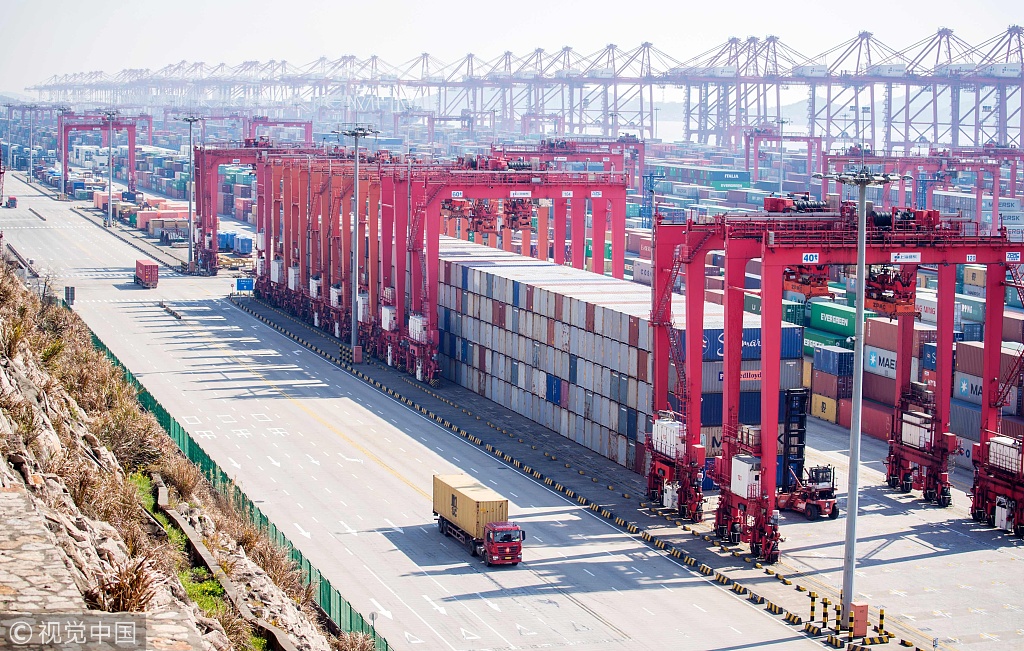
China is driving a large part of several fundamental shifts in global trade, according to a recent survey by McKinsey Global Institute.
These include the diminished share of output moving across the world's borders, the surging role of services in the global value chain, and the growing significance of intraregional trade, the consultancy said.
Output and trade both continue to grow in absolute terms, but a smaller share of the goods rolling off the world's assembly lines are now traded across borders. According to the study, between 2007 and 2017, exports declined from 28.1 to 22.5 percent of gross output in goods-producing value chains.
This is largely attributable to the development of China and other emerging economies, which are consuming more of what they produce, said Jonathan Woetzel, director of McKinsey Global Institute.
"Lower global trade intensity is a sign that these countries are reaching the next stage of economic development," he said.
The developing economies are expected to drive more than half of global consumption by 2030, among which China occupies the largest share, of 16 percent, said Jeongmin Seong, senior fellow at McKinsey Global Institute.
But rising demand is only one side of the story. China's share in the global output has jumped from just 6 percent in 2007 to around one-third in 2017. This is because the country is building more comprehensive domestic supply chains, reducing reliance on imported intermediate inputs.
"As its domestic supplier industries mature, the country is becoming less reliant on foreign imports; and because of the sheer size of China's economy, this shift registers at the global level," Seong said.
Meanwhile, regionalization is most apparent in global innovation value chains, given the need to closely integrate many suppliers for just-in-time sequencing, stay close to customers and speed product launches.
Looking into the future, Woetzel said China needs to adapt to the emerging three trends defining future trade: regionalization, the rise of service trade and digitalization.
"Usually China takes a bilateral approach and that works well in a system where you think about manufacturing and shipping (the goods) somewhere. But future trade is about networks, and it requires a more regional approach," he said.



















