Lhoba of Tibet find new ways of living









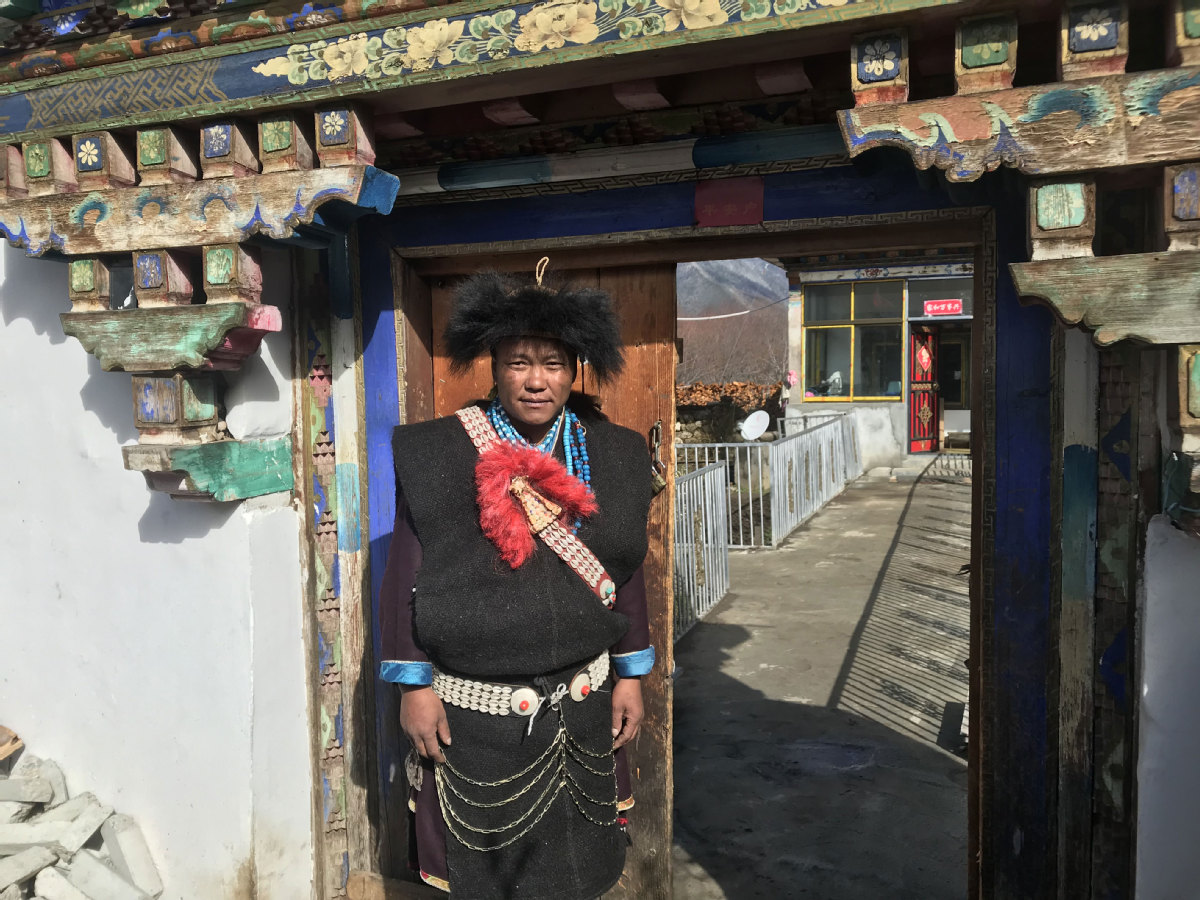
The Lhoba people, an ethnic minority group in the Tibet autonomous region, took less than 40 years to modernize from their primitive hunting lives deep in the mountains.
Since 1984, when they moved down from the mountains with the help of the local government, they began to settle down in villages, earn regular wages and learn farming from their Tibetan counterparts. Now the Lhoba population in three villages in Manling county, Nyingchi city, have prospered greatly from the tourism industry.
In 1983, China created its first supercomputer, named Galaxy, and the country began seeing broadcasts of the Chinese New Year celebration gala on television. Meanwhile, 7-year-old Daniang was busy hunting prey every day in the forest, carrying arrows and a bow on his back.
His tribe was isolated from the outside world. They moved from place to place, following their prey, such as leopards, bears and boars, and lived in temporary wooden shelters. They ate the meat and sometimes traded the hides with local Tibetans for salt. They wore animal skins and rarely had enough food to fill their stomachs.
"Sometimes we wouldn't kill a single animal in two weeks, then we could only count on some potatoes in the mountains. But the monkeys always stole our food," he said.
In 1984, Daniang's tribe was discovered by the local government and relocated to a village. The government provided land and houses, and the local agriculture and animal husbandry bureau sent experts to teach them how to grow crops, including highland barley and wheat.
"It wasn't easy to learning to farm at first because we had never seen farming in the mountains. But with the help of Tibetans and experts, we caught on gradually. Life was a lot more comfortable after we started farming. We ate well every day and had a steady income," he said.
In 2008, three villages with relatively high Lhoba populations in Manling county began to develop tourism with the support of the local government, bringing them a new source of income.
The beautiful mountain scenery, the exotic customs of the Lhoba ethnic group and their history of hunting life soon attracted many tourists from around the country. Dawa, head of the township, said the villages received 200,000 tourists from March to October last year. They spent more than 2 million yuan. Each village household received a dividend of 15,000 yuan.
In addition to shepherding yaks from time to time, villagers run homestays, hotels, restaurants and food stalls during peak season. Yaxia, who runs a barbecue stall, said he can earn as much as 500 or 600 yuan per day by selling grilled fish and potatoes.
"Now after 10 years, villagers are keen to develop tourism and very happy to communicate with outsiders. Many of them have learned Mandarin for daily communication," Dawa said.
The development of tourism also helps protect Lhoba culture. Dawa said many forms of intangible cultural heritage, such as bamboo weaving and fabric weaving were used in handicrafts. Traditional performances such at singing and dancing with long knives were preserved.
"Companies in Nyingchi invited our Lhoba women to weave wool scarves in the traditional Lhoba way. They can earn a monthly salary of 3,000 yuan and an extra 200 yuan commission for each scarf," he said.
China now has about 3,000 Lhoba people living in Tibet, and the government has made great efforts to preserve their culture and traditional way of life.
Lhoba people speak their own language - which has no written script. According to Daniang, many young children studying at school in the past communicated with their Tibetan or Han classmates in Tibetan or Mandarin and gradually forgot how to speak the Lhoba language. The local government then employed Lhoba teachers to revive the language, he said.
The materials of their traditional costumes, including shells and turquoise, were provided by the government, he said.
"Our lives are getting better and better. Now we look forward to an even more development," he said.



- Guangdong urged to drive high-quality development
- Shanghai hosts 6th intl 3E talent fair
- Xi's special envoy attends inauguration of Bolivian president
- Countdown to 15th National Games: On-site warm-up entertains audience
- Eight missing after cargo ship collides with fishing vessel near Shandong
- Investing in people: a worthwhile investment