StanChart identifies China as center of strategy









Bank making substantial improvements in retail, SME and corporate business
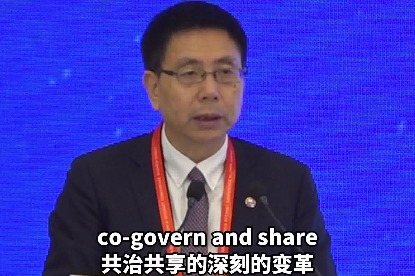
Standard Chartered Bank identifies China as the center of its strategy, as the country has become a key driver for the group's business growth, said Bill Winters, group chief executive of the bank.
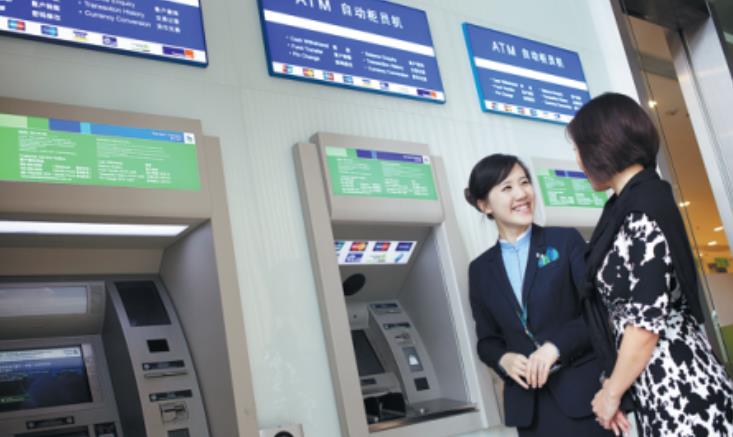
Last year, StanChart celebrated its 160th anniversary in China and made substantial improvements in retail, small and medium-sized enterprise banking and corporate banking business.
China and North Asia generated the largest share of the group's income in 2018, at 41 percent. The region is highly interconnected, with China's economy at its core.
"It was with complete confidence and conviction after our performance in the last two or three years that we were able to identify China as the center of our group's strategy for the years to come," said Winters on the sidelines of the China Development Forum 2019 last month.
The bank has demonstrated for several years its commitment to and interest in the Belt and Road Initiative. Last year, it executed over 100 deals that were Belt and Road related.
Apart from the initiative, Stan-Chart has continued to focus on enhancing its banking capabilities in China and has become the first foreign bank to receive a domestic fund custody license in the country.
The bank is also proactively looking at opportunities in digital banking and nonbank financial institutions.
In an interview with China Daily, Winters shared his thoughts on the prospects and opportunities for the bank in the context of the Greater Bay Area plan, the Belt and Road Initiative and the country's further opening-up.
How will you realize the aim of doubling StanChart's China-related income contribution?
We've got a number of ongoing initiatives in China. Broadly they break down into incomes that are booked onshore and offshore.
The offshore income is the cross-border payments. In many cases, it is bringing international investors into the Chinese market via the China Interbank Bond Market or Bond Connect. It's acting as a facilitator and arranger for Belt and Road-related financing. These are businesses where we have a leading position today.
Onshore we have a healthy retail business that is substantially anchored in wealth management products, which have been growing fast.
We hope that we have the ability to distribute further international wealth management products into the domestic market. That is an important part of the opening-up of China. We think we can generate substantial incremental growth there.
We also have a substantial onshore business banking SMEs and local corporations, and acting as a custodian for international and local investors who are investing in the Chinese market.
So the underlying market is growing quite nicely. We continue to grow with the market and in fact we can help to grow the market.
Will the newly adopted Foreign Investment Law encourage StanChart to expand its business here?
The new law is supportive for building confidence that international investors in China will have more opportunities to have stakes in the businesses that they can influence directly and that they can have greater confidence with generating profits. The direction is extremely important.
For Standard Chartered, we will look at every allowance that we have all the time and judge whether there is a market segment that we should be participating in.
We are present in many of the financial services areas already. There are some areas that are not central to our global strategy - asset management, for example - so it is unlikely that we will be looking to set up a controlled joint venture in China.
We are looking at the securities business, though, and looking at opportunities to better present our capabilities in the securities industry in China.
As the law protects foreign investors to a greater degree, we have greater confidence that incremental investments can be good and healthy investments for us.
What are the opportunities for StanChart in China's Greater Bay Area?
We are excited about the GBA initiative. We think that it provides a framework for more fluid movement of ideas, capital and people.
Giving our strong position in Hong Kong, Shenzhen and Guangzhou, we are intending to be an active participant in the newly configured GBA - both on the retail side of our business and also in terms of serving our corporate clients.
We will be operating across that area more fluidly than we were able to in the past, so we set up a dedicated GBA team that cuts across our Hong Kong and Guangdong province coverage and underlying support, in order to have seamless support for our corporate and retail clients in the area.
The GBA has been one of the most innovative centers for the world, not just in China. We would like to leverage on the talents and the technological advancement to use that as a center for us to think about how we innovate and develop our systems and products.
What are the prospects of the BRI, and what are your suggestions to further promote it?
It is clear that a number of economies that have been recipients of Belt and Road financing are experiencing some type of economic and/or political stress. It is not surprising that the economic cycle is alive in these markets but it creates a challenge right now.
I think it is important that we, as a bank that has been involved in many of these financings, and also the other financiers, including the contractors and banks in China, recognize that this is cyclical and not structural and help those borrowers walk through the difficult time.
A period like this is a good reminder of a few things: First, it is important to be rigorous about understanding the economic viability of a project at the time that you enter into that project, so I imagine that the BRI will be subject to greater scrutiny.
The second is that it will be important for the Chinese entities that are involved in these projects to fully appreciate when you become as deeply embedded in a country's economy as China has become, that there is an effective obligation to help these countries through their difficult times.
China has shown every indication that it understands that effective obligation and is doing its part to help these countries resolve their economic challenges.
What will StanChart do to make further progress of exploration with financial technology?
Technology is at the heart of everything that we do. We have substantially increased our investment in technology over the past three years. We are now spending almost three times on technical investment what we spent in 2015. It's close to 20 percent of our annual expenses - just the investment, not operations.
We've invested heavily in digital retail banking, so we've set up a standalone digital bank in Africa that we've rolled out in five markets. We will roll that bank out in five more markets before the end of the year. It allows our African customers to do everything on their mobile phones that they could do in a bank branch.
We are also building a virtual bank in Hong Kong. We have excellent partners who are attracted to us because of our technical strength and our presence in Hong Kong, and because at some point they mentioned we might be able to deploy some of these technologies on the Chinese mainland.
We would love to have the opportunity to establish a digital bank on the mainland. As far as I can tell, there haven't been many licenses activated, so that would be an area that we would be keen to participate in. We think we could add some real value to Chinese customers by bringing some of our knowledge from other markets but also our knowledge of China. If there are licenses going, we'd like one.