6 ways Japan has changed under Akihito









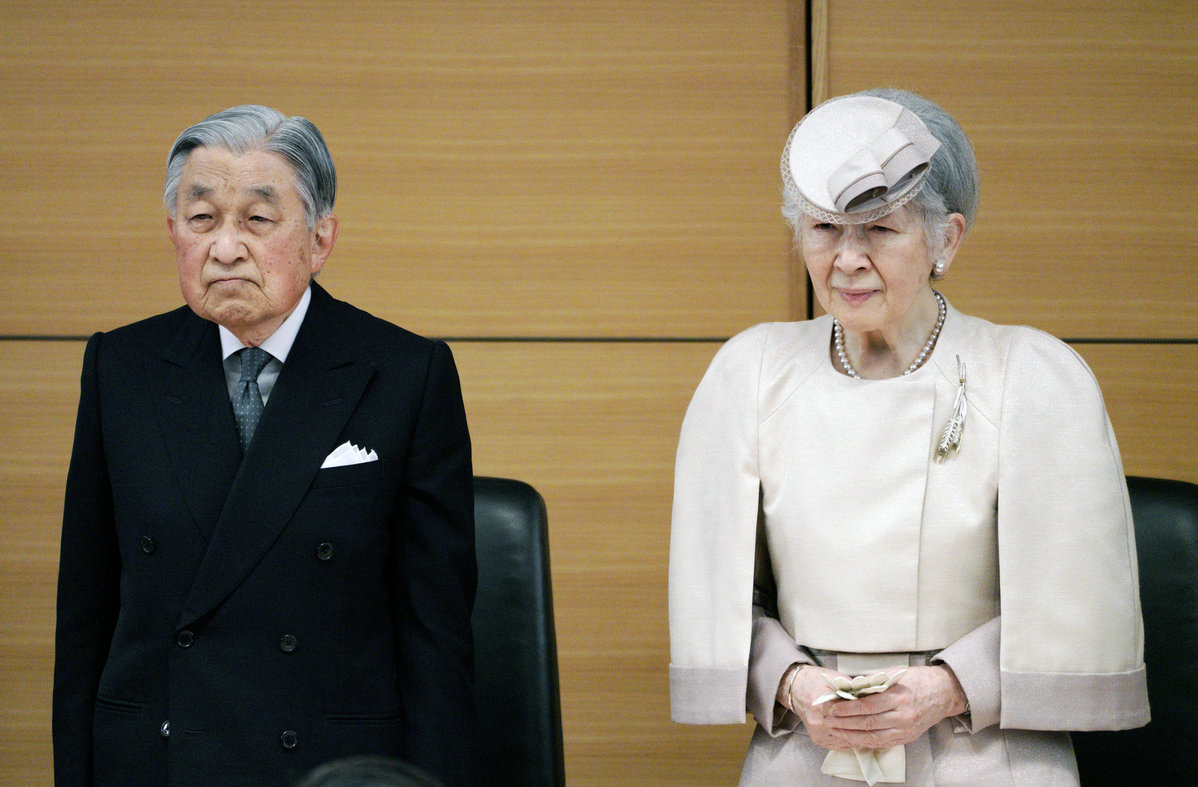
Naruhito will inherit a different nation from that at the start of his father's reign
TOKYO - Japan will mark the end of an era with Tuesday's abdication of 85-year-old Emperor Akihito, the first emperor to abdicate in 200 years.
Crown Prince Naruhito will inherit a Japan vastly different from that of the start of his father's reign, when the country was in the grip of an economic bubble and on the verge of a tech revolution.
Here are some of the ways Japan has changed dramatically during the Heisei imperial era of Akihito's rule:
Population decline
Japan's shrinking population is among the country's most pressing social and economic issues.
When Akihito took the throne, he was emperor of a country with a population of 123 million people.
The population continued growing for his first years in the job, peaking a decade ago at 128 million.
But since then, Japan's has been on a downward trend, with the birthrate regularly hitting record lows. The population now stands around 126 million and is continuing to decline despite governmental efforts to reverse the trend.
China
When Akihito took the throne, the United States was still Japan's top trading partner - a reflection of a relationship defined by the post-World War II experience.
But China overtook the US during Akihito's reign and trade with China has jumped more than tenfold to 35 trillion yen ($314 billion) from 2.7 trillion, far outstripping the 24 trillion yen in trade with the US.
Foreign gaze
Japan might now be a top international tourist destination, but that wasn't always the case.
Visitors have been pouring into the country in recent years, particularly ahead of the Rugby World Cup this year and Tokyo Summer Olympics in 2020.
Last year alone, 31 million foreign tourists came to Japan, a staggering increase from just 2.8 million the year Akihito took the throne.
And the government is hoping to boost that figure further, with a goal of 40 million tourists a year by 2020.
Women in politics
When Akihito took the throne, less than four percent of parliamentary seats were occupied by women.
The rate has tripled since then, but still stands at just 14 percent, a stubbornly low figure and out of step with most of the rest of the developed world.
Japanese Prime Minister Shinzo Abe's cabinet includes just one woman, despite his stated commitment to "womenomics" or increasing female representation in the workplace.
Smoking
When Akihito took the throne in 1989, Japan was a nation of smokers. The majority of men smoked - 61 percent, though the rate was vastly lower among women, at just 12 percent.
But smoking rates have plunged in Japan, particularly among men, with only 28 percent of the male population now smoking.
Among women the rate has dropped to nine percent.
Strict laws against smoking in the street and health campaigns have been implemented in recent years, though the government's most recent legislation to ban smoking in restaurants and bars came under fire after being watered down.
Smoking is still common in Japan's ubiquitous izakaya bar-restaurants.
High-tech toilets
Among the many pleasures of life in today's Japan is the high-tech toilet, complete with a warm water spray and often an array of other functions including an air dryer and even ambient noise.
Today, 80 percent of households have "spray seats" according to government data. But that figure was just 14 percent in 1992, the earliest year for which data is available.
Agence France-presse