


The future of China-Azerbaijan scientific cooperation









President Xi Jinping on May 15 delivered a keynote speech calling for Asian countries to increase cooperation at the Conference on Dialogue of Asian Civilizations opening ceremony in Beijing.
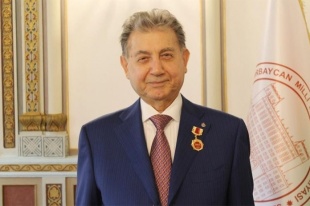
Akif Alizadeh, president of the Azerbaijan National Academy of Sciences (ANAS), talked with China Daily reporter Zhang Zhihao on China-Azerbaijan scientific cooperation via written interview. Edited for clarity, here's the interview.

1. What are some of the biggest changes you see in China-Azerbaijan scientific cooperation in the past 25 years?
In 1994 Heydar Aliyev, then president of Azerbaijan, paid an historic visit to the People's Republic of China. He gave a speech at the Chinese Academy of Social Sciences, and the two countries signed their agreement on scientific and technological cooperation during the visit.
These actions laid the foundation and defined the strategy of scientific relations between Azerbaijan and China in the fields of natural and social sciences.
Over the past years, scientific exchange between our countries has developed successfully. Leading scientists from academic institutions in Azerbaijan have actively participated in around 100 scientific conferences in China.
The Azerbaijani-Chinese Technology Transfer Center was established at the High Technologies Park of ANAS. Direct partnerships have also been established between profiled scientific institutions, including the Chinese Academy of Engineering and agricultural academies of the two countries.
All these scientific interactions not only enrich the fundamental social and humanitarian sciences of Azerbaijan, but also allow both countries to develop specific recommendations for deepening the integration of countries and peoples along the historical Silk Road.
2. What are some fields that the two countries are actively cooperating in?
Research on the history of Azerbaijani-Chinese trade and cultural contacts on the ancient Silk Road remains one of the priority spheres of scientific cooperation between our countries. The history of literary relations, ancient Chinese philosophy, and the Chinese experience on socioeconomic reforms, as well as its modernization policy are also topics we research together.
Environmental problems and climate change are serious challenges to humanity. As Azerbaijan deals with its own state ecological programs, China has also proposed building an ecological civilization, which is necessary to unite efforts and intensify scientific investigation in related fields, with the goal of producing practical results.
As a result, it is necessary to establish cooperation between the specialized institutions of ANAS and those from China. ANAS scientists regularly participate in conferences on Asian geographical and botanical research held in China and are collaborating with Chinese research organizations.
3. How would you describe China-Azerbaijan scientific cooperation and its role in promoting cultural exchange?
Azerbaijan and China have scientific potential and outstanding scientists whose research is among the best in the world. The Belt and Road Initiative also united Asia and Europe in many multicultural ways, not just in transportation.
Azerbaijan is a country located at the geopolitical and cultural crossroads of Asia and Europe and is one of the most important supporters of the expansion of fundamental and applied innovative research.
The historical, civilization-based and cultural interactions between Azerbaijan and China, reflected in architecture, music, fine arts, decorative and applied arts, traditional crafts such as carpet weaving, silk, and porcelain, not only have great educational purpose, but are also of great interest to researchers from both countries.
4. How is China-Azerbaijan scientific cooperation benefiting the people?
Developing the whole society and improving the level and quality of life for the people are the features of modern science. China is one of the world leaders in the fields of high-tech and innovation, and Azerbaijan is greatly interested in expanding scientific cooperation with China.
China-Azerbaijan scientific cooperation has led to the joint development of many products, including lubricants and silk products, with participation from some Chinese companies as well.
5. What are your thoughts on China's effort in connecting scientific communities along the Belt and Road Initiative (BRI)?
China launched the BRI as its policies of modernizing the society and economy are being successfully realized. It also opened wide prospects for cooperation among Eurasian states.
The implementation of this project will be determined by specific political decisions and the economic developments and recommendations of participating countries, which can be very complex given the grandiosity of the project.
Currently in ANAS, many academic institutions have developed plans at various levels related to China, ranging from probing the ancient history of Turkic-Chinese interaction to Chinese philology. They also exchange scientific information and cooperate with their Chinese peers.
Promoting communication between scientists from Azerbaijan and China and jointly educating the next generation of innovative talent are viewed with great interest and significance in conducting joint research and tacking modern scientific issues.
6. What is the biggest challenge in China-Azerbaijan scientific cooperation?
There are no insuperable problems in Azerbaijani-Chinese scientific and technological cooperation. But it is necessary to conduct a thorough examination of current research priorities and directions and find those that can serve the purpose of joint scientific and innovative cooperation.
It is important to develop effective forms of inter-state partnership and the subsequent organizational and economic mechanisms to carry out these programs. A more effective system for exchanging and training scientists, as well as a system that can integrate scientific and industrial practices from both countries, would be highly appreciated.
7. How do you view the prospects for China-Azerbaijan scientific cooperation?
Science plays a crucial role in many fields and spheres of people's lives in both the Chinese and Azerbaijani societies. It is also an important indicator for a country's level of development. The two countries were historically connected by the Silk Road, and now via the BRI, whose future projects will require serious scientific support.
The BRI is not just a massive infrastructure or economic project. It is a project that unites people from unique cultural and political backgrounds. I think it would be very timely to create an Azerbaijani-Chinese scientific institution specialized in researching this complex topic.