San Francisco to raise tax on tech IPOs









Objective is to address income inequality, but business groups fear exodus from city
A San Francisco supervisor proposed a tax on wealth from initial public offerings to address income inequality, drawing pushback from business groups worried about driving companies out of the city.
The so-called "IPO tax" would raise the tax on corporations for stock-based compensation to 1.5 percent from the current level of 0.38 percent. It would restore the rate to the level in 2011, when San Francisco began offering tax breaks to lure tech companies to the city.
"Since 2011, we've seen a tremendous growth in the technology sector, growth fueled by tax breaks and tax cuts designed specifically to benefit big tech companies," Supervisor Gordon Mar, lead sponsor of the proposal, told China Daily.
"In 2019, we now have the highest housing costs in the country, the highest income-gap in the country, and the highest number of billionaires per capita anywhere in the world," he said.
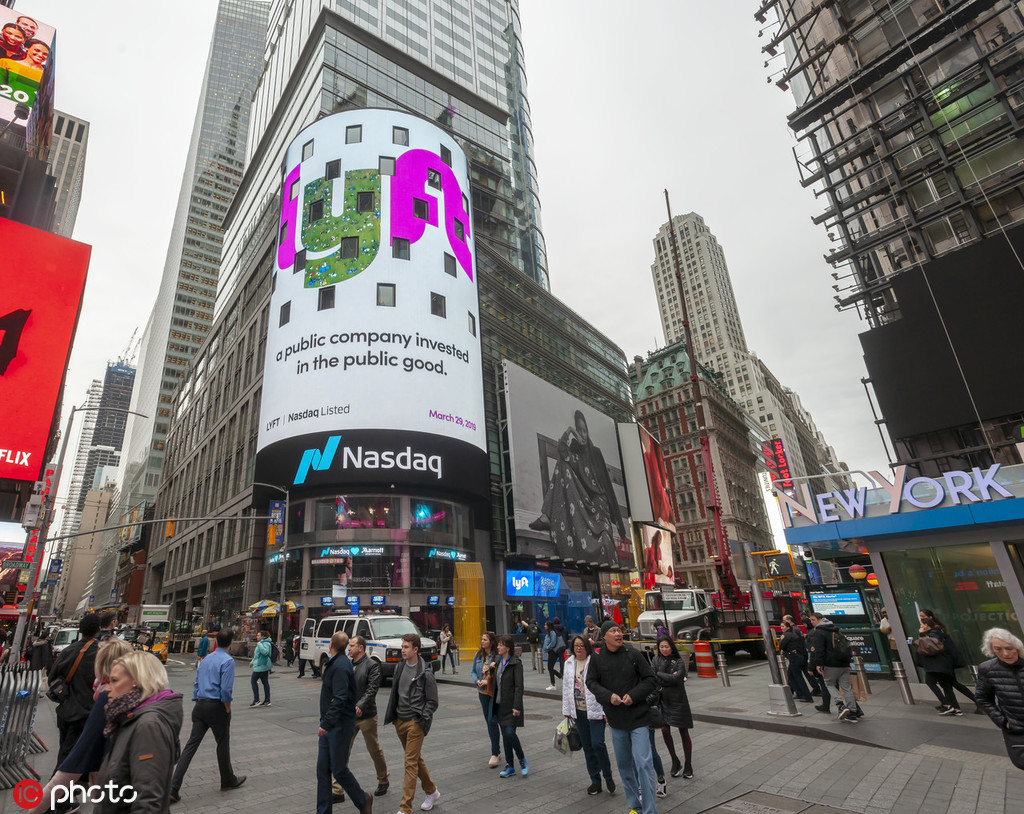
Over the next two years, a record number of private tech companies based in San Francisco — including Uber, Lyft, Airbnb and Pinterest — have held or are planning IPOs. It's likely San Francisco will be flooded with billions in new wealth, and the existing crises of housing affordability and wealth disparities will be exacerbated, according to a statement from Mar's office.
San Francisco is the most expensive city in the US and in the world, with $3,690 median monthly rent on a one-bedroom apartment, according to a March report by rental site Zumper.
The city also surpassed New York as the world's priciest place for new construction, according to a new report by consulting company Turner and Townsend.
Mar said the inequality was fueled in part by the growth of the tech sector and will be exacerbated by the IPOs of the large, wealthy corporations.
"It's time we end the tax cuts to Big Tech to instead invest in small businesses and working people," he said.
The IPO tax, projected to generate between $100 million and $200 million in the first two years, would be put into a Shared Prosperity Fund for programs for low- and moderate-income workers and families, small businesses and for affordable housing.
The proposal, co-sponsored by six supervisors, will be introduced to the city's 11-member Board of Supervisors in the next two weeks. If passed, it will be placed on the ballot for this November.
The proposal has drawn opposition from business groups like the San Francisco Chamber of Commerce and the Silicon Valley Leadership Group.
Dan Kostenbauder, vice-president of tax policy at Silicon Valley Leadership Group, called Mar's proposal "a bad idea".
"His proposal is really a tax on jobs. The more that San Francisco taxes jobs, the fewer jobs it will have," said Kostenbauder in an email. "Taxing stock-based compensation would be a great way to discourage innovation- economy companies from starting or growing in San Francisco, because innovation-economy companies have the highest amount of stock-based compensation."
"The strong economy that we enjoy now will not last forever, and when the next downturn happens, the high tax burden on well-paying jobs in San Francisco could produce a much greater level of job losses than would otherwise happen," he said.
The San Francisco Chamber of Commerce, the largest business network in the city, is still reviewing the proposal before the board of directors vote on the formal position, said Juliana Bunim, the organization's spokesperson.
"We have significant concerns. It's not an IPO tax, it's a tax on all equity-based compensation. So it's misleading to people and the business community to call it just an IPO tax," she told China Daily.
"Fifteen years ago, companies were leaving San Francisco, because they were told to pay 1.5 percent payroll tax on stock options. So if we want to drive San Francisco companies out of the city when they go public, we only have to look at the history to see that it doesn't work," she said.
In response to the concern, Mar said they would take it into account, but also said that it's being overstated.
"This is not a new tax, and it's a modest one — only 1.12 percent on the billions in new wealth that these incredibly wealthy corporations are receiving as they go public," said Mar.
"San Francisco has become the technology capital of the world, and these companies are deeply rooted here. I'm glad they find San Francisco an attractive place to do business, and I think it's reasonable to ask them to pay their fair share," he said.
As the San Francisco Bay Area is experiencing a housing crisis, worsening traffic and homelessness, many point fingers at the surge in employment and income in the tech sector and argue that tech companies should engage with and support their communities.
In 2018, San Francisco and Mountain View banned free food at tech companies — a popular benefit at tech companies throughout the Bay Area — in order to increase business for local food vendors.
Last November, San Francisco's voters approved a tax on large corporations to raise money to assist the city's homeless population. The move is expected to yield $300 million annually.
San Francisco Supervisor Aaron Peskin is working on another proposal to tax the revenue of ride-sharing companies, such as Uber and Lyft, for transit and infrastructure improvements to ease congestion.
"(San Francisco residents) are tired of the city subsidizing wealthy corporations while working people struggle to get by. I think voters will agree that restoring a small tax on big tech to invest in crucial services for working people and small businesses is a timely and necessary step forward," said Mar.