


From Forbidden City to people's museum









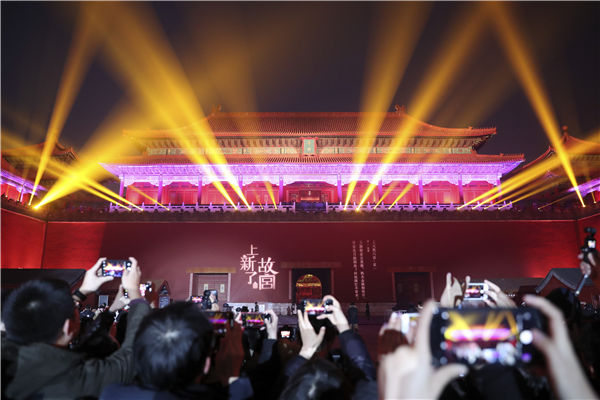
Palace Museum witnesses changing China.
When Reginald Johnston, a British scholar, first walked into the Forbidden City in the spring of 1919, the vast walled enclosure in the heart of Beijing was "in the strictest sense 'forbidden' to all the world except those who had the entree."
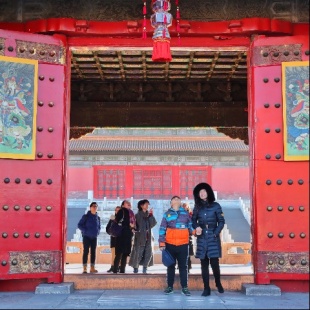
Now it holds the world's busiest museum, receiving more than 17 million visitors every year.
In his memoir Twilight in the Forbidden City, Johnston describes a world of turmoil, disruption, banditry, famine and civil war.
A century later when the People's Republic of China is to celebrate its 70th founding anniversary in October, the 599-year-old palace complex flourishes in the world's second-largest economy and one of the largest tourist markets.
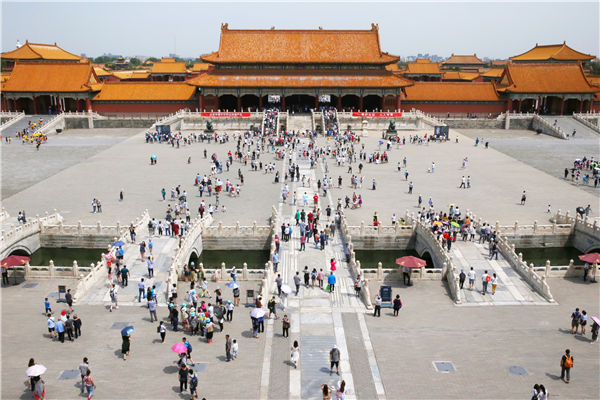
Open to the public
"All buildings in Beijing, official and private, were low, except for the Forbidden City guarded by high walls and a wide moat," said Li Wenru, former vice-curator of the Palace Museum, depicting the old imperial capital. "From outside the walls with a glimpse of the golden roof, ordinary people could only imagine what it looked like inside."
The public had their first view of the interior of the palaces in 1925 when the Palace Museum was established.
The following years saw the museum struggling through tight budgets, political controversy and war threats. During the war against Japanese invasion, it was forced to send away and hide a large number of collections.
In the spring of 1949, a critical moment made history at the Palace Museum. With the city of Beijing, then called Beiping, liberated peacefully, it was taken over by the People's Liberation Army without a scratch, a few months before Chairman Mao Zedong announced the founding of the People's Republic of China on the Tian'anmen Rostrum.
"In the past seven decades, China has developed into a modern nation with a strong sense of mission," said Wu Shizhou, a historian and professor with the graduate school of the Chinese Academy of Social Sciences. "It was in these years that the Palace Museum finally grew out of hardship and unrest and entered a new stage."
With continuous support from the government, the Palace Museum has upgraded storage, conducted thorough examinations of its collections and launched large-scale restorations of ancient buildings, with conservation institutions established and research advancing.