Multiple factors gave Modi a big win at polls









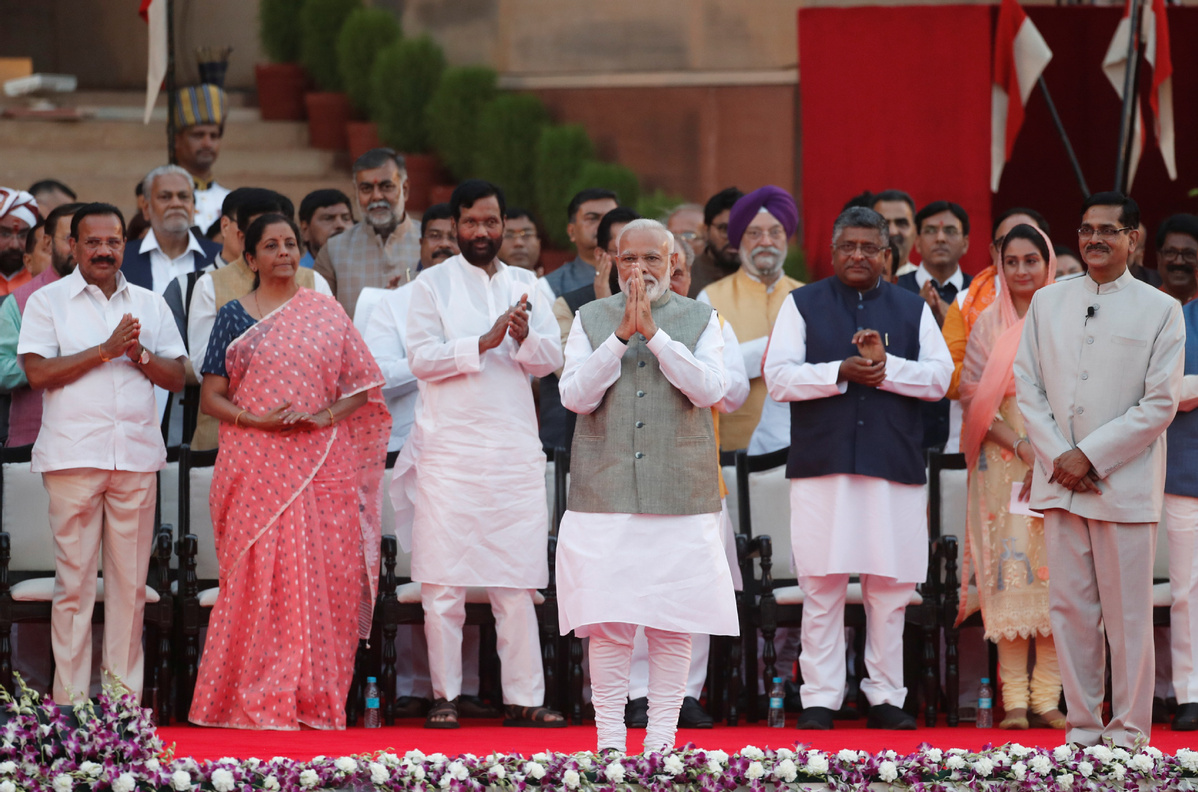
Beware the pundits who claim they foresaw Narendra Modi's crushing victory in India's just-concluded national elections.
His Hindu nationalist Bharatiya Janata Party won 303 of the 543 seats in India's Parliament. Nobody saw this coming.
As India looks for an answer, one hears two common theories in media commentaries. They are that it was a vote against dynasticism, and that it was a vote for a majoritarian Hindu polity. Neither sounds convincing.
Take dynasticism. The poor performance of the Congress party under Rahul Gandhi, scion of India's most famous political dynasty, has got the tongue of even the most ardent follower of the Congress party wagging. India's oldest party has for decades been in a state of decline. In 2004, it unexpectedly sprang back to life. But Modi's successful bid for power in 2014 sent it back to the wilderness.
This time, it had raised hopes again. Gandhi ran a smart campaign. With recent victories in key provincial elections, his party appeared energized. But at the end of the day, it only managed to raise its 2014 tally of a paltry 44 seats to 52. Gandhi himself lost from his old constituency.
Those upset with the Congress party's performance lay the blame at Gandhi's door, saying the party needs to find fresh political talent. Never mind that the same party, under the same dynast, seized three northern states from the BJP less than six months ago.
Many Indians find dynastic politics an abomination. But the fact remains that dynasticism is part and parcel of India's political life.
Indian parties mostly run top-down, are woven around a personality and generally don't bother with internal elections. Hence, mini-dynasties populate every level of hierarchy in most parties, except the leftist ones, from Parliament to village committees.
A fifth of the elected parliamentarians in 2014 were from political families. About 24 percent of Modi's own Cabinet were dynasts, compared with 36 percent in his predecessor Manmohan Singh's ministry.
In the southern state of Andhra Pradesh, the son of a late Congress strongman who branched out to form his own party has risen to power. Another dynast, by the name of Stalin, has steered his party back to the top in Tamil Nadu, also in the south. In the eastern state of Orissa, yet another local dynast has become the chief minister for the fifth time. Dynasticism itself is not losing; individual dynasts may be.
Now, as for religious polarization, the BJP has expanded in provinces where it had a negligible presence earlier. This is being cited as evidence of a deepening of Hindu nationalism across India. The most notable example is the eastern state of Bengal, where the right-wing BJP has had little influence.
This time the BJP's tally there shot up from two seats to 18. But this was really more an expression of anger at the provincial incumbent, a regional party headed by a firebrand leader, than a Hindufication of the politics there.
Rather than simple, knee-jerk explanations for Modi's sweep, one has to look at the combination of factors that propelled him back to power. His self-projection as a nationalist, backed by covert airstrikes on Pakistani soil just before the elections, boosted his popularity manifold.
He managed to easily convince voters he was their only bet. A mostly pliant mainstream media and the party's savvy social media cells helped in reinforcing the narrative.
Modi's many welfare programs, such as free homes, toilets, electricity, cooking gas connections and infrastructure development, also played a large role, amplified by the huge outreach budget to advertise them, and leveraged by Modi's well-funded and well-oiled party machinery.
India is facing acute joblessness and an agrarian crisis. But in my travels to the hinterlands, I have often found people still expressing support for Modi. That is because joblessness or agrarian crises may not be new to them, but a toilet or a gas connection is. And even if they themselves have not directly benefited from these programs, the hope of getting them one day kept them betting on Modi.
Modi conducted a terrific, multi-pronged, constant campaign for five years, compared with the opposition's two months. It is naive to count one or two factors.
The author is a senior research fellow of the Sydney Democracy Network at the University of Sydney. The views do not necessarily reflect those of China Daily.