Greater Bay Area set to boost HK development









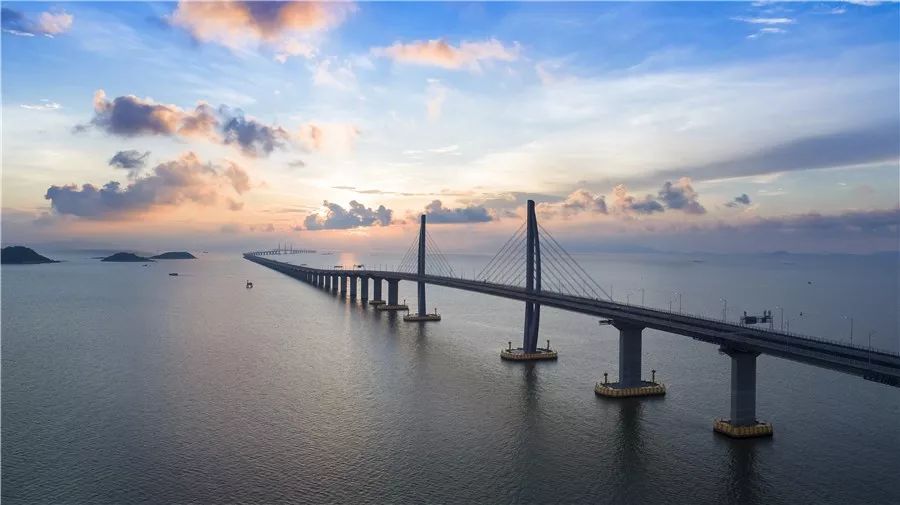
The outside world may not be optimistic about the economic prospects of the Hong Kong Special Administrative Region, but a closer look will show Hong Kong's economic and employment conditions remain sound. And by fully integrating into the under-construction of Guangdong-Hong Kong-Macao Greater Bay Area, Hong Kong can inject new vitality into its economy, especially its job market.
Hong Kong's GDP grew by 3 percent year-on-year in 2018, but slowed to only 0.6 percent in the first quarter of this year. The GDP growth for the whole of 2019 is still expected to be between 2 and 3 percent, though. Despite being low, Hong Kong's economic growth rate is healthy compared with the 0.5-1 percent growth of some European Union countries and a number of developed economies.
That the Hong Kong job market is vigorous is borne out by the SAR government data. Hong Kong's unemployment rate has been around 3 percent for a long time, slowing to 2.8 percent in April this year. This unemployment rate essentially means almost all Hong Kong residents are employed, because a jobless rate of about 2 percent suggests labor supply cannot meet the demand in the job market.
As for the consumer price index, it has been hovering around 2.5-3 percent, which means there is no risk of high inflation (when compared with the previous average of 5 percent inflation) or deflation. This has laid a relatively solid foundation for Hong Kong's economic development.
Hong Kong's development is likely to be bolstered by some other important factors, too. As a small city with a relatively small population but a solid economic foundation, Hong Kong can easily correct its development course any time, if necessary. Also, it is possible that as long as one industry in Hong Kong develops vigorously, it can drive the development of the other industries. In the past, manufacturing, imports and exports, high-end tourism, real estate, the stock market, and the finance and high-end service industry each has played the role of "head goose" in the region's economic cycle and led the development of the other industries.
As an international financial hub, Hong Kong's core competitive advantage lies in not only the central government's preferential policy, but also the formation of its "cluster effect" that comprises lawyers, accountants, bankers, consultants and many other professionals. Given such a strong transaction-oriented climate, Hong Kong can work out solutions to any problems and overcome the difficulties that may emerge in the future, and thus consolidate its position as an international financial center.
Since the construction of the Guangdong-Hong Kong-Macao Greater Bay Area started, the SAR and other jurisdictions have been studying its various details and looking forward to integrating Hong Kong in the Greater Bay Area. And as Hong Kong believes in "small government, big market", it can find ways to boost its economic development.
Moreover, the construction of the GBA is a major strategic plan of the central government and an important measure to enrich the principle of "one country, two systems" in the new era, which will open up new vistas for Hong Kong's development. With the introduction of various supporting policies, more and more young people in Hong Kong will find suitable career opportunities in the GBA and become an important force of its development.
Given the "business-first" atmosphere in Hong Kong, its residents are more pragmatic in and accustomed to "putting money first" and thus more willing to try their hand at business and high-end services.
With such unique advantages, coupled with the development of the GBA, and especially with the continued support of the central government, Hong Kong's economy and employment will remain stable, and its status as an international financial hub will be further consolidated.
The author is dean of Hainan University Belt and Road Research Institute, and chairman of the China Silk Road iValley Research Institute. The views don't necessarily represent those of China Daily.