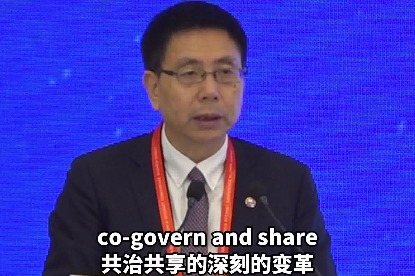
'Internet of credit' to boost economic development









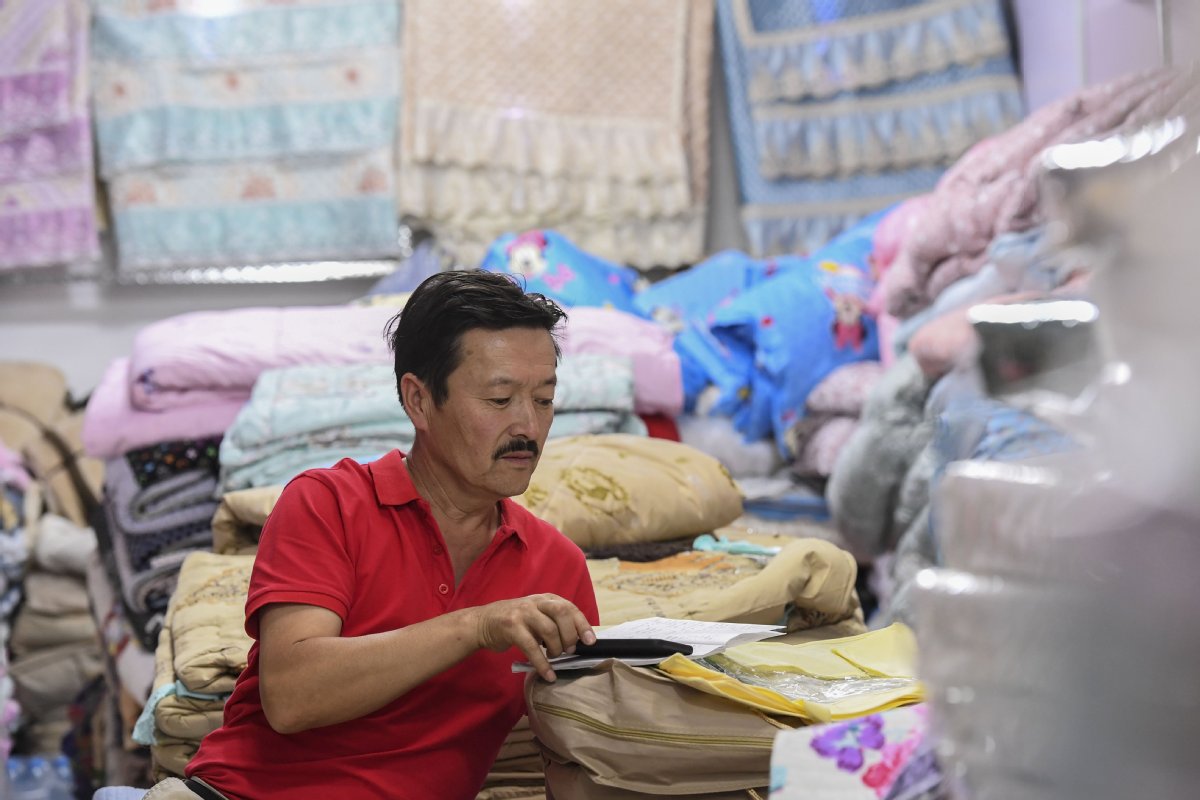
Establishing an "internet of credit" that supplements the Belt and Road Initiative will help spur regional cooperation, especially in the Central Asian region, experts said.
According to Zhang Yunqi, a professor at the Business School of the Central University of Finance and Economics, the BRI development, especially in the Central Asian region, hinges largely on the success of credit-based international trade.
"Without credit, business cannot be undertaken. It is the essence of policy communication, trade circulation and funding between the 11 countries in the Central Asian region. Hence it is necessary to build a business credit network within the region," he said in his address to the Belt and Road New Economy Forms Development Forum, jointly organized by the Circulation Expert Committee of China, and the Central Asia Regional Economic Cooperation Institute, in Beijing. It was aimed at boosting Belt and Road construction, as well as offering suggestions to China in the new era.
"The new economy serves as new momentum for economic growth, representing the latest trend of scientific development," said Liang Ziqian, deputy director of the Central Asia Regional Economic Cooperation Institute.
Ai Jiakai, director of the Circulation Expert Committee of China Marketing Association, said: "The new economy, with the form of the sharing economy, experience economy and new retail, is gradually replacing the old economy. Industrial chain reform and model innovation have become major issues at the national strategic level, and many problems should be addressed."
"The 'internet of credit' interconnects credibility within the Central Asian region, so that business communication and trade circulation become smoother," Zhang said.
Hu Biliang, director of the Belt and Road School at Beijing Normal University, said: "China, as other Central Asian countries, is a developing country. Developing economy is the priority. The economic cooperation between Central Asian countries within the BRI framework helps to solve bottleneck problems that restrict economic development."
He said that Central Asian countries should cooperate in fields including manufacturing, specialty trade and tourism, and accelerated regional economic development will unlock huge growth potential.
Akram Zeynolli, Azerbaijan's ambassador to China, said: "Azerbaijan is among the first batch of countries supporting the BRI. The initiative brought us economic benefits in many areas, such as infrastructure construction, tourism and cultural exchanges."
Archi Kalandia, Georgia's ambassador to China said: "We are fully supportive of the BRI implementation and will continue to reinforce the cooperation with other Central Asian countries. We are now constructing a railway that connects Central Asian countries. Once completed, the railway will greatly decrease transportation time and cost and bring economic benefits to the region."
As an intergovernmental organization contributing to regional economic cooperation in Central Asia, the Central Asia Regional Economic Cooperation Institute works on BRI-related programs to help foster cooperation between Central Asian countries.
Sanjaasuren Bayaraa, director of the institute, said that the interconnectivity of people, policy and projects within Central Asian countries is important.
"Through field research, capacity building service, knowledge dissemination, and cooperation with other organizations, the institute will continue to serve as a platform to boost shared regional prosperity and sustainable development," he said.
Experts also suggested enterprises' and consumers' information rights should be protected during digital transactions.
Li Xiaoyong, deputy secretary-general of the block chain branch under the Circulation Expert Committee of China Marketing Association, said: "As China is taking a leading role in the digital economy, massive data are exposed through the internet every day. Protecting the data assets of both consumers and e-commerce enterprises is in urgent need."
According to Li, the fact that institutions within a certain industry exchange user data to make money has become a common phenomenon. For example, some medical institutions sell patients' information to insurance companies for them to develop long-term life insurance; while e-commerce platforms sell users' bank account information to banks to explore clients.
Wu Miao, deputy director of the China Blockchain Economic Research Institute, said: "Our research showed that granting consumers and e-commerce enterprises the rights to collect and use data, creates greater room for sales growth of e-commerce platforms, while restructuring the current e-commerce system."