Chinese automakers evolve, innovate, to keep pace with times









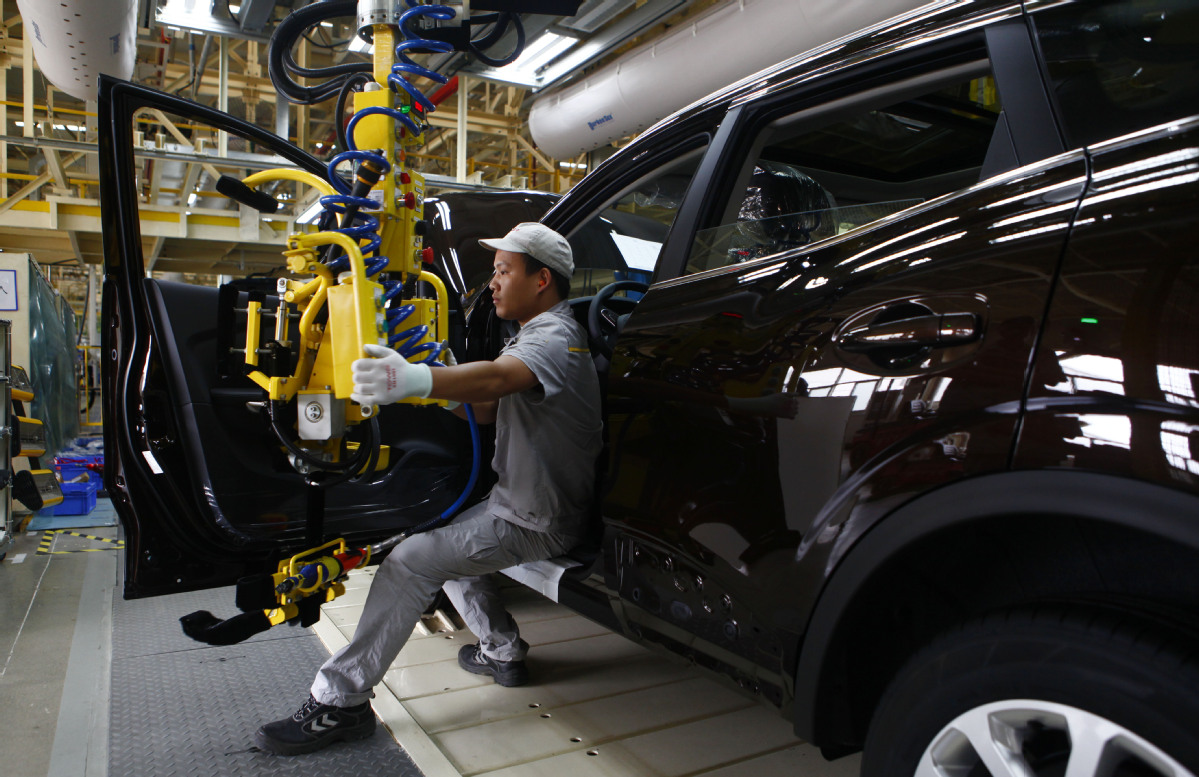
CHANGCHUN - Over six decades ago, China set up its first automobile manufacturer in the northeastern industrial city of Changchun as the country began to beef up its economy, and unveiled the nation's first domestically produced passenger car in 1958.
Today, the country is the world's largest automobile manufacturer and seller. It has been so in the past decade. It sold 28.08 million vehicles last year, accounting for 30.6 percent of the global market.
Despite getting a late start, China's automobile manufacturers have been narrowing down the gap with global competitive players and embarked on a journey of becoming a globally popular auto retailer.
China ended its history of no domestically-made vehicles when the first Jiefang truck rolled off the line in 1956. So far, the brand has sold more than 7 million vehicles and has expanded its presence to 80 countries and regions.
In 1957, however, China's automobile engineers were faced with a bigger challenge of producing the country's first sedan car, said Liu Jingchuan, chief designer of the former China FAW Group Corporation, the cradle of the country's automobile industry.
"Back then, we were in desperate need of expertise and experience in manufacturing automobiles and faced shortages in equipment," Liu, who is in his 90s, said.
Despite the great difficulties, engineers worked day and night before the first domestically produced sedan car, the Dongfeng, rolled off the line on May 12, 1958.
Liu became the first passenger of the first Dongfeng sedan car. "My test ride attracted a mass of employees gathering along the sides of the road as I drove around the factory," Liu said.
The Dongfeng sedan unveiled the first chapter of China's domestic car brands. On August 1, 1958, the country's first high-end passenger car, the Hongqi, was manufactured and became the exclusive vehicle brand for State leaders during national events.
Since China's reform and opening-up in late 1970s, a nationwide reform has enabled the auto industry to go full steam ahead with various products and stronger production capacity.
"The early generation of automobile manufacturers survived the hardship of growing out of nothing, and we should act as curators of innovation based on their achievements," said Cui Xiaojuan, chief engineer of FAW Jiefang Powertrain Development& Application.
At the end of the 1990s when expressways increased rapidly and demand for long-distance transport was on the rise, FAW's CA6110 diesel engine, a previously popular product with nearly two decades of history, failed to meet the market demand and gradually lost its edge.
"To break the plight, the Jiefang, China's first truck brand, had to develop a quality high-horsepower diesel engine with independent intellectual property rights," said Cui in charge of the daunting task.
She added that the engine is the heart of a vehicle, and independent research and development capabilities are vital to the industry.
Partnering with Austria's AVL List GmbH, a world-leading producer of power-train systems, China FAW Group Corporation developed the country's first self-manufactured CA6DL diesel engine on December 20, 2013, a more competitive kind with cutting-edge technology in the global market.
"The new engine filled in the gap that there were no self-manufactured heavy vehicles in China," Cui said.
In 2001, China's automobile industry ushered in a wave of globalization after entry into the World Trade Organization.
Auto companies in China began to acquire their foreign counterparts and learned from world experience. Since 2009, China has become the world's largest producer and seller of automobiles.
The ongoing technological revolutions of informatization, automation and artificial intelligence have also propelled the industry into vigorous and prompt actions after over 60 years of catching up, said Han Linghai, director of Engine Product Development at the FAW Research and Development Institute.