Opera form banks on innovation










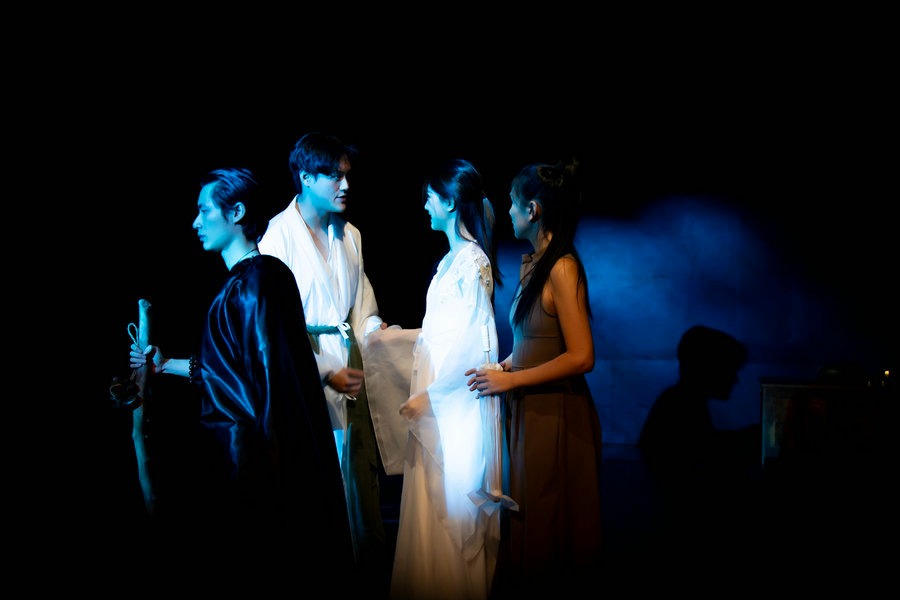
Huaiju, one of several hundred regional folk operas in China, originated in the mid-Qing Dynasty (1644-1911), from the folk ballads of the region known as "Jiangbei" (a widely-used term referring to the northern bank of the Yangtze River, covering part of Jiangsu and Anhui provinces). It was later combined with other folk ballads and especially those from Anhui, which brought great artistic improvements in its performances and artistic expressions.
Then, at the turn of the 1900s, a large number of people from the Jiangbei region migrated to Shanghai because of famine and poverty caused by floods or drought. They joined the urban work force in Shanghai, doing hard labor in the harbor and factories and in service industries. The ballads and melodies of Huaiju Opera found a home in Shanghai.
After the founding of the People's Republic of China in 1949, workers gained social recognition and respect. People from Jiangbei took up a large number of the jobs in Shanghai's leading industries: textile mills, iron and steel plants and shipyards. So, Huaiju rose to prominence in the Chinese folk opera scene as well.
Liang started his career in the golden age of Huaiju Opera, witnessing the great popularity of master artists such as Xiao Wenyan. He himself was "pushed forward" by senior artists, rising gradually to center stage.
Since the 1990s, however, things have changed drastically. And Shanghai has gradually changed from a manufacturing center to an international metropolis.
So, as factories were closed or relocated out of the city, workers were laid off and scattered to suburban residential communities.
During this period, not only Huaiju, but many other traditional Chinese opera forms, went through a slump.
Speaking about the changes, Liang says: "There are now too many new forms of entertainment, especially with the rise of the internet, and people became easily distracted."
But determined to keep the art form alive, Liang and colleagues went the extra mile to perform in suburban communities. "Jinshan, Chongming and Waigaoqiao, you name it, we have performed there," says Liang.
"To showcase the value of Huaiju as a unique opera form, we had to create fine productions.
"This is because only if we succeed in that, can we attract new audiences. And I believe that one day the young and well-educated people in urban China will recognize the charm of Huaiju."