China regrets US decision to label China currency manipulator









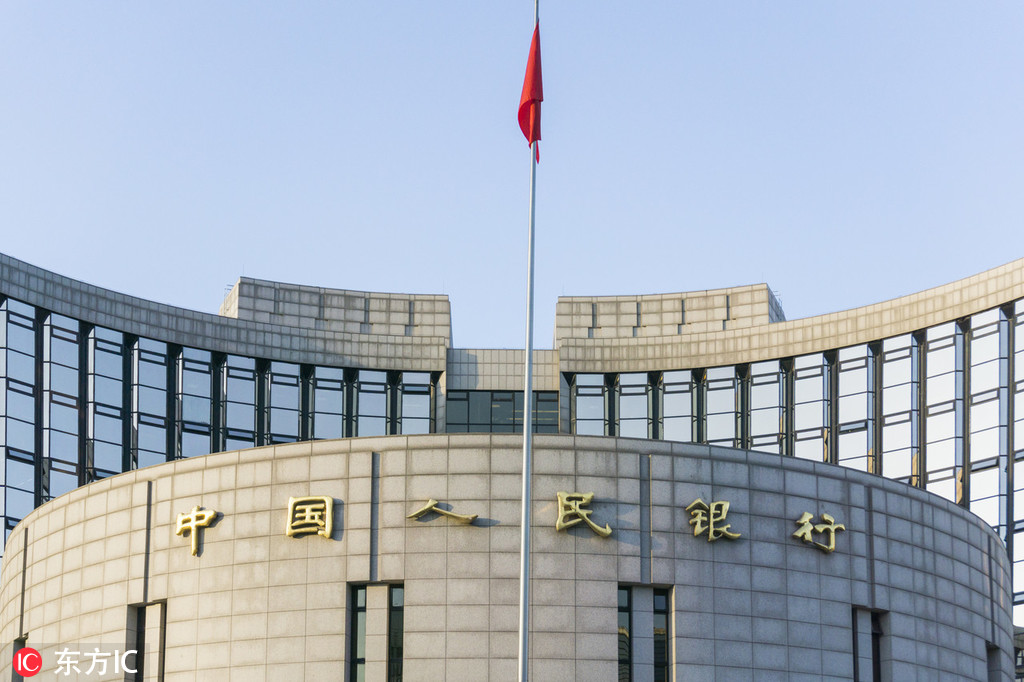
BEIJING - China on Tuesday voiced strong opposition to the US decision to label it "a currency manipulator," stressing that China has never resorted to competitive devaluation and will not use the currency as a tool to deal with trade disputes.
In a response to the designation, China's central bank refuted the unilateral move, saying the label does not meet the quantitative criteria for the so-called "currency manipulator" set by the US Treasury.
"The US labeling is an arbitrary unilateral and protectionist practice, which seriously undermines international rules and will significantly impact the global economy and financial markets," the People's Bank of China (PBOC) said in an online statement.
US TYPICAL MAXIMUM-PRESSURE TRICK
Ronald Wen, a Hong Kong-based senior banker, said the alleged currency manipulation is a new weapon used by the US in the trade friction with China, sending a signal that the US-waged trade war is being expanded to more fields, including forex and financial markets.
The US Treasury designation was seen by analysts as a new excuse for more protectionist measures.
The Treasury move reeks of arbitrariness and unilateralism, and will disrupt international trade rules and order as well as dampened investors' confidence, experts said.
"By labeling China a currency manipulator, the US is in fact continuing its maximum-pressure approach in trade talks," said Liao Qun, chief economist of the China CITIC Bank International.
China and the US have been locked up in drawn-out trade disputes since last year.
On Monday, Chinese companies have halted purchases of US farm produce after the US decided to impose additional 10-percent tariffs on $300 billion worth of Chinese imports, as the US move seriously violated the consensus reached by the two heads of state in Osaka.
NO INTENTION TO DEVALUATE CURRENCY
China has long been committed to keeping the yuan's exchange rate basically stable at a reasonable and balanced level, the central bank said.
The Chinese currency is the strongest among the G20 and is one of the currencies that has seen substantial appreciation.
From the beginning of 2005 to June this year, the currency's nominal exchange rate appreciated 38 percent and real exchange rate strengthened 47 percent.
Last month, the IMF found in its latest annual assessment that the renminbi exchange rate was broadly in line with fundamentals.
From the macro perspective, the yuan's exchange rate is buoyed by the country's sound fundamentals, strong economic resilience, stable fiscal position, controllable financial risks, balanced cross-border capital movement and sufficient foreign exchange reserves.
China has no intention to gain trade advantages by devaluing its currency, as the yuan's depreciation cannot necessarily lift exports, said Song Xiangyan, an analyst with the PBOC.
A large devaluation probably leads to panic capital outflows and competitive currency devaluation of China's trading partners, which will undermine the country's financial stability and hurt imports, Song added.
MARKET-DETERMINED EXCHANGE RATE SYSTEM
China will be committed to the promises on exchange rates made at all G20 summits and abide by a market-determined exchange rate system, the PBOC governor Yi Gang said Monday.
Refusing competitive devaluation, the country will not resort to exchange rates in handling external uncertainties such as trade disputes, Yi said.
Looking ahead, Yi stressed the central bank, together with the State Administration of Foreign Exchange, would maintain stability and continuity of the country's foreign exchange management policy and safeguard market entities' legitimate and reasonable demands for using foreign currencies.
More efforts will be made to deepen the reform and opening up in the field of foreign exchange, promote the liberalization and facilitation of cross-border trade and investment and better serve the real economy and the country's comprehensive opening up, Yi pledged.