Rare earth, nation's edge









Country looks inward for high-tech materials
China is sitting atop the biggest trove of strategic rare earth elements on the planet - 40 million metric tons, more than a third of the estimated global total.
Remember that periodic table from chemistry class? It's the tabular grid showing the 118 known elements, the building blocks of all matter. The cryptic one-and two-character codes stand for things that touch people's lives every day. Who can forget the combination of hydrogen and oxygen for water, or H2O?
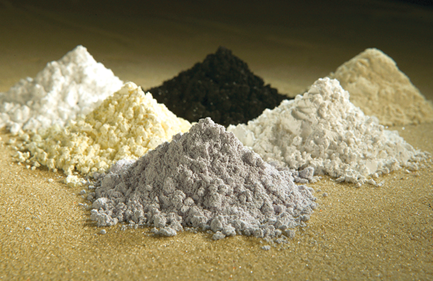
Rare earths are a category of 17 metallic elements in the periodic table that have desirable properties, such as electrical conductivity and magnetism. The metals are used in a wide variety of applications, including cellphone batteries, computers, wind turbines, televisions, fiber optics and missiles. One of the 17 is even used as an expensive bright blue oil paint pigment.
China aims to upgrade its industries to get a piece of the commercial action in such finished products. Whereas the country has been mainly a miner and shipper of rare earths in the past, it now seeks to become a top refiner and manufacturer.
"Rare earths are a key strategic nonrenewable resource," said Pang Zaisheng, vice-general manager of Ganzhou Fortune Electronic Co, which is focusing on high-end magnetic materials and applications in Ganzhou, Jiangxi province.
"With its abundant rare earth resources, China has advantages for separation and purification. But compared with countries like Japan, there's still a gap in terms of high-quality applications."
Jiangxi possesses vast rare earth resources, with its heavy rare earth elements, the most valuable kind, accounting for 80 percent of the nation's total stock.
Recent moves by the government in the sector followed in the wake of President Xi Jinping's visit to JL MAG Rare-Earth Co in Ganzhou in late May, during which he pulled rare earths into the spotlight. The science and technology for exploiting them needed to reach a higher level, he said.
The vision is for China to be more self-reliant in the manufacture of high-end products.
Rare earth metals are distributed throughout the planet's crust, so they are technically not so much rare as they are difficult to find in concentrated amounts. The process of extracting and refining them is labor-and resource-intensive - and costly - so little is produced. Few high-end processors exist globally.
"To better utilize this strategic resource, we need to continually keep on top of rare earth separation and purification," said Mei Xinyu, a researcher at the Chinese Academy of International Trade and Economic Cooperation. "As a modern industrial country, China needs to maintain a competitive edge in manufacturing, not just natural resources. It needs to gear up in the intensive field of rare earth processing and offer more finished products."
Seeing huge potential in the field, the central government is pushing to take better advantage of the country's rare earth resources by streamlining markets and improving the management of materials from extraction to high-quality finished commodities, industry experts and company executives said.
"With a unique set of properties that can make products more durable and efficient, rare earth materials are critical ingredients in a wide range of modern technologies - new sensors, pollutant treatment catalysts and much more - providing basic support for people's future needs," said Xu Shuo, a researcher at the Qianzhan Industry Research Institute, who pointed to smart homes, smart cars and magnetic levitation as examples.
The government is plowing ahead. In June, the country's top economic planner, the National Development and Reform Commission, together with the Ministry of Industry and Information Technology and the Ministry of Natural Resources, began detailed surveys in seven areas rich in rare earth deposits - the Inner Mongolia and Guangxi Zhuang autonomous regions and the provinces of Jiangxi, Fujian, Hunan, Guangdong and Sichuan.
Local authorities have been asked to provide information on issues related to the protection and application of the resources, according to a report citing an NDRC circular.
The surveys will focus on industrial chains, experience in resource management, major problems and plans for future development.