Technology harnessed in learning Chinese










To meet the rising demand and also to differentiate itself, Chinada uses a "situational teaching method" and recruits more than 1,800 local residents in 16 Chinese cities as teachers to act out different scenarios. This approach has attracted widespread attention from people interested in China or its language, with more than 70 percent of the users being office workers. In January, Chinada announced a record daily revenue of 50 million won ($43,230).
In 2017, Chinada launched the first Chinatan Camp in the upscale Seoul district of Gangnam, not only for face-to-face Chinese-language teaching, but to create a space for students to experience Chinese culture. Seven such camps opened within two years.
Courses focus on areas such as speeches by Chinese internet industry leaders-including Alibaba's Jack Ma and Tencent's Ma Huateng-how to use WeChat, and even activities such as tasting food in local Chinese restaurants.
"Instead of speaking Chinese by sticking rigidly to grammar, we want to allow our students to speak the language naturally and make them feel as if they are in China," Chinada's Jee said in fluent Chinese.
Jee, who lived in China for more than 30 years and worked for LG Group, South Korea's fourth-largest conglomerate, said learning Chinese is more about knowing the country, rather than just the language.
Maeng, from KACLE, said, "Language is the carrier of culture and the process of learning can promote cultural exchanges."
Noting that China promotes its language and culture worldwide through the Confucius Institute, a public organization affiliated with the Ministry of Education, Maeng said the institutes play important roles in cross-cultural communications, as they provide students with opportunities to learn about Chinese people and the country. South Korea is home to the world's first Confucius Institute.
"Communication between South Korea and China will continue to develop in a more comprehensive and detailed way… and the trend of learning Chinese in South Korea will be maintained steadily," Maeng said. He added that South Koreans no longer learn the language for basic daily communication, but for more advanced and professional reasons.
Maeng said South Korea and China can further cooperate on cultural exchanges through academic research, film and television productions, as well as people-to-people exchanges such as organizing international meetings and talent training.
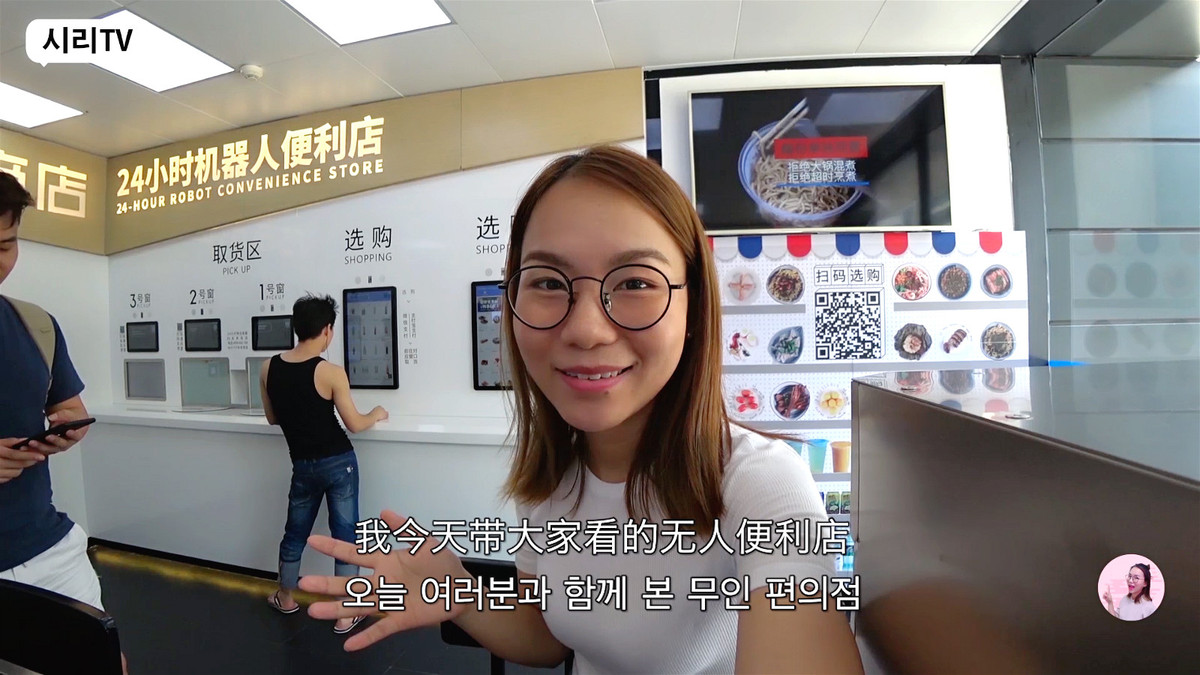
Liu, from Shenzhen, hopes that with support from South Korean netizens, she can make her YouTube channel more diverse by reaching audiences worldwide. Last month, she also launched an eponymous mobile app for learning Chinese.
Liu's videos are usually about 10 minutes long. After uploading them, she submits the dialogue in Chinese, Korean and also in pinyin. "Reading netizens' comments is the happiest time for me, especially when I see people saying every day that they have completed the homework I gave them in the videos," she said.
After the number of her subscribers reached 20,000, Liu began to receive invitations to cooperate with Chinese-language education institutions and companies interested in China. But she still feels it is important to focus solely on the channel.
"I make about 20,000 to 30,000 yuan ($2,900 to $4,360) a month from my channel, but this does not even cover my production costs," said Liu, who visits one Chinese city every month. "I just want to help people who want to learn Chinese and know about China."
Jee said that with the aim of making Chinada a leading global Chinese-language education institution, the company is in talks with partners in Vietnam and Indonesia to introduce its teaching methods.
Acknowledging that the online education market in China is booming with startups such as VIPKid, Jee is open to cooperating with Chinese companies to encourage new ideas and jointly build an internationalized business model.
VIPKid, which operates from Beijing and is one of the world's most valuable online education companies, connects more than 70,000 English-language teachers in North America to give one-on-one lessons to hundreds of thousands of children, mostly in China.
"It doesn't necessarily need to be just about learning Chinese," said Jee, who hopes to launch offline "lounges" in China as language exchange spaces for people learning Chinese, English and Korean.