Activists' testimony to US Congress baseless









During the negotiations on Hong Kong's future in the early 1990s, the international media forecast the death knell for the then-British colony. There were pleas to the international community to save Hong Kong from being handed over to a communist state, but no one interfered with the negotiations.
Both China as a whole and the Hong Kong Special Administrative Region have fared well during the 22 years since the handover in 1997. The "one country, two systems" policy has been an overwhelming success, in which a capitalist entity has lived in harmony within a communist state. It is therefore questionable why anyone should be rocking the boat unless there is an ulterior motive.
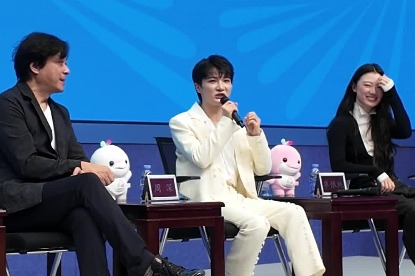
The testimony of activists Joshua Wong Chi-fung and Denise Ho Wan-see in the United States Congress this week demonstrates the absurd lengths to which they will go to achieve their goal: separatism. They claim Hong Kong is losing its freedoms, yet not one freedom enshrined in Hong Kong's Basic Law has been lost.
The demonstrations that have plagued Hong Kong, and the criticism the government receives daily from the media, the public and political opposition, speak volumes about Hong Kong people's freedom of speech and freedom of the press. The unrestrained exercise of their freedoms is such that if the testimony of Wong and Ho were in a court of law, they would be prosecuted for perjury. What people believe in and what is truth are two different things. Belief is a dream; truth is a fact.
The US Congress is about to debate an important bill that has the potential to make or break Hong Kong. If it were to become law, the long-standing trust that Hong Kong has had with its US partner would be broken. The 1,400 US companies operating in Hong Kong would face uncertainty with the threat of reprisal from their home country. But Hong Kong is not afraid, for it upholds all human rights. It is the matter of trust that is unsettling.
Ho cries out for democracy and the freedom to choose. She fails to acknowledge that the chief executive is appointed the same way as the president of the US - by an electoral college. President Donald Trump lost the country's popular vote to Hillary Clinton in 2016, yet the 538-strong electoral college voted him in. In Hong Kong, the chief executive was voted in by a 1,200-strong electoral college made up of a very broad cross-section of the community. It included all members of the Legislative Council.
Hong Kong's plans for democracy are clear: universal suffrage for both the chief executive and the entire legislature. It is enshrined in the Basic Law, and both Ho and Wong are fully aware of it. They pretend it doesn't exist. Democracy exists in Hong Kong with a fully elected legislature (50 percent by universal suffrage and 50 percent by their peers - medical practitioners, the legal profession, trade unions, industries and businesses). Its 18 district councils are also fully elected and represented in the Legislative Council.
The SAR government put forward universal suffrage proposals as stated in the Basic Law in 2014, but it was vetoed by the "pan-democrats" and their supporters in 2015. It is still on the table and will be reintroduced when political tempers have subsided enough to facilitate rational discussion and when further consultation is completed.
Wong went on with his diatribe against China, accusing it of "eradicating our sociopolitical identity" and claiming "Hong Kong is standing at a critical juncture".
Throughout their testimony in Congress, neither Wong nor Ho produced any evidence to back up their claims. They even hypothesized worst-case scenarios of "harsher actions" and "sending the tanks in". And they claimed the chief executive could shut down the internet and close public transportation, of which there was not the slightest hint from any source. Neither has there been any directive from Beijing to employ "harsher" control measures, much less any intention to send the People's Liberation Army into Hong Kong to quell the riots.
Yes, there was some saber-rattling at the Shenzhen border when PLA troops were rehearsing for the 70th anniversary of the founding of the People's Republic of China. But in Hong Kong itself, there are 5,000 PLA troops who did not leave their barracks once during the riots. And why would the chief executive close down the internet and public transportation to the detriment of the whole population?
The entire testimony of Wong and Ho was badly scripted, with an abundance of cliches and a smoke screen to divert attention away from their sole mission: independence.
The author is a former chief information officer of the Hong Kong Special Administrative Region government. The views do not necessarily reflect those of China Daily.