Plant-based meat firms make hay as demand surges









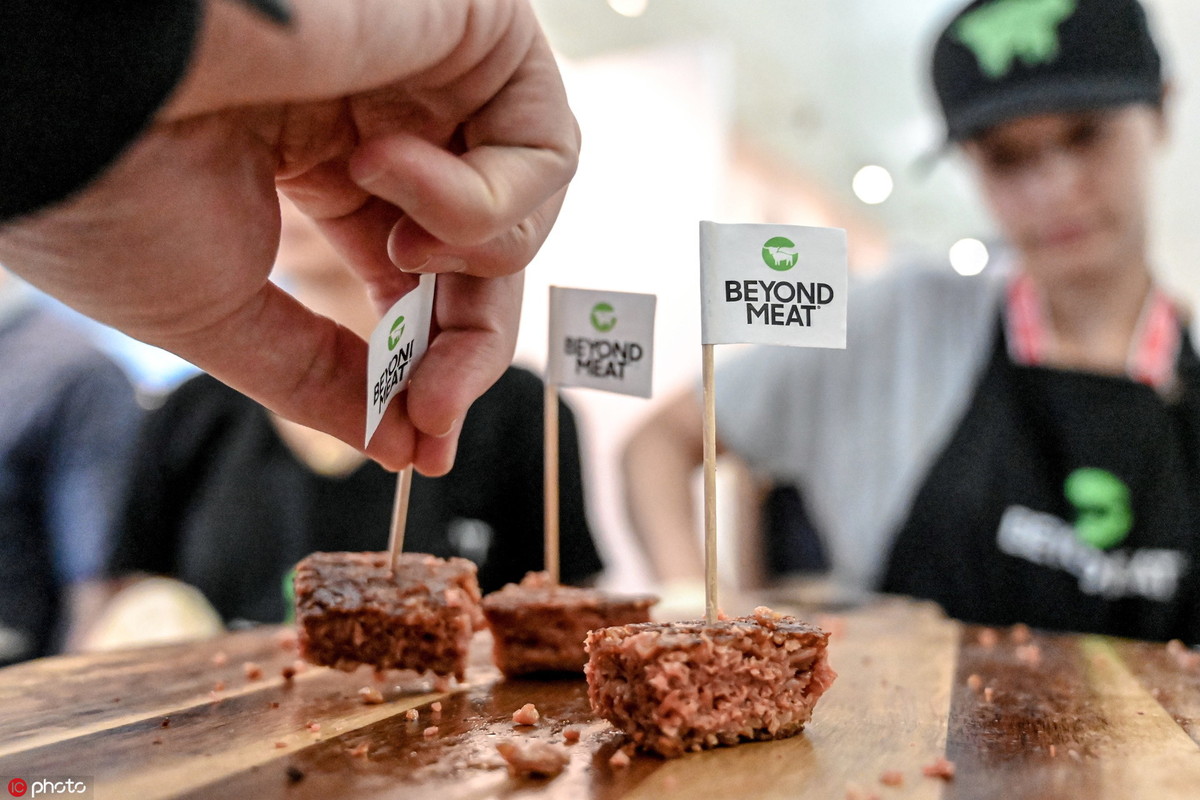
Plant-based meat manufacturers from China are looking to tap more mass market consumers as demand for such products continues to surge across the world.
Companies are not only developing novel products, such as popular Chinese snacks and traditional food for holidays, but are also teaming up with large scale chain supermarkets to promote the food products.
"In the next five years, our factory's output value of plant-based meat products will reach 500 million yuan ($70 million)," said Zhou Qiyu, director of the product and branding department at Shenzhen-based Whole Perfect Food, one of the largest plant-based meat manufacturers in China.
The company, which has about 300 employees, can produce six metric tons of plant-based meat products daily and gained an output value of 40 million yuan so far this year.
Its research and development team has developed more than 500 product categories in its 26 years of history, from popular vegetable sausages and meatballs, to some exotic Chinese products like plant-based crawfish and mooncakes.
Traditionally, the demand for plant-based meat products was limited to vegetarians. But more people across the world have now started taking a fancy to such products, giving the industry the much-needed growth impetus, he said.
Impossible Foods secured an investment of $300 million in its latest round of funding, taking its total funding to more than $750 million. Meanwhile, another US-based firm Beyond Meat saw its share price jump by 163 percent on its listing debut in May this year.
All of these show a glimpse of how the artificial meat industry has been gaining traction with international investors. In China, the country with the largest hog consumption and growing health awareness, local retailers also are eyeing the emerging artificial meat products market.
Walmart stores, Alibaba's Hema Fresh supermarkets and Yonghui Superstores in Shenzhen have all started to offer Whole Perfect Food products from this year.
Zhou said they are trying to explore new consumer needs in order to create unique products.
"Mass consumers are mostly not familiar with plant-based meat as a food ingredient. Ready-to-eat snacks are much easier for them to try out," he said.
According to a survey conducted by iiMedia Research, nearly one third of Chinese customers are not aware of artificial meat products.
Aiming to get closer to tech-savvy customers, the firm has also set up online stores, sales of which have doubled every year, according to Zhou. A flagship store of about 100 square meters in Shanghai is also in the pipeline to showcase the factory's creative and modern products.
Startups from abroad are also planning to take a bite of the Chinese market. For instance, Impossible Foods has been selling products in more than 150 restaurants in Hong Kong and plans to tap the mainland market in two years.
Zhou believes more players in the fray can help propel the market's rapid expansion and also is confident that local factories have gained an upper hand in the competition.
He said they have the experience and knowledge of Chinese eating habits and cooking styles, while paying attention to technology advances to create novel products as well.
China's history of "vegetarian meat" can be traced back to the Tang Dynasty (618-907) when monks started eating tofu made from soybeans.
"But our food is totally different from bean products," he said, adding that they focus on restructuring globular protein of beans to strip animal fibers.
New types of vegetarian restaurants are also on the rise in China. Planet Green, one of the most famous vegan restaurants in Shenzhen, targets flexitarians, or persons who are primarily vegetarian but occasionally eat meat or fish, instead of traditional vegetarians who account for only 30 percent of the total customers.
Xue Yan, secretary-general of China Plant Based Foods Alliance, noted the rise of "artificial meat" is in line with the development trend of China's consumption upgrade and growing health awareness.