HK mask ban proves necessary amid new unrest









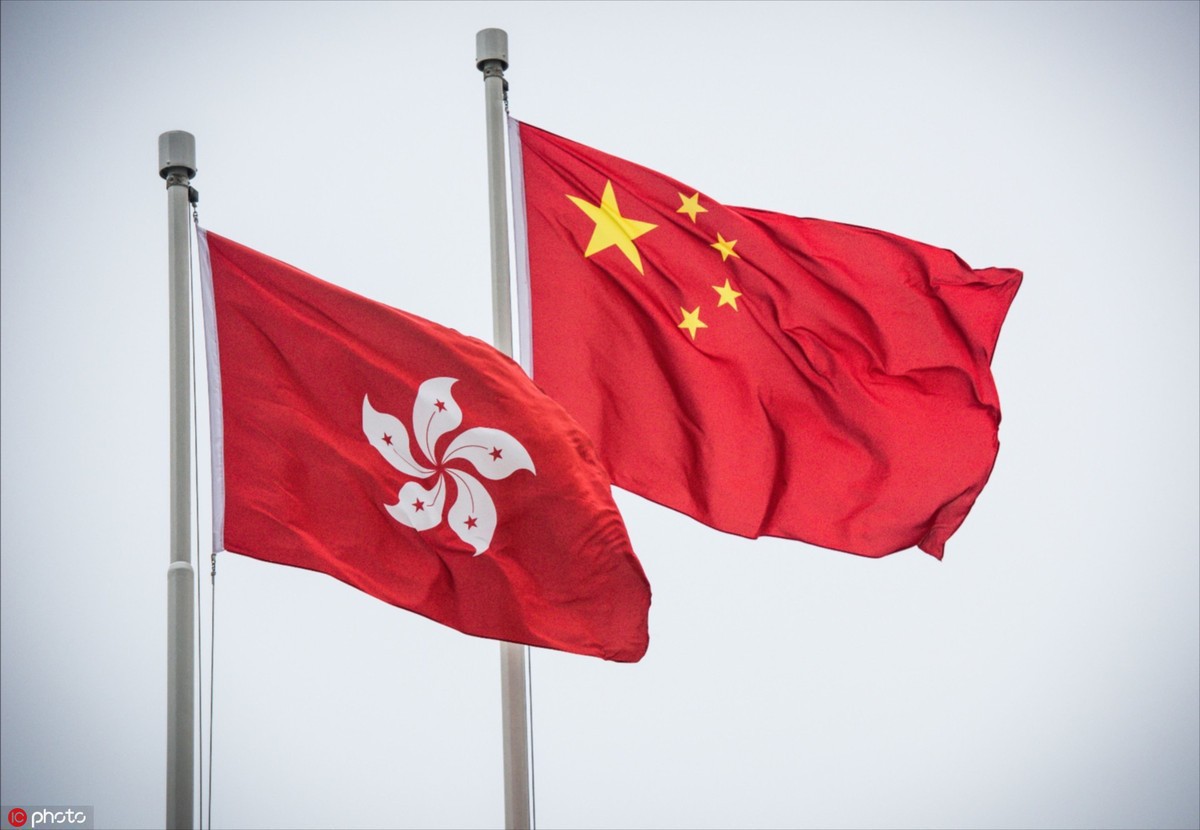
It has been more than 10 days since Hong Kong's Chief Executive Carrie Lam Cheng Yuet-ngor announced an anti-mask law intended to ease escalating unrest in the city.
In a new wave of social turmoil, the prohibition on face masks will deter violence and help police enforce the law banning protesters from covering their faces during protests. Anyone who wears a mask at lawful rallies and marches, unlawful or unauthorized assemblies or riots could be sentenced to a year in jail and a fine of HK$25,000 ($3,187 dollars). Exemptions include those wearing masks at protests for professional or paid work, or for religious or medical reasons.
Hong Kong has seen over four months of protests sparked by the government's soon-to-be-withdrawn extradition law.
The situation is increasingly chaotic and appears to be spiraling out of control.
In a city long known for its rule of law, a world-class transport system and a low crime rate, the ongoing protests have unleashed a side of Hong Kong no one ever thought possible.
On Oct 4, a JPMorgan Chase employee was punched outside the company's main Hong Kong offices amid increasingly violent political protests in the city, leading the firm to tell workers it was increasing security and they should avoid the building over the weekend. According to a video circulated on social media, as he made his way into the lobby, one protester hit him in the face, knocking his eyeglasses off.
On Oct 6, a Xiaomi smartphone shop in Mong Kok was set on fire; a Fulum restaurant in Cheung Sha Wan linked to a Fujian clan was wrecked, and a branch of China's state-owned Bank of China in Wan Chai was heavily damaged; a branch of China Construction Bank (Asia) near Prince Edward MTR station was also hit by vandals.
After rioting mobs trashed MTR stations, set a train on fire and assaulted railway staff on the night of Oct 4, the entire network remained closed the enxt day, depriving many citizens of their primary mode of transport.
Dozens of shopping centers, retail outlets, grocery stores and banks closed for business for fear of more protest violence and vandalism.
The acts of the masked rioters cast clouds of worry and anxiety over the city.
This is not the Hong Kong we were, nor the Hong Kong we like. Certainly, it is not in the best interests of anyone except the few looking to take advantage of the chaos.
This violence, instead, provided solid grounds for imposing the anti-mask law. It would be beneficial for all parties if dialogue replaced confrontation.
By helping to bring order back to the city, the mask ban would pave the way for rational dialogue between the Hong Kong government and the protesters.
Also, the restriction would let protestors know they cannot recklessly break the law just because they wear a mask to hide their identity.
This is especially the case for young people.
According to figures released by the Hong Kong government on Thursday, students now accounted for 40 percent of all those arrested for crimes relating to the protest, up from just 25 percent in June.
Anonymity provided to protesters has led to some of them believing they were engaging in some kind of game rather than violent acts.
Contrary to popular belief, banning face coverings in public is not new. Governments of many countries, including the United States, Canada, Austria, Denmark, France, Germany and Switzerland, have at one time or another banned the wearing of masks in public.
After several high-profile protests, Canada enacted a law in 2013 banning masks during a riot or unlawful assembly. The law also covers those who commit offenses while wearing any disguise and is punishable by up to 10 years in prison.
Following months of "yellow vest" protests this year, the French government implemented an "anti-troublemakers" law which made it a crime for protesters to conceal their faces. Violators face up to a year in prison.
Masks are legal in Australia, but in Melbourne, police can direct a demonstrator wearing a mask to leave a protest area if it is clear the demonstrator is wearing the mask primarily to conceal his or her identity or as protection against crowd-controlling substances like tear gas. Those wearing masks who refuse to leave can be charged.
In Germany it is illegal to disguise one's identity in public meetings and demonstrations. The 1985 law is to ensure police are able to identify those who wear masks. Violators can be fined or imprisoned for up to one year.
Since 1845, more than a dozen states in the US have used mask ban laws to prosecute political protesters. In the 20th century, the law was used to stop the racist actions of the hooded Ku Klux Klan. More recently, the law was used against people taking part in Occupy protests.
Italy banned any attire that could hide a person's face in public in 1975. The initial purpose of the law was to prevent terrorism and crime.
The chaos in Hong Kong cannot go on indefinitely. It is high time for all to take a more clear-cut attitude and effective measures to immediately stop the violence and unrest.
The mask ban is not the only remedy. The HKSAR government has carried out an array of pro-growth policies since mid-August, including a scheme worth HK$19.1 billion ($2.44 billion dollars) to relieve the burden on businesses and individuals amid economic hardship.
The HKSAR government has promised continued effort to bring back a peaceful yet prosperous Hong Kong, but to heal the split society the baseline expectation is the same — the violence must stop, so Hong Kong shall no longer be harmed.
Alice Zhao is a consultant with six years working experience in Hong Kong in the public relations and communications industry.
The opinions expressed here are those of the writer and do not represent the views of China Daily and China Daily website.