US bill on HK infringes on China's sovereignty









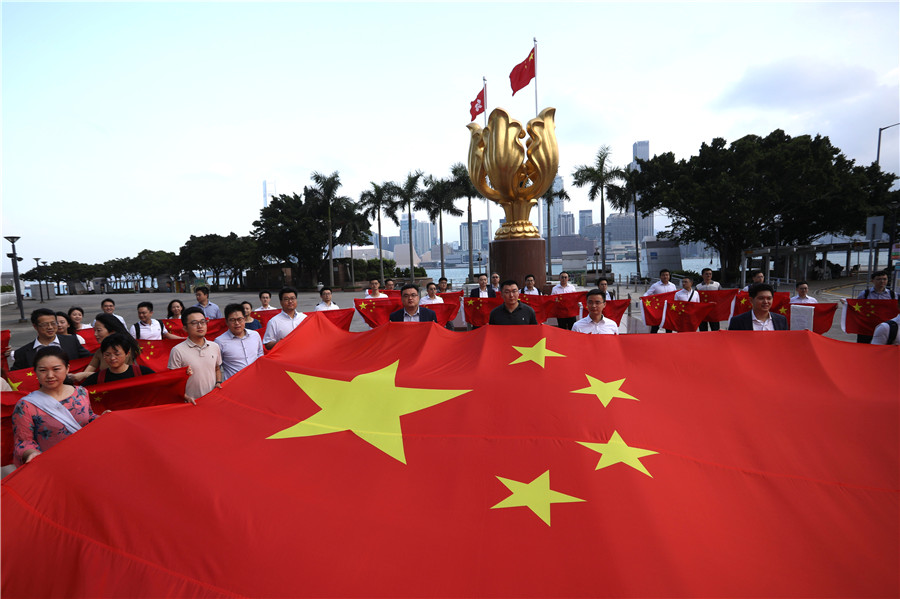
The passage by the US House of Representatives of the Hong Kong Human Rights and Democracy Act, which confirms the United States' support for protests in China's special administrative region, comes as no surprise, given the high-profile support in the House and the visit of Hong Kong activists Joshua Wong and Denise Ho to the US last month.
It is also likely to be passed by the US Senate soon.
In supporting the legislation, which threatens Hong Kong's "special status" if certain provisions are not made to protect its autonomy, US politicians claim they are supporting the "rights" and "liberties" of Hong Kong people.
China calls the legislation a mechanism that supports separatism. Although the Western media are quick to dismiss such a claim, details of the act reveal Washington's real agenda goes far beyond a simple push for popular rule.
The act is about reaffirming Hong Kong's permanent differentiation from the Chinese mainland and its subjugation to US foreign policy interests. Its supporters hope to sustain Hong Kong not as a city that aligns with its sovereign country, but one that acts as a "hostile periphery" to China.
Hong Kong is under an arrangement known as "one country, two systems", which was configured in the Sino-British Joint Declaration of 1984. The arrangement guaranteed autonomy for the city for 50 years following its handover in 1997. However, this does not nullify the fact that Hong Kong is a legal component of the People's Republic of China.
Local activists do not accept this provision. They do not want Hong Kong to be associated with China. The sentiment they advocate is not about a simple question of democracy, but an assertive statement of belief that the city ought to be differentiated and permanently exclusive from the PRC. This is what is known as "Hong Kong identity", evolving through the legacy of the territory as an exclusive political space in the colonial era. Activists have shown open aggression toward the city's "belonging" as part of China.
The US sees Hong Kong as a major financial center and wants to effectively end the influence of the mainland in the city by supporting a popular uprising.
The evidence lies within the text of the bill itself. Section 5 of the Hong Kong Human Rights and Democracy Act contains provisions that would require an assessment of whether the city enforces US sanctions, blacklisting and export control goals.
The US envisions the city's financial bodies complying with its Iran sanctions, the Democratic People's Republic of Korea sanctions, and any sanctions related to the PRC itself, and also calls for closing customs loopholes that China's companies might use to gain benefits.
What this means is that if Hong Kong is to remain a "free port", it should toe Washington's line on US trade and technology wars with the mainland. Thus, the city must take the US side and not that of the country it is a part of.
Washington is forcing its agenda on the city.
This is a violation of China's national sovereignty. It seeks to create a new status quo by supporting violent disorder in order to transform Hong Kong into a US subject.
If the protesters were to have their way, they would align with the US and work with Washington in forcing out the role of the mainland from the city, thus creating a "hostile periphery" that would be openly antagonistic to it.
China is not making a false case when it says this act is an infringement on its sovereignty and territorial integrity. The act encourages unrest and instability in the city and infringes on its market advantages.
The author is a British political analyst. The views do not necessarily reflect those of China Daily.

- National Games vibe is everywhere in Guangzhou
- Forum unites global experts to enhance city image communication
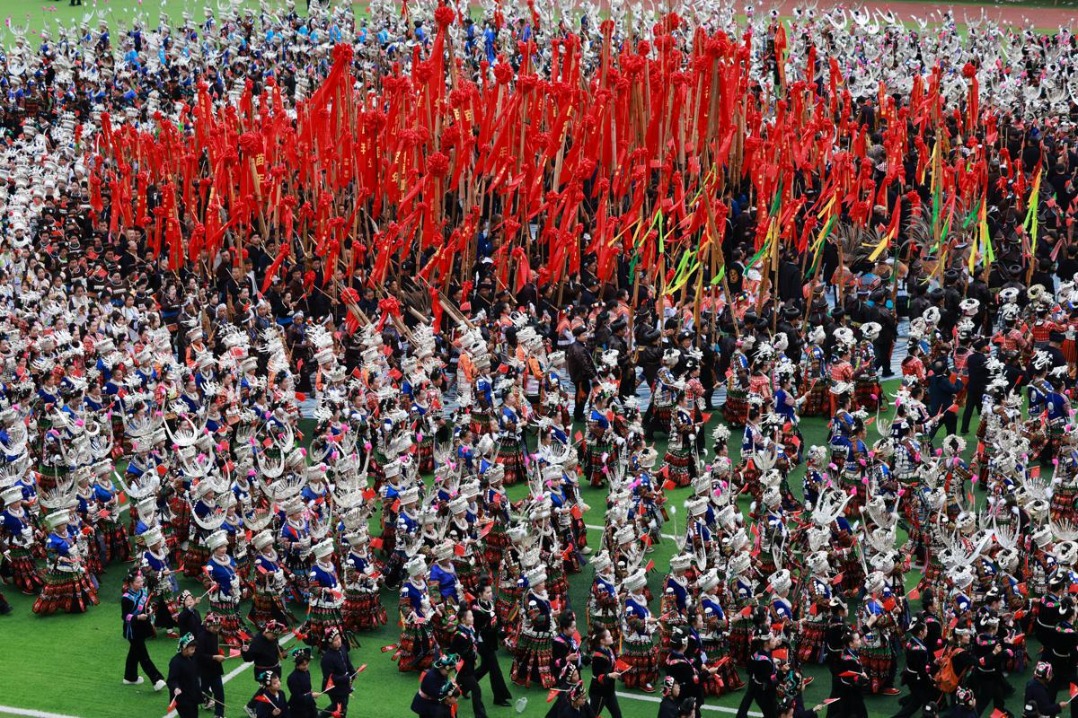
- Miao New Year celebrations get underway in Guizhou's Leishan county
- Mainland spokesman reiterates stand on Taiwan
- Fujian county's rural development becomes a big draw for Taiwan investors
- Nobel laureate in chemistry: Give young scientists more independence