Essilor eyes China expansion









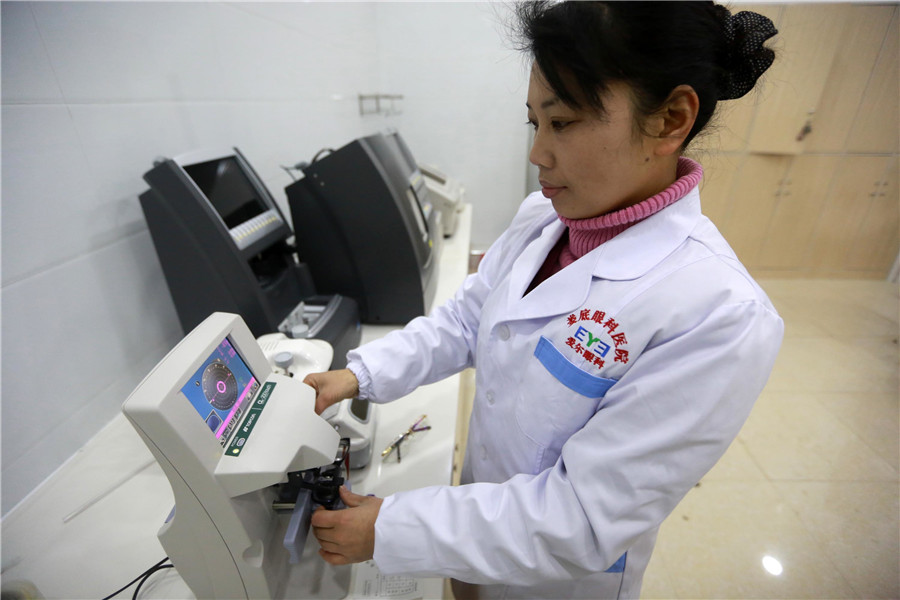
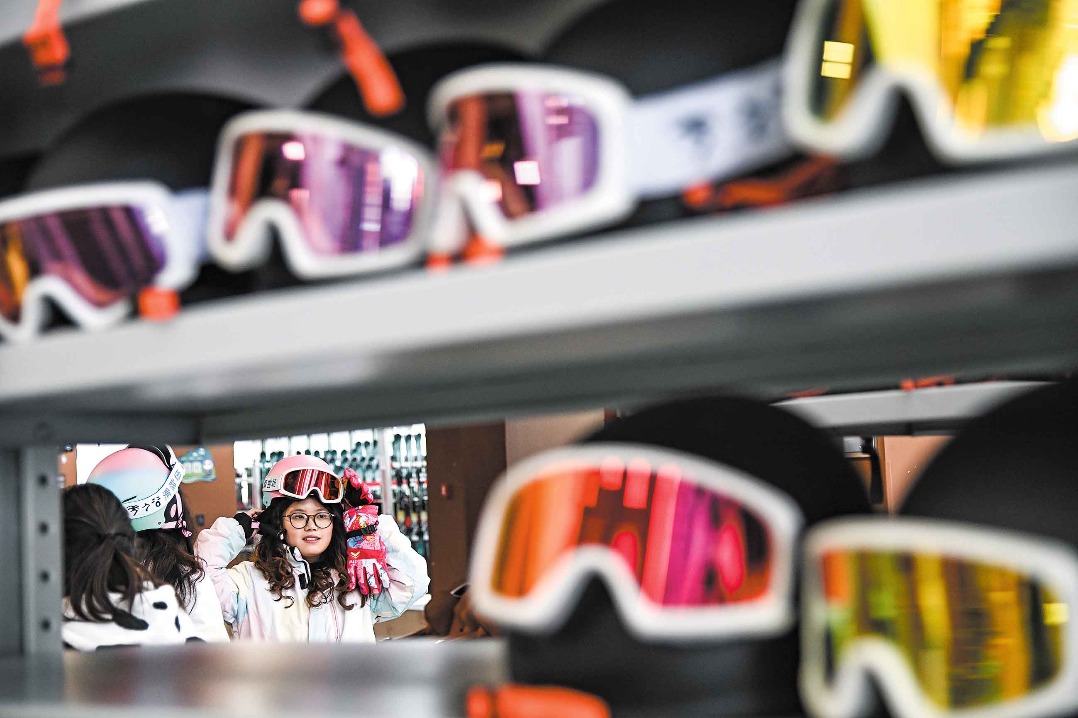
Eyeglass market in the country has grown by an annual rate of around 6%
French ophthalmic optics giant Essilor Group is aiming at double-digit annual growth in China over the next three to five years, inspired by innovation and people's rising awareness of eye health problems.
A product empowered by new technology to slow down myopia, a growing problem for China and the world especially as high cases of myopia represent a risk of blindness, is scheduled to make its global debut in China next year, Laurent Vacherot, CEO of Essilor Group, told China Daily during an exclusive interview on Sunday.
"We've recently started a research and development center in Shanghai dedicated to myopia, focusing on understanding the mechanism to prevent myopia and how to help myopic people, especially minors, see well and manage to slow down myopia's progress as we believe seeing better means living better," he said.
China's market for eyeglasses has grown at around 6 percent annually in the past few years and the size of the industry has reached 87 billion yuan ($12 billion). But the need is actually six times larger as many consumers are buying simple products and 470 million Chinese people have eye problems that remain uncorrected.
"The Chinese market will change rapidly as a rising number of consumers have attached importance to eye protection and are opting for eye care products after intensive use of digital devices, which create new eye problems, including eye fatigue," said Vacherot.
Essilor forged a merger with Italian eyewear frame maker Luxottica last year and Vacherot said the combination will accelerate the development of the industry by providing consumers with a total solution at a more affordable price.
Arnaud Ribadeau Dumas, CEO of Essilor China, raised the example of a bifocal lens product that can slow down myopia for minors.
"If the lens isn't fitted well in the frame, the child may look at the wrong place and then it becomes zero effective. So it's important for the product to fit well on the kid's nose and ears so that he or she can look at the right angle," he said.
The company anticipates further collaborations with the government in its fight against myopia as the country set a goal last year of reducing the rate of myopia among young people.
Statistics from the National Health Commission showed that the myopia rate among kids and teenagers in the country reached 53.6 percent last year, and rose to 81 percent for senior high school students.
The company said that it will join hands with the Shanghai Association for School Health Care to officially launch a training program targeting health teachers at schools to ultimately educate students about proper eye care.
It has also reached out over the last five years to disadvantaged rural residents throughout 23 provincial-level regions to provide eye health screening to a total of 2 million people.
Around half of those people have been equipped with a pair of glasses, including many getting them for the first time in their lives. The glasses were made available through charity or sold at affordable prices.
"It's important to give children with poor vision their first pair of glasses so that they can explore the world as it is. It's also important to give parents presbyopic glasses so that they can work for more years with ideal eyesight and will be able to financially support their children for schooling for more years and bring a positive cycle to the families," Vacherot said.
Dumas said the ultimate goal of such programs is to reach all the people in China and eradicate uncorrected poor vision in the country as well as globally.
A research by the China Center for Health Development Studies affiliated with Peking University showed that social and economic costs caused by various types of visual impairment in China totaled 680 billion yuan in 2012, accounting for 1.3 percent of the country's GDP that year.