Quick fixes won't be enough for Hong Kong









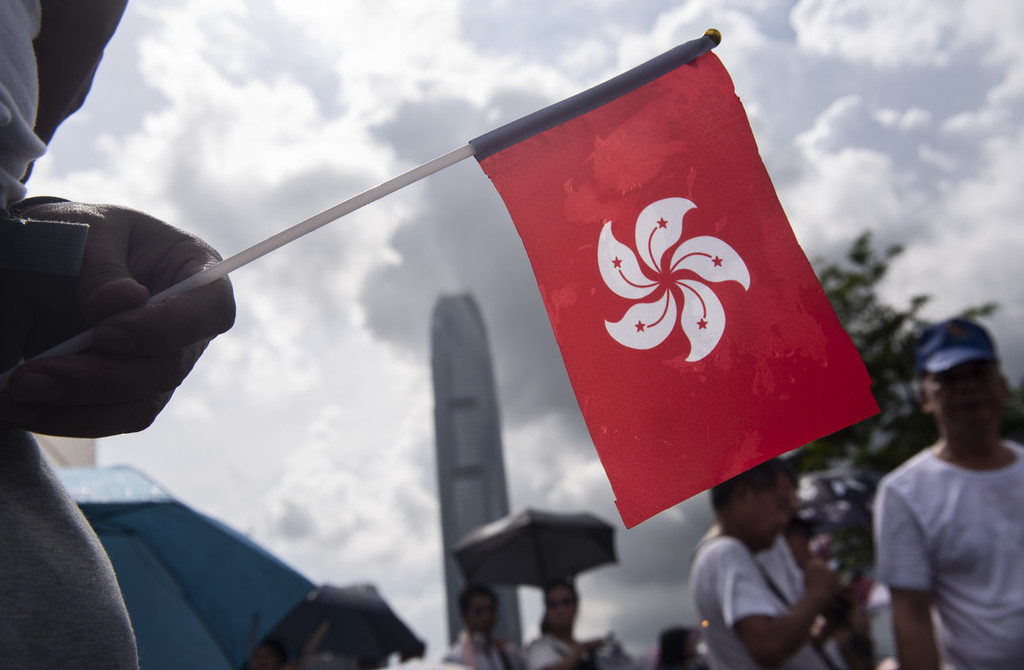
With protracted social unrest and violence in recent months, Hong Kong has been going through one of its worst crises. Hong Kong's retail sales and the hotel and tourism sectors have already witnessed massive declines not seen since the global financial crisis.
However, the foundation of Hong Kong's long-term prosperity remains solid, and there is every reason to be confident about its economic future. After all, Hong Kong has long served as a role model for Asian cities, with well-developed legal institutions to protect property rights and allow free flow of capital, goods and information, and a world-class business environment with a highly educated professional workforce.
Under the "one country, two systems" framework, Hong Kong has the advantage of bridging the rapidly growing markets on the Chinese mainland with the rest of the global economy. None of these factors will change because of the unrest.
However, confidence should not be mistaken for complacency. The current crisis has revealed deep-rooted structural vulnerabilities in Hong Kong's socioeconomic structure and government-market relations.
More than 90 percent of Hong Kong's GDP is generated by service sectors, which are segmented into multiple layers with uneven distribution of productivity and income. While entrepreneurship and professional services in finance, healthcare, law and real estate provide the elite with lucrative jobs that can benefit enormously from the mainland's economic dynamism and Hong Kong's unique advantages, a majority of young people are left out in low-end local service sectors with dismal growth opportunities. There is a lack of upward socioeconomic mobility for many young people.
The free flow of capital under ultra-low interest rates has led to a housing price boom in Hong Kong, making it the world's most expensive city to live in, measured by housing price-to-income ratios. Between 1997 and 2017, the median monthly salary of Hong Kong's employees in the age group 25 to 29 increased less than 50 percent, from HK$11,000 ($1,400) to HK$15,000, but the price index of small to medium-sized apartments almost doubled in Hong Kong between 2008 and 2017. Now an average family has to save for around 21 years without spending a single dollar to buy a home in Hong Kong, compared with less than five years in Singapore.
The socioeconomic challenges facing Hong Kong are partly rooted in global trends, but they also reflect the problematic interaction among government bureaucracy, markets and civil society at the local level. There is a lack of communication between elites and the masses, especially young people.
Even where the problems of market failures are recognized, public officials in Hong Kong are often reluctant or unable to intervene with the market forces or alter the institutional status quo in interacting with society.
In such areas as innovation, public housing, social safety nets and education, there is urgent need for Hong Kong to strengthen its policy performance.
Research and development accounts for less than 1 percent of Hong Kong's GDP, compared with more than 4 percent in Shanghai and Shenzhen. Land used for housing accounts for around 7 percent of Hong Kong's land, while over 65 percent remains undeveloped grassland, shrubland or woodland. The gap between potentially available resources and their actual use indicates coordination failures in public policies.
Hong Kong needs to develop long-term plans to address crucial challenges in healthcare and retirement welfare as its population ages and demands better social safety nets.
Hong Kong's economic future ultimately depends on its young people. Improving the educational system is vital to better equip them with values and abilities for success. It is unfortunate that many aspects of Hong Kong's educational system are ill-equipped for this mission.
Governance is a process of social learning in an uncertain environment, and policymaking is a form of collective exploration and discovery on behalf of society. To govern effectively and build a brighter future for Hong Kong's young people, the needed solutions are less about quick fixes than continuous efforts to enhance understanding and implement adaptive reforms for the long term.
The author is assistant professor at the Centre for China Studies at the Chinese University of Hong Kong. The views do not necessarily reflect those of China Daily.


- Lhasa's GDP grows 7.1 percent in first three quarters of 2025
- Co-hosting games boosts GBA integration
- Scholars call for ecological protection of Tunbu culture
- Cross-Strait exhibition highlights Chinese crested tern conservation
- China halts port fees on US vessels for one year
- China moves to cut teachers' administrative workload