Programs enhanced mutual trust









As a result, the first joint cooperation project was launched in 1978 between the Shanghai Baoshan steel plant - predecessor of Baosteel Group - and Japan's Nippon Steel. The Shanghai plant learned advanced production techniques from its Japanese counterpart and quickly became a major steel production base in China.
In 1996, China's crude steel output surpassed that of Japan, ranking it No 1 in the world.
Ma Shuping, a researcher with the Development Research Center of the State Council, said the introduction of Japanese steel production methods to China not only improved Chinese companies' production efficiency, but also brought to the country the most advanced business philosophy of the time and changed the development model for the entire steel industry in China.
"This helped reform the management system of Chinese enterprises and improve the overall efficiency of the country at the time," Ma said.
When the Shanghai Baosteel plant was being built, Japanese companies were trying to expand their global influence amid fraught relations with the United States due to trade friction. Japanese companies were seeking more opportunities in other markets, and the country became the first major developed country to provide ODA to China.
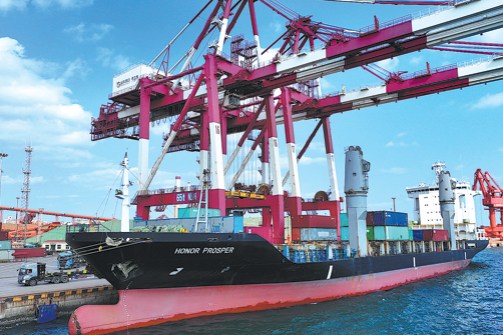
In 1979, the first round of Japanese ODA to China was approved, with a loan of 50 billion yen. This included expanding the railway line from Beijing to Qinhuangdao, Hebei province, construction of Qinhuangdao Port and also the Wuqiangxi hydropower station in Hunan province.
Ma Chengsan, an emeritus professor at Shizuoka University of Art and Culture in Japan, said ODA was not only a factor that contributed to China's modernization, it also made Japan a beneficiary of the country's development.
"By funding and supporting China's infrastructure, which gave easy access to raw materials, energy and labor, Japan saw many of its companies becoming increasingly confident and willing to explore the huge Chinese market and make investments. Meanwhile, ODA helped Japan improve its image in China and encouraged both countries to enhance people-to-people relationships and mutual trust," Ma said.
A white paper issued by the Japanese Foreign Ministry in 2017 stated: "China has given top priority to economic modernization, and since 1979, the core idea of Japan's ODA policy toward China is to support China's modernization drive and reform and opening-up. In addition, it will promote political and economic relations with China... which is also beneficial for Japanese companies".
Taiji Nakazato, chief representative of the Japan International Cooperation Agency's China Office, which administered the ODA funds, said the form of such Japanese assistance to China changed from time to time in response to the country's rapid social development.
"When aid first started being provided in the 1980s, the focus was on development of large-scale economic infrastructure, including harbor maintenance, railroad installations connecting inland regions to coastal areas, and power station construction.
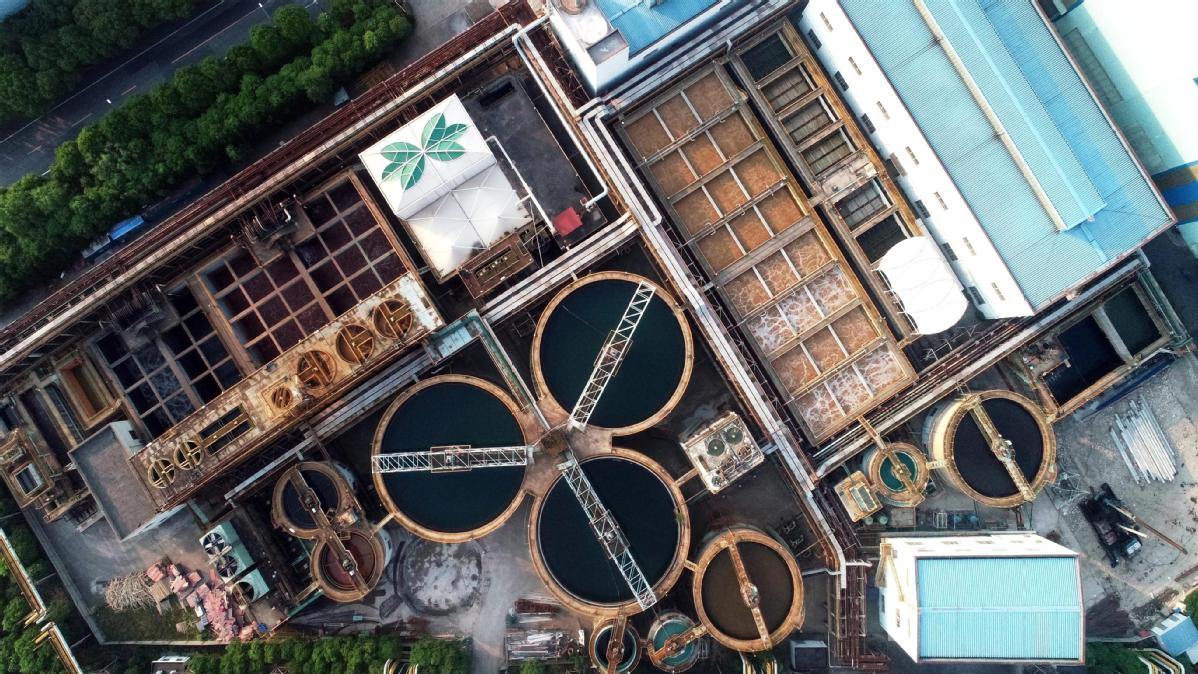
"At the start of the 1990s, in response to progressive urbanization, the emphasis shifted to water and sewage systems in major cities, gas supply and measures to reduce poverty in response to the increased disparity between coastal and inland areas. Then, from 2000 onward, more effort was put into aspects of development such as environmental protection and human resource training."