Hefei eyes cutting-edge breakthroughs









Rich talent pool, advanced, modern facilities to help eastern province become a top-tier hub for research
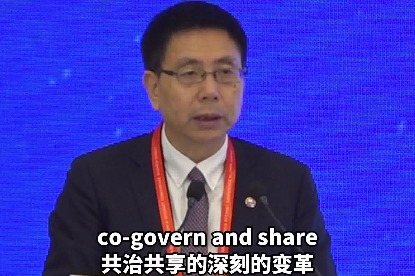
Kuang Guangli remembers clearly that 20 years ago when Chinese researchers submitted papers to global science forums nobody cared.
"We did not have the facilities to do cutting-edge research. That was the biggest bottleneck back then," said Kuang, a physics professor and current president of the Hefei Institutes of Physical Science, a branch of the Chinese Academy of Sciences.
When opportunities came, Kuang returned from Germany in 1992, entertaining ambitions of building China's own state-of-theart gigantic scientific facilities.
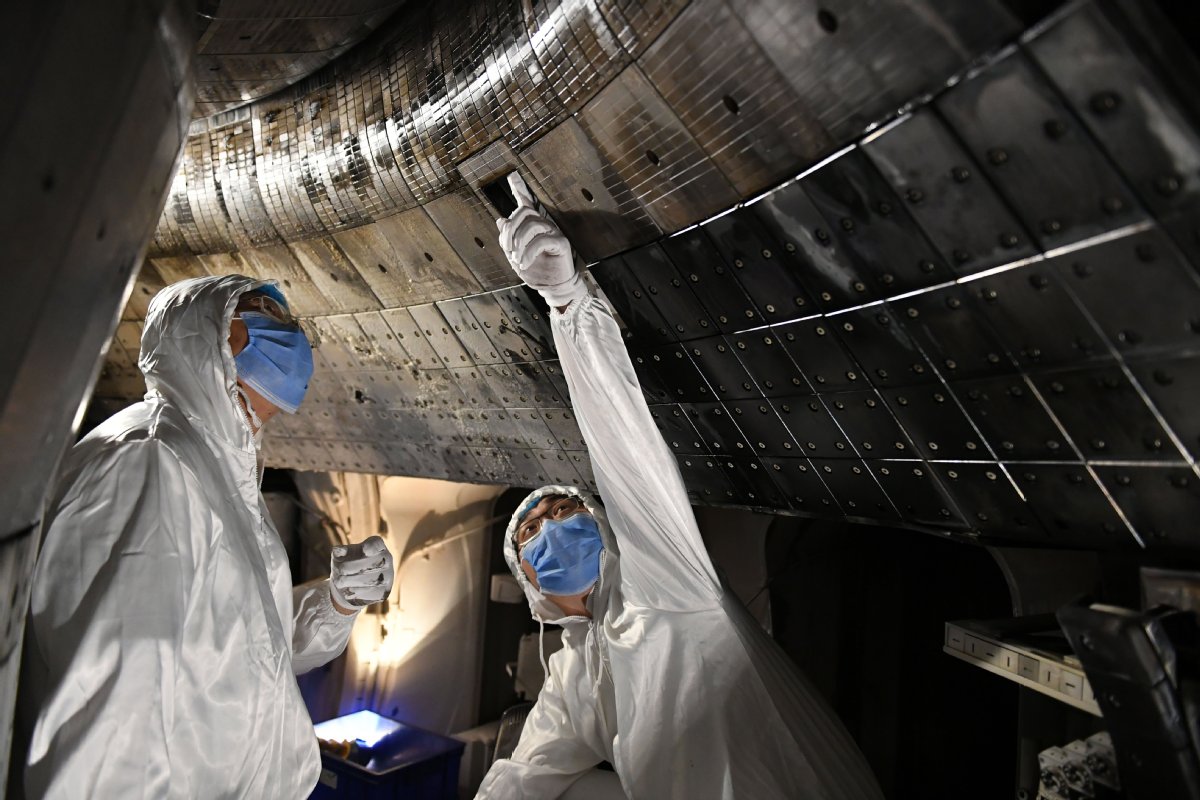
Two decades later, the Hefei Institutes, located in Anhui province, has built China's own tokamak, a device which uses a powerful magnetic field to confine a hot plasma in the shape of a torus. It is the leading candidate for a practical fusion reactor in the future.
"By leveraging the research device, scientists are now able to perform experiments that were unaffordable earlier, assisting them to accomplish more," Kuang said. "Now our scientists are often invited as keynote speakers at important global science forums."
Such a change mirrors what the eastern province has done to build itself into a science hub, boasting top-tier research facilities and renowned global scientists. The eastern province has spent huge amounts to build a slew of crucial scientific projects, including the Steady High Magnetic Field Facility, spectrometers that direct lasers to monitor atmospheric pollution, and the Experimental Advanced Superconducting Tokamak, which is key to a nuclear fusion reactor in the future.
"The research facilities have been built to attract reputed scientists from the world and they can function as a sound infrastructure to boost China's fundamental science research capabilities," Kuang said.
The EAST program, for instance, is now key to both the China Fusion Engineering Test Reactor project and the International Thermonuclear Experimental Reactor project.
Sergachev Dmitrii, a researcher from the Institute of Theoretical and Applied Mechanics in Russia, recently visited the EAST program and is discussing possible cooperation with the Hefei Institutes.
"China is now the leader in nuclear fusion research. We want to discuss how to better use the equipment for cooperation," Dmitrii said.
Hefei's growing reputation as a scientific center has also increased its appeal to foreigners. The provincial capital has been ranked alongside Shanghai and Beijing as the three cities that are the most attractive to foreigners who are living in China, according to an annual poll conducted by the State Administration of Foreign Experts Affairs.
Yang Fan, a spokesman of the University of Science and Technology of China, one of the country's top universities and based in Hefei, said: "Our university alone received more than 1,600 visiting foreign experts last year."
Also, by taking full advantage of the top-level research facilities, concrete progress has been made in several fronts. For instance, researchers have found a kind of new material under high magnetic conditions that may have the potential to replace semiconductor wafers in the future, according to Kuang.
To accelerate the commercial application of such technological advancements, the Hefei Institutes set up a company named CAS (Hefei) Institute of Technology Innovation Co Ltd in 2014. Its mission is to incubate high-tech enterprises by selling technologies to other companies or helping researchers set up their own startups.
"The new company first buys technological patents owned by our institute, and then develops these patents into commercially viable technologies and sells them to outsiders. The price differences constitute the company's profits and keep it running," Kuang said.
According to him, most of the rewards go to front-line researchers and motivate them to do more innovation. So far, more than 71 enterprises have been incubated under the platform, covering areas including medical tech, biological agriculture, and smart sensor technologies.
Their combined registered capital exceeded 700 million yuan ($100 million), and they have attracted 600 million yuan from other investors in total.
"We are constantly looking for opportunities to connect with the business world, to see what they need and what technologies boast the biggest potential for commercial cases," Kuang said.
The platform has also set up 13 engineering research and development centers to accelerate commercialization of technologies including water detection, agricultural big data, and cancer detection.
Such an eagerness to take action is in line with what Anhui Party secretary Li Jinbin has underlined.
"If original innovation is like turning money into papers, industrial innovation is turning papers into money," Li said. "While pouring resources into technological research, we will also work hard to leverage them into commercial applications."
The central government has rolled out plans to build Hefei into one of the three national science centers in China along with Shanghai and Beijing. Planning documents show Hefei will focus on information technology, new energy sources, life sciences and environmental protection. Scientists based in Hefei will also aim for research breakthroughs in quantum communications, nuclear fusion, smog prevention and cancer treatments.
"Innovation is the key for Anhui to achieve leapfrog growth," Li said.