


Mogao Grottoes









Mogao Grottoes (also known as "Thousand Buddha Grottoes") were first constructed in 366 A.D., the second year of the Jianyuan Period of the Former Qin of the Sixteen Kingdoms, or 1,650 years ago.
The grottoes were continuously built for around 1,000 years across 11 dynasties or periods, including the Northern Liang Dynasty, the Northern Wei Dynasty, the Western Wei Dynasty, the Northern Zhou Dynasty, the Sui Dynasty, the Tang Dynasty (in early, prime, mid, and late stages), the Five Dynasties, the Song Dynasty, the Uighur period, the Western Xia Dynasty, and the Yuan Dynasty.
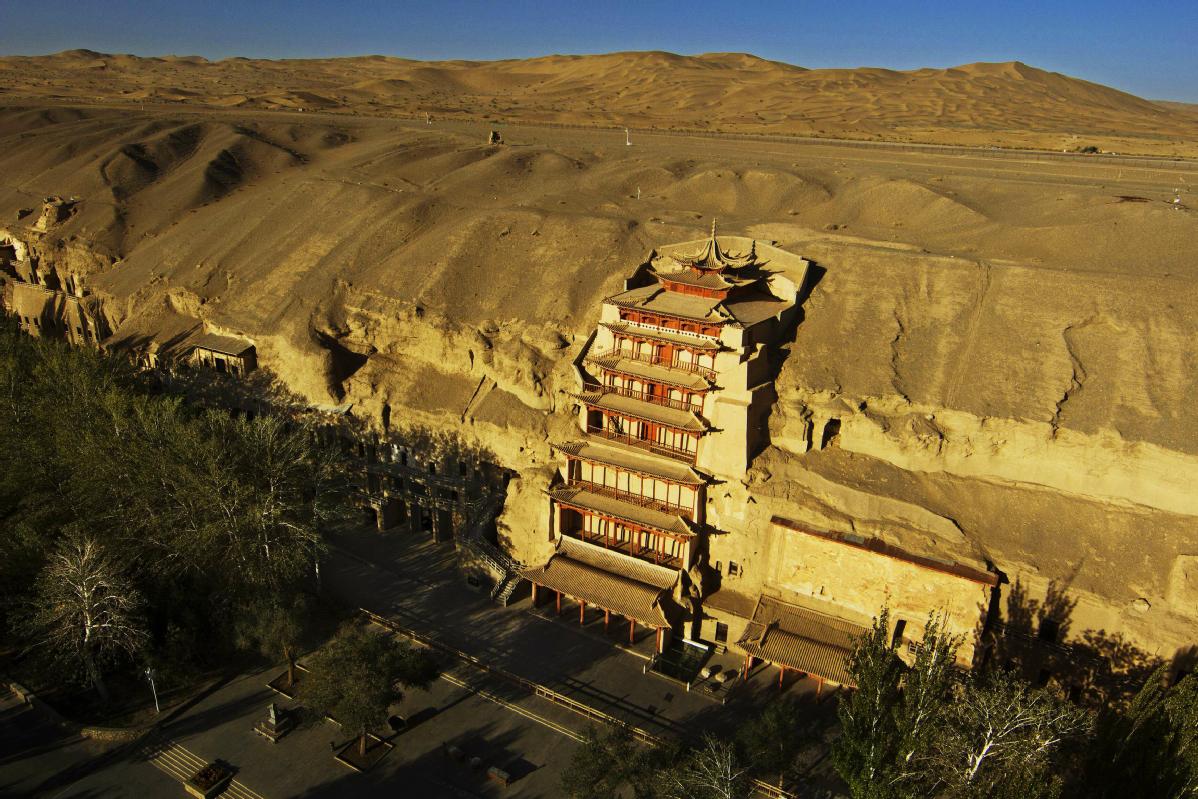
Mogao Grottoes are located on the eastern slope of Mingsha Mountain and the west bank of Dangquan River, which is 25 kilometers to the southeast of Dunhuang city. The east-facing grottoes face the Sanwei Mountain. Distributed on a cliff of about two kilometers long south to north and about 40 to 50 meters high, Mogao Grottoes were built on rocks of Jiuquan gravel stratum. Spanning a distance of 1,600-plus meters, the grottoes are composed of 736 caves (including 492 containing murals and painted statues).
Overall, Mogao Grottoes house 45,000 sq m of murals, 2,400-plus painted statues and five wood-structure eaves from the Tang and Song dynasties. Among the painted statues, the highest one, Beida Statue in Grotto No. 96, is 35.5 meters tall, and the largest mural, the Wutai Mountain Painting in Grotto No. 61, is 47 sq m in size.
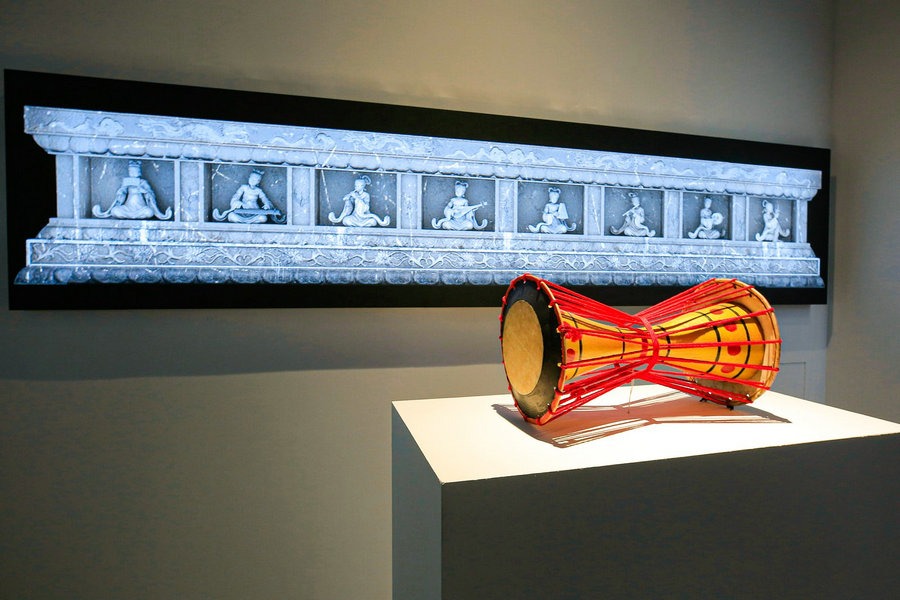
Mogao Grottoes are Buddhist cultural relics featuring a combination of grotto structures, painted statues and murals, dominated by painted statues, with murals on four walls and overhead, patterned floors,as well as eaves and plank roads outside the grottoes (or temple halls).
Known for their exquisite statues and murals, Mogao Grottoes form the largest Buddhist grotto temple site in China.
By virtue of the most comprehensive, diversified, and refined Buddhist art heritage of the longest history in the world, Mogao Grottoes represent the integration of the diversified cultures and civilizations along the Silk Road. In 1987, Mogao Grottoes were enlisted by the UNESCO in the first batch of World Heritage List of China.