More than meets the eye in ROK ceding developing economy status









A large number of farmers in the Republic of Korea took to the streets of Seoul on Wednesday, protesting the government's recent decision to give up its developing country status at the World Trade Organization in future trade negotiations and thus lose the benefits accruing out of it. The protesters were worried that the decision would eventually lead to a drastic cut in state agriculture subsidies and tariffs.
The ROK gave up its developing country status on Oct 25 along with the special and differential treatment that comes with it as part of the WTO reform proposed by the United States in late July. This means that, under pressure from Washington, Seoul has decided to compromise the interests of its agriculture sector and farmers in exchange for some advantages in the auto and other manufacturing sectors. Perhaps the ROK hopes to increase its bargaining power in the trade negotiations with the US.
In terms of per capita income and the human development index-which takes life expectancy, education and living standards into consideration-the ROK's development level has risen significantly since it joined the WTO in 1995. The ROK has entered the ranks of developed countries because, for instance, its per capita income increased to $30,600 in 2018 from $11,600 in 1995 when it identified itself as a developing country. According to the World Bank, countries with per capita income of more than $12,235 are considered high-income countries.
The ROK's human development index was as high as 0.903 in 2017, not much lower than the US' 0.924. And according to the UN Development Programme, states with a human development index above 0.800 are highly developed. Which shows the ROK's decision to give up its developing country status is in accordance with its development level.
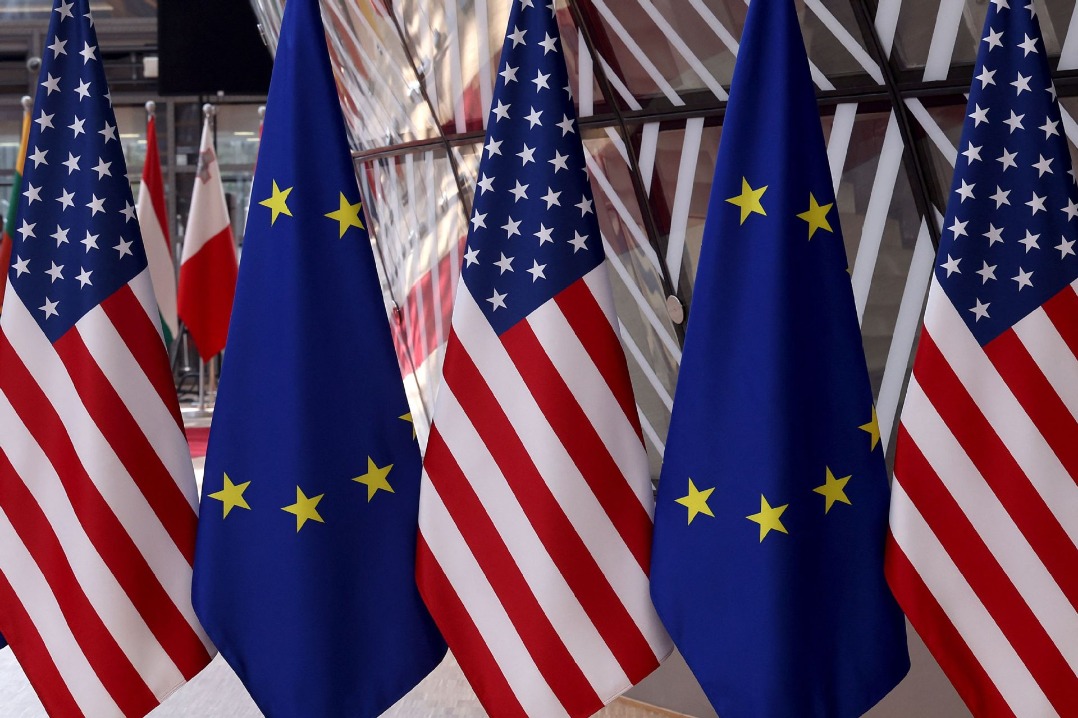
In the multilateral trading system, a WTO member state's responsibilities are fixed according to its economic development level. As of now, one-third of the 164 WTO member states are developed economies, but only the US, the European Union, Canada, Japan, Australia, New Zealand and Switzerland have chosen to declare themselves as developed economies, while the rest declared themselves to be developing economies.
Given that countries could experience uneven development, gaining undue advantages in some areas while being weak in others, the WTO has prevented some developing countries from enjoying some of the special and differential treatments in certain fields. For instance, it has restricted the ROK and India from using measures to promote balance of payment. Besides, the Agreement on Trade-Related Aspects of Intellectual Property Rights, revised in 2003, allows countries that lack production capability to import nonproprietary medicines, which is opposed by the developed countries-and 11 countries including China, the ROK, Mexico and Turkey have agreed to implement the agreement only in emergencies.
The WTO is at a crossroad of reform, with the developing economy status and the special and differential treatment to countries being the bone of contention between developed and developing countries. At the Doha Development Round, the developing countries paid close attention to the proceedings to determine whether joining the WTO would help boost their development, while the developed ones were more interested in whether the global trade body would provide a stable and transparent global trading system.
Today, the international community wants the developing countries, thanks to their rapidly growing economic power, to shoulder more global responsibilities.
A country's development level depends not only on its total GDP, but also, and more importantly, on factors such as per capita income, people's living standards and its human development index. A comparison of some basic development indicators shows China still lags far behind the ROK, not to mention the US, in terms of development and therefore is still a developing country. For example, China's per capita income in 2018 was only $9,470, less than the global average of $11,097, and its human development index was 0.752 in 2017 compared with the ROK's 0.903.
Yet China has shouldered as much global responsibility as the developed countries in helping finalize such accords as the Trade Facilitation Agreement. And thanks to its growth as an economic power, it will continue to play a leading role in the multilateral trading system and take on more global responsibilities.
Dong Yan is a research fellow at the Institute of World Economics and Politics, Chinese Academy of Social Sciences, and Ma Tao is an assistant research fellow at the same institute. The views do not necessarily represent those of China Daily.





Today's Top News
- Xi chairs CPC leadership meeting on Party conduct, anti-corruption work
- Why Hainan Free Trade Port stands out
- Rule of law strengthens business environment
- Documents affirm one-China principle
- Central SOEs urged to push upgrading
- Agreement boosts ocean governance