Beijing makes welcome effort to promote dialogue









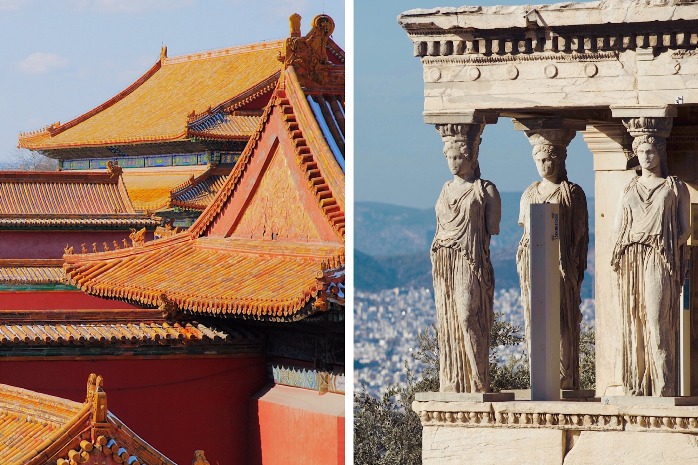
The core principle for a dialogue between civilizations is mutual respect and an effort at accommodation, suggesting that we learn from each other for the common good of humanity. China's efforts to promote such dialogue, and to make ecological civilization a global movement, should be welcomed by all.
The world is facing an unprecedented crisis, an ecological nightmare resulting from a culture grounded in endless consumption and expansion. Moreover, we are witnessing deep social alienation that cannot be resolved by the standard tools of economic growth, free trade and technological advancement.
A growing number of people are becoming aware of the crisis. Yet the major industrial powers - those that have the most profound impact on perceptions and values around the world - remain hesitant to offer an alternative to the standard model of consumption.
China has recently made an honest effort, at the level of national policy, to articulate a vision for an ecological civilization.
The term "ecological civilization" is part of a broader dialogue on civilization in China. The government has shown a broad-ranging commitment to culture, whether it is support for the fine arts, music, philosophy, history or meaningful intellectual exchanges with the rest of the world.
Such moves are a refreshing break from the drive for technology, trade, production and consumption that forms the dominant ideology of the ruling class. Of course, Chinese policy also continues to value consumption, but it also addresses the cultural and spiritual needs of society.
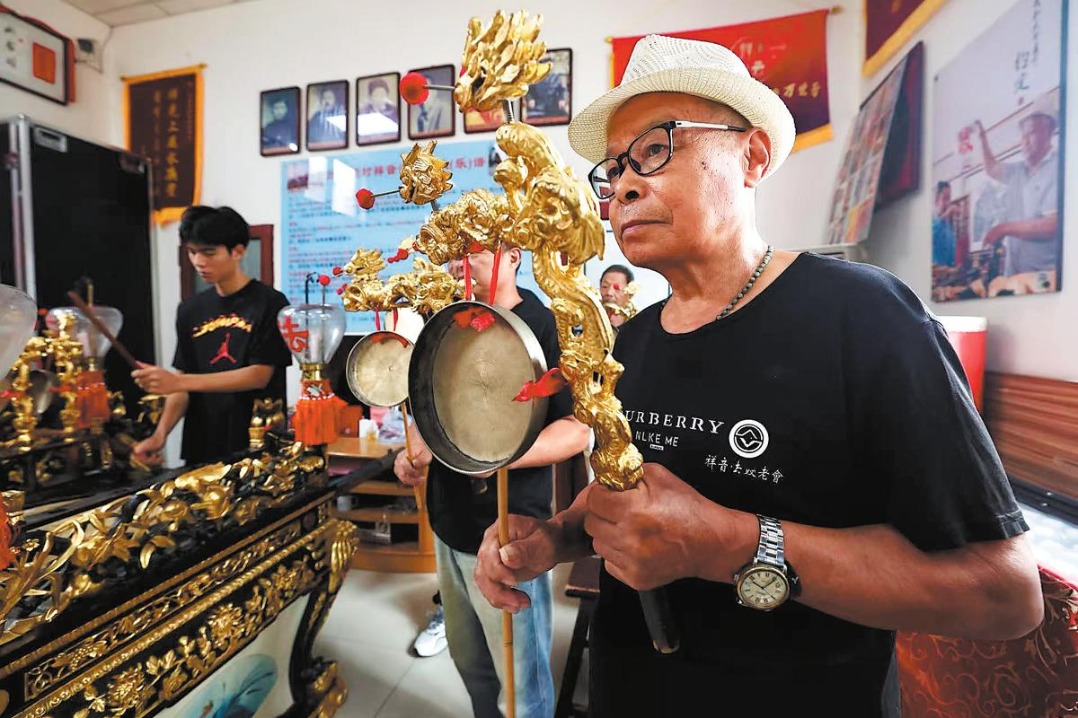
Whether it is the recent revival of Chinese clothing from different dynasties over the past 2,000 years, or the efforts to study and preserve local musical traditions, culture is becoming a central theme in China at a time when support for culture is being slashed around the world.
No other major power has come close to that level of investment in culture. If anything, we are seeing the rise of isolationism, chauvinism and xenophobia gaining global momentum.
In addition, China is not pushing its cultural superiority, but rather calling for dialogue between equals that is more in tune with the internationalism of the 1930s and 1940s.
President Xi Jinping called for dialogue between civilizations to promote inclusiveness, and promote mutual learning, when he visited the Acropolis in Athens with Greek President Prokopis Pavlopoulos. Xi took advantage of this return to the roots of Western civilization to ask that the model of ruthless competition be replaced with one of honest collaboration.
These comments, made on Nov 12, were in striking contrast to the image of China promoted in much of the media as an arrogant new power confident of its new status and contemptuous of others. Xi went out of his way to recognize the valuable contributions of Greek civilization and in no way suggested Chinese superiority.
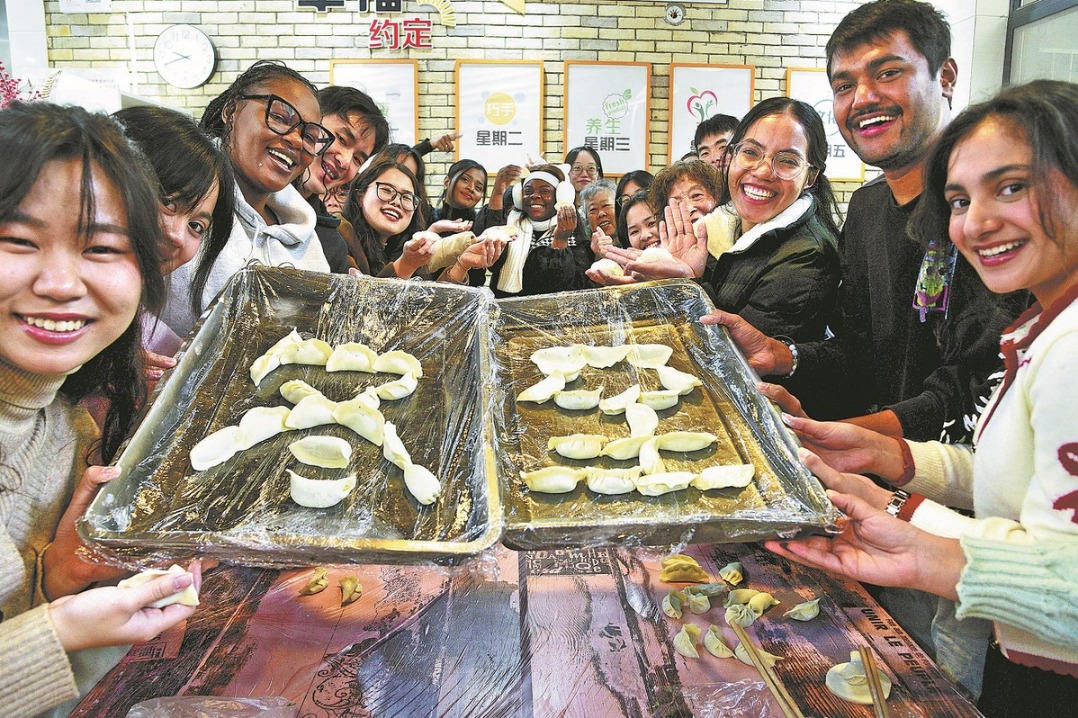
He was continuing a theme expressed in Beijing at the Conference on Dialogue of Asian Civilizations on May 14. Xi then asked that all peoples of the Earth embrace a mindset that is "able to take in the waters of a hundred rivers like the ocean".
He envisioned an "exchange and mutual learning between civilizations" that would help humanity advance, suggesting a universality in human experience that goes beyond a Western, post-enlightenment system of values and methods.
At the Sino-French Dialogue on Civilization, held in Paris on Oct 21, State Councilor and Foreign Minister Wang Yi explained the significance of this Chinese approach. He called for a true dialogue of civilizations in which "all civilizations are equal, inclusive and cooperative".
Wang referred to the desperate need to find solutions to profound challenges, whether they are ecological or geopolitical, that threaten humankind. He insisted that we move beyond the assumption of a "clash of civilizations" to explain current contradictions, calling instead for a mind-set that encourages cooperation.
The core principle for a dialogue between civilizations is mutual respect and an effort at accommodation, suggesting that we learn from each other for the common good of humanity. The Chinese proposal of a "community with a shared future for mankind" is a new vision for multilateralism, deeper cooperation with other countries, and unremitting efforts to promote the progress of human civilization.
The repeated use of the term "equal dialogue" suggests that the absolute authority of any single civilization needs to be replaced by ongoing dialogue.
Today, as politicians around the world employ xenophobic rhetoric to distract the public from the failures of economic policy, and the contradictions produced by systems not focused on the needs of the people, an honest dialogue of civilizations must be our highest priority.
China's efforts to promote such dialogue, and to make ecological civilization a global movement, should be welcomed by all.
The author is director of The Asia Institute, a pan-Asian think tank. The views do not necessarily reflect those of China Daily.
(China Daily Global 12/03/2019 page1)





- Starry Lee Wai-king elected president of HKSAR's 8th-term LegCo
- China's patrols around Diaoyu Island lawful, justified: spokesperson
- China urges international community to prevent revival of Japanese militarism
- Extended visa-free transit program fuels surge in China's inbound visitors
- Research report on Japan's nuclear ambitions released in Beijing
- Chinese vice-premier stresses importance of wheat field management