Proactive fiscal policy to be key economic priority, say experts










Implementing a proactive fiscal policy will be one of the top six tasks for the central government in its 2020 economic agenda, experts said.
The thrust of the fiscal policy, however, should not be confined to supporting economic growth through investments, but instead focus on boosting the overall quality and efficiency, guaranteeing salary payments, ensuring administrative operations in local government departments and boost people's livelihoods, said the experts while sharing their insights on the recently concluded annual Economic Work Conference.
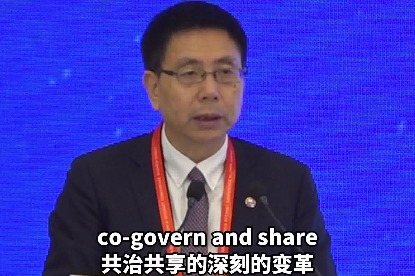
The basic tone of next year's policies would be to maintain stability, meaning the key economic indicators including GDP growth, employment rate, inflation and other indexes "need to avoid big ups and downs", said Liu Wei, president of Renmin University of China and a member of the central bank's monetary policy committee.
China's policies to counter an economic slowdown have already started taking effect, as seen in the average 9.4 percent annual GDP growth during the past four decades with very moderate volatility, Liu said at a forum held by the National School of Development of Peking University on Saturday.
"Stability is a key gauge to assess the quality of economic growth, other than only focusing on the speed," he said.
To achieve the targets, a "too-large scale" of new tax cuts is not suitable for next year and policymakers may instead focus on implementing the existing tax cut policies, said Chen Changsheng, director-general of the department of macroeconomic research under the Development Research Center of the State Council.
Fiscal deficit is expected to expand next year as strong support from the local government special bonds will help stabilize infrastructure investment. But the funds should be used more for the new types of infrastructure projects, instead of injecting too much into traditional projects, said Chen, without explaining the definition of "new infrastructure".
A statement issued after the three-day policy tone-setting conference had said that proactive fiscal policies should focus on structural adjustments, while government expenditure for general administrative purposes needs to be reduced.
The high-level economic conference stressed that fiscal policy should work in conjunction with the prudent monetary policy, and coordinate with consumption, investment, employment, industrial and regional policies.
The policymakers have emphasized that macroeconomic policies should lead capital into areas of advanced manufacturing, as well as in projects that can improve people's livelihood and infrastructure construction. Both industrial production and consumption should be upgraded, the statement said.
In the face of some uncertainties, especially when the world is still undergoing in-depth adjustments due to the global financial crisis, the basic function of fiscal policy should be to "inject certainties" and reduce the level of public risk, so that the cost of production and living can be lowered, said Liu Shangxi, head of the Chinese Academy of Fiscal Sciences, a research institute under the Ministry of Finance, during the Saturday forum.
The Ministry of Finance said on Tuesday that from January to November, the country's total tax income was 14.97 trillion yuan ($2.14 trillion), with the tax income declining by about 3 percent on average in October and November.
Individual income tax collections fell by 26.8 percent as tax reforms changed the taxation threshold and the tax rates. Value-added tax on imported goods and consumption tax decreased by 8.7 percent during the same period, according to official data.
The central government's fiscal revenue increased by 3.8 percent to 17.90 trillion yuan in the first 11 months, much slower than the growth of 6.5 percent in the same period last year, mainly due to the reduction of taxes and fees. Fiscal spending rose by 7.7 percent year-on-year to 20.65 trillion yuan, up by 6.8 percent over a year earlier, the ministry said.
Falling land prices in some cities and lower income from land sales could be headwinds for China's growth in 2020, said Lu Ting, chief economist of Nomura Securities.
He said the government may need to increase the fiscal deficit and increase the quota for local government special bonds next year to deliver a "truly expansionary fiscal policy".