Five struggles that could shape the world









Five ongoing struggles in this rocky year of 2019, which is about to end, could determine the future direction of the world.
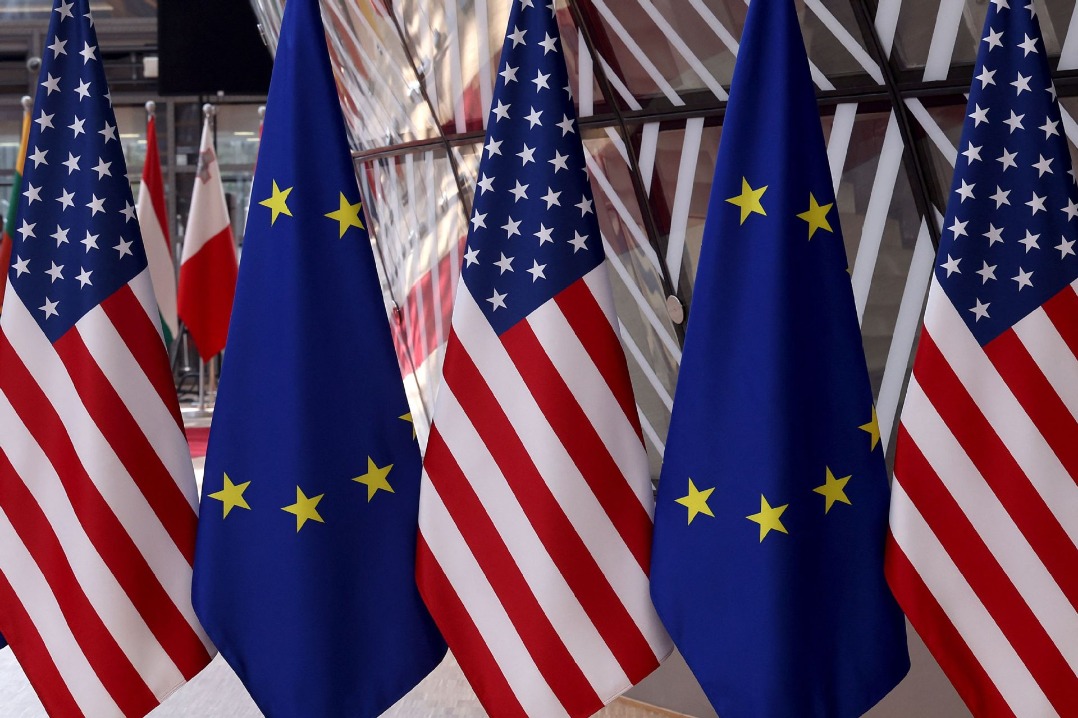
The first is the struggle between nationalism and global governance. Whenever the world order tilts toward nationalism, globalization will suffer setbacks, and political and economic turbulence will increase. Yet there are no signs that nationalism, supported by variant forms of populism, even racism, is receding in the world. As such, the rule-based multilateral system faces a threat, not least because the United States has pulled out of the multilateral Iran nuclear deal and Paris Agreement, abandoned the Intermediate-Range Nuclear Forces Treaty with Russia, paralyzed the World Trade Organization dispute settlement system, and weakened global and regional institutions.
Next year, the world would be focused on Brexit and the US presidential election to gauge the nationalist sentiment and a possible shift in the world order. But since developing countries seek to establish a fair and representative global governance system, they will try to resolve the security, trade, investment, finance, and technology issues by working together at bilateral, regional and multilateral levels.
The second struggle is for economic priority. Due to the severe side effects of the measures taken to cope with the effects of the 2008 global financial crisis, the accumulative distribution gap has widened to an unprecedented level, with state finance being at the center of this storm. US politicians have offered to solve the problem by, for instance, increasing taxes on the rich, granting universal basic income, breaking monopolistic technology companies, and providing universal healthcare. And while Brazil has passed new laws to reform its pension system, France faces protests against its attempt to do so.
So, more research into the effective use of resources in education, healthcare, infrastructure, poverty relief and national defense must be conducted to find the best way to use state finance as a facilitator of inclusive growth.
The third struggle is between cutting-edge technology and security. The development of 5G technology, artificial intelligence and robotics potentially pose a threat to national security, individual privacy, and job security. However, global responses to these challenges have been fragmented, contradictory and ineffective.
Without China and the US working together to set standards and boundaries for the use of technology, the world faces the unwelcome prospect of mutually exclusive technology blocs. The lack of progress in digital technology governance will worsen the security dilemma and ultimately suffocate innovation. That is why Huawei has made the "no backdoor" pledge, and European Union member states and countries such as Canada are leading the charge to make rules to ensure safety, transparency, and accountability in the use of advanced technology.
Moreover, since digital technology will account for one-fourth of global GDP, a huge number of workers across countries will need job retraining, especially because the mismatch in the job markets is already serious.
The fourth struggle is environmental. Time magazine's person of the year Greta Thunberg may be controversial, but the increasing frequency of climate calamities is real and alarming. That this year's UN climate change conference in Madrid accomplished little has only added to the urgency of the task.
The last struggle is between truth and misinformation. The flow of information is crucial for the proper functioning of any government, society or economy. But the distortion of information is polarizing societies and antagonizing states.
On one level, the rise of social media has widened the sources of information but also led to manufacturing and sharing of highly biased "news". On another level, new media have created a "gray zone" for information warfare between states. Domestic and international political disputes are increasingly taking the form of fake news in which truth is distorted to fulfill personal, party or state interests.
Given the level and speed of at which misinformation spreads, policymakers are forced to make instinctive decisions because they don't have enough time to make rational and calculated decisions. Nowadays, things can easily escalate, be resolved or forgotten depending on the new tools and skills politicians and states can use. Yet the best way to address this problem remains good education for citizens based on independent and critical thinking.
The author is a researcher at the Institute of World Economics and Politics, Chinese Academy of Social Sciences.
The views don't necessarily reflect those of China Daily.





Today's Top News
- Disrupting market under fabricated veneer of 'national security' hurts US' own interest: China Daily editorial
- Yasukuni visit would add insult to injury: China Daily editorial
- Judicial reform critical for modernizing governance
- Effective use of investment emphasized
- China's shuttle diplomacy strives to reach ceasefire
- Nanjing Museum's handling of donated art, relics being probed