Shanghai outshines peers as launch pad for international brands









Despite the ubiquity of e-commerce in China, international brands are looking beyond digital platforms and increasingly recognizing the importance of boosting their physical presence in the country, with Shanghai seen as the ideal first stop.
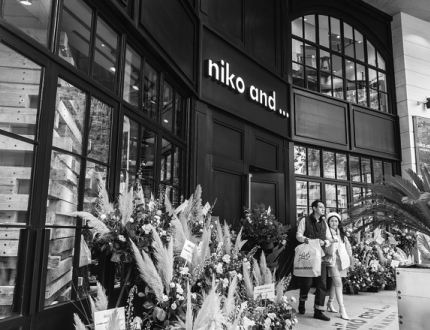
Japanese lifestyle megastore "Niko and…" opened its first store in China in downtown Shanghai in late December. Covering 3,500 square meters, the three-story flagship store is the largest of the 130 shops that the Japanese lifestyle leader has built globally.
Kitamura Yoshiaki, board member and general manager of the sales division of Adastria Co, the owner of the "Niko and …"brand, described the launch of the megastore-which sells 4,000 types of products and includes a cafe-as a "water-testing "endeavor in the Chinese market, as lifestyle megastores are still a rarity in the country.
Although Shanghai is probably the "fiercest battlefield" for retail brands, the pros outweigh the cons, according to Yoshiaki.
"Shanghai has moved quickly up the global fashion ladder, making it a flag-bearer to host new entrants like us," he said.
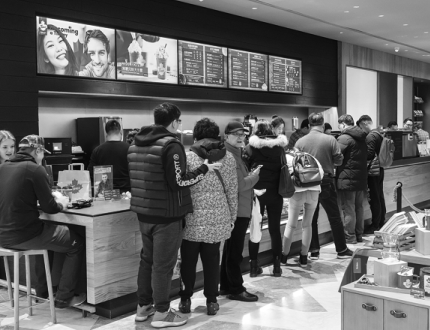
Canada's largest quick service restaurant chain Tim Hortons opened a coffee shop in Shanghai in February 2019, marking its first step in the Chinese market. Since then, the Toronto-based coffee chain has opened 33 cafes in the country and another 1,500 stores are on the way in the next 10 years.
According to Tim Hortons' China CEO Lu Yongchen, the reasons for choosing Shanghai as the company's first stop in China can be largely attributed to its position as the most mature Chinese coffee market, and more importantly, the city's ability to serve as a bellwether.
"If a brand is welcomed in Shanghai, it is safe to say that the brand will be able to seek sustained growth in China," he said.
While other Chinese cities such as Beijing and Chengdu have made more efforts to attract international brands to launch their first Chinese mainland stores, Shanghai still outshines its peers as the business models of the first stores vary, said experts from China's largest real estate consultancy RET.
Among the 498 stores first opened in Shanghai in the first half of 2019, 59 percent are restaurants, 32 percent retail stores and 11 percent entertainment service providers. Apart from the obvious reasons such as the large population, higher consumption capability of local residents, and business vibrancy, experts from RET also stressed that the communication proficiency and government efficiency have made Shanghai an ideal launch pad.
Statistics from the Shanghai Municipal Commission of Commerce showed that a total of 756 stores debuted in the city in the first three quarters of 2019, up 74.6 percent from a year earlier.
Liu Min, deputy director of the commission, said that the store debuts in Shanghai have become a consumption highlight in the city.
"The stores have largely enriched local consumption business models, meeting the increasing demand of local consumers. They have collectively grown into a new driving force of Shanghai's economic development by further stimulating consumption demand," she said.
According to the Shanghai municipal statistics bureau, the total retail sales revenue of consumer goods exceeded 1.2 trillion yuan ($173 billion) during the first 11 months of 2019, up 6.6 percent year-on-year. The retail amount of wholesale and retail industries in the city was more than 1.1 trillion yuan, up 6.9 percent from a year earlier.
In late 2017, Shanghai's Party secretary Li Qiang said that consumption, which is one of the major strengths of the city, should be further enhanced by introducing more prestigious domestic and international brands to debut new products in Shanghai.
In a visit to a department store in central Shanghai in May 2018, Li said brands that are in tune with the latest trends should be introduced to provide upgraded consumption experience and meet the demand of increasingly sophisticated consumers, especially the younger generation.
Sun Mingyang, vice-general manager of Shanghai Silk (Group) Brand Development Co Ltd, said that the domestic e-commerce giants' mapping in the offline retail sector has shown that it is becoming increasingly difficult to achieve rapid growth. Consumers on the other hand are no longer easily attracted by bargains offered online.
"The trend of upgraded consumption is quite noticeable. We can see that more and more consumers are returning to brick-and-mortar stores, especially those offering better experiences," she said.






Today's Top News
- Agreement boosts ocean governance
- Experts: Punishments law misinterpreted
- Project weaves global map of silk's grand history
- Cross-border research work bearing fruit
- Disrupting market under fabricated veneer of 'national security' hurts US' own interest: China Daily editorial
- Yasukuni visit would add insult to injury: China Daily editorial