How has Singapore responded to coronavirus outbreak?









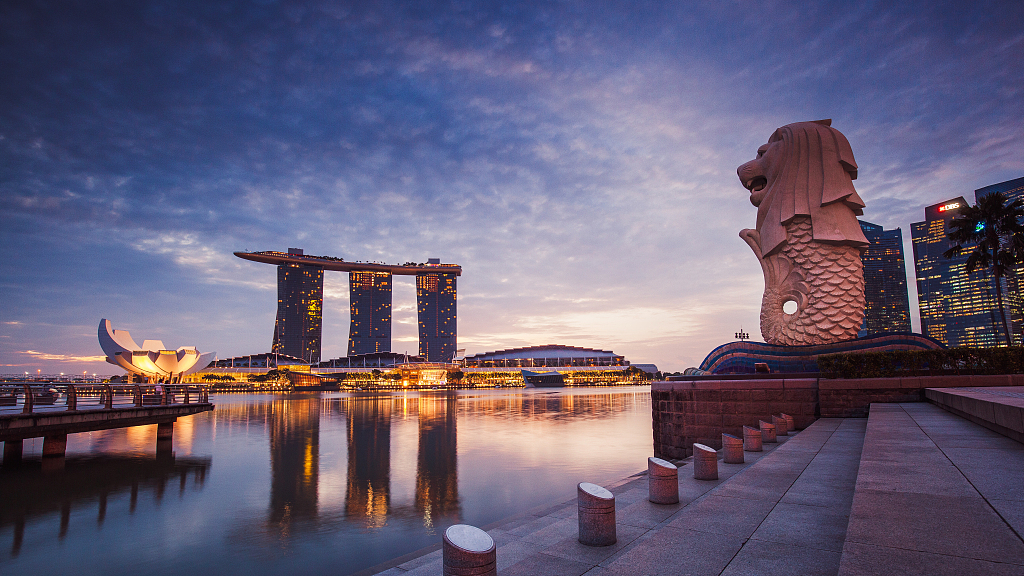
Shortly after the outbreak of the novel coronavirus in China, the epidemic hit Southeast Asia. The tropical city-state of Singapore is the single most popular outbound flight destination from Wuhan. In the first three weeks of 2020 alone, close to 10,000 travelers flew in from Wuhan.
Somewhat expectedly, the first confirmed case of infection was reported on January 23, 2020. Since then, Singapore has been decisive and effective in containing the spread of the virus on the island. In fact, Singapore started temperature screening for passengers from Wuhan on as early as January 3. As the situation in China worsened, Singapore put up multiple lines of defense to guard against the virus.
From January 22, all Chinese visitors were required to undergo health screening at Changi Airport. In the next two days, all inbound flights from Wuhan were suspended and temperature screening protocols extended to air, sea and land checkpoints. A Multi-Ministry Taskforce on Wuhan Coronavirus was convened on January 27 to execute a national whole-of-government response to the outbreak. On the same day, Singapore implemented a two-week Leave of Absence (LOA) for all students and staff returning from China. Major local universities quickly followed suit while turning available hostels into quarantine facilities to accommodate those returnees.
By the end of January, Singapore further stepped up precautionary measures, stopping issuing new visas to Chinese nationals, bringing back Singaporeans locked down in Wuhan and reducing direct flights with China. On February 2, in a big ban move, the government disallowed all passengers with recent travel history to China, regardless of nationality, to enter or transit in Singapore.
Thanks to these and other actions, as of February 3, there were only 18 confirmed infections in Singapore. All are imported cases with no evidence of local community transmission. Another 524 people are under quarantine.
Despite the stable and controlled public health condition, a sense of panic can be felt in Singapore. Long queues were seen in shopping malls and outside clinics with nervous shoppers snapping up surgical masks, thermometers and hand sanitizers. Anti-China and racists sentiments were on the rise. Singaporean netizens took to social media platforms to lash out at what they saw as "animal-eating, barbaric Chinese" and "incompetent government" for failing to close the borders faster. Several Chinese tenants – some of whom did not travel to Hubei – were ejected from their rented houses by overreacting landlords fearing infection risk.
Fortunately, the Singaporean government has stayed calm and refused to bow to the xenophobia that was running high. Rather, it is taking three concerted steps to shape public opinion away from hysteria and hatred toward compassion and solidarity vis-à-vis Chinese.
First, the top political leadership spared no efforts to frame the coronavirus outbreak as an issue of global and public health concern, instead of an exclusive Chinese affair. They explained to Singaporeans at length about the tough measures China has taken domestically to fight the epidemic. Rhetorically, the virus is no longer referred to as "Wuhan virus" but as "2019-nCoV" and "Novel Coronavirus" in official and media discourse.
Second, the authorities resorted to the "Protection from Online Falsehoods and Manipulation Act" to combat misinformation, untruths and deliberate fake news such as false claims of Singaporeans contracting the virus through human-to-human transmission.
Third, having realized that some fears resulted from mask shortage, the government injected positivity by giving out four surgical masks to each Singaporean household. Around 1,500 Singapore Armed Forces servicemen were mobilized to pack 5.2 million masks to be distributed across the country.
With decisive actions and the three-pronged approach of relieving anti-China public anxiety, Singapore has done a remarkably good job so far dealing with the 2019-nCoV crisis. Singapore has always been appraised for its world-class governance model, and the constructive ways it has responded to the virus have just given us a fresh glimpse of how incredibly good the model is.




Today's Top News
- Andy Palmer: West can learn from China's long-term planning
- Mainland spokesman reiterates stand on Taiwan
- Xi to attend opening ceremony of National Games, declare Games open
- Xi urges deepening reform, opening-up during Guangdong inspection tour
- China releases white paper on low-carbon development
- What use are the humanities in the age of AI?