Rapid IP development pushes China ahead on tech









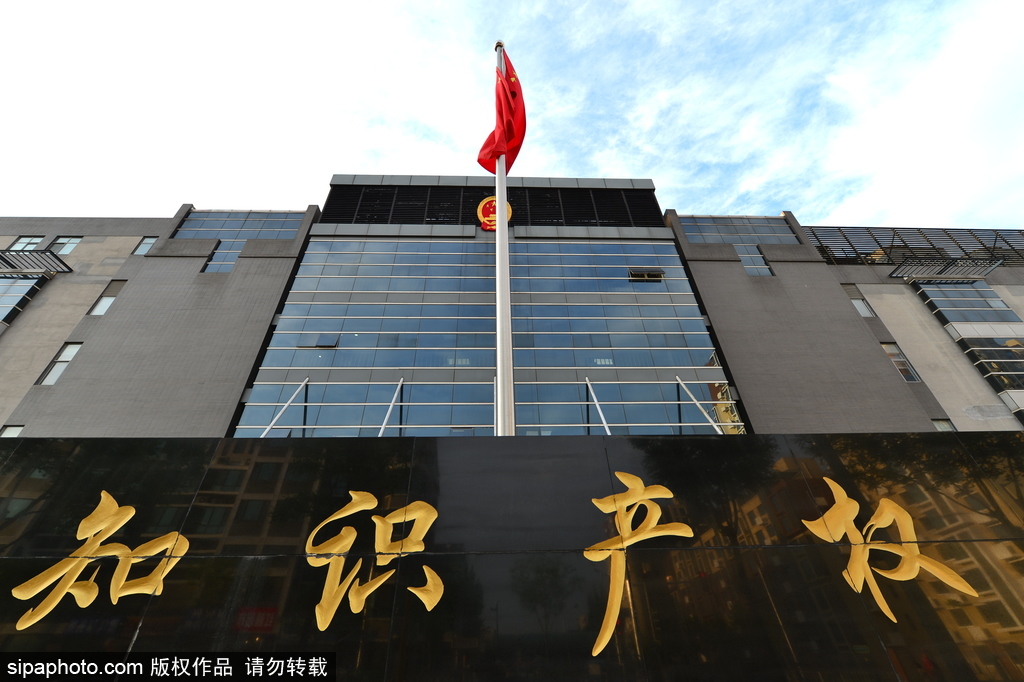
The development of intellectual property in China over the past 30 years is as impressive as the country's economic growth, according to a top global IP expert.
Renata Righetti Pelosi, president of the International Association for the Protection of Intellectual Property, made the remarks in a recent interview with China Intellectual Property News.
China has become a major player on the IP front in a matter of decades, thanks to its continued efforts to foster, protect and utilize IP.
Patent applications filed with China's IP administration grew 11.6 percent year-on-year to reach 1.54 million in 2018, accounting for almost half of the global total, according to the annual World Intellectual Property Indicators report released by the World Intellectual Property Organization.
The quality of Chinese filings has also improved, especially in the fields of artificial intelligence, mobile communication, high-speed rail and biopharmaceuticals. These high-value patents serve as a strong driver of economic growth and social well-being, according to the National Intellectual Property Administration.
Pelosi said the growth in patent filing is "mostly driven by Chinese applicants headed by tech giants such as Huawai, Oppo, ZTE and BOE Technology", who ranked among "the first 100 patent filers at the European Patent Office in 2018".
"This is a sign that Chinese companies are taking the lead in innovation in particular in the tech sector, not only domestically but worldwide," she added.
Underpinning these achievements is the government's continued commitment to promoting IP creation, protection and utilization.
"The rapid development of intellectual property in China reflects the commitment of the Chinese government to transform the economy from a manufacturing-based system to an economy based on innovation in science and technology," Pelosi said.
Built from scratch in the 1980s, China's IP system is relatively young compared to its Western counterparts, which have become what they are today after hundreds of years of development.
China started off by learning from the best, joining WIPO in 1980. To date, China has joined almost every major international IP convention there is. A legal framework has been built around IP in China over the past decades, including the Trademark Law, Patent Law, Copyright Law and Regulations on the Protection of New Varieties of Plants. They are regularly updated to reflect the latest changes and developments.
China also constantly revises its IP laws to make them compatible with international agreements it is party to such as the Agreement on Trade-Related Aspects of Intellectual Property Rights.
The administrative procedures for processing IP applications have also been streamlined and modernized.
By the end of 2019, the average processing time for high-value patent applications had been reduced to 17.3 months and that for trademark registration 4.5 months. Both have enabled China to join the ranks of the countries with the highest efficiency in using the same examination system, NIPA said.
The whole examination process has now gone digital and an intelligent examination system is in the works to raise efficiency to a new high.
Putting IP into proper use is what this is all about. It isestimated that the added value of China's patent-intensive industries topped 10 trillion yuan ($1.43 trillion) in 2018, contributing more than 15 percent of GDP growth, according to NIPA.
Small and medium-sized enterprises have been using IP as collateral to secure funding and many poverty-affected regions have relied on geographical indications to improve living standards.
In terms of future improvement, Pelosi recommended further reforms of the procedures to obtain IP rights.
The practices of China's IP office "still do not fit seamlessly into those of the Madrid system, particularly regarding the identification of products and services in the trademark applications", she said.
- China sees increased IP applications in 2019
- China's opening-up brings huge opportunities for international firms
- Trade, intellectual property initiative issued in Guangzhou
- Families set to increase spending on snacks, banquet food and gift packages
- China Daily Hong Kong earns high praise for 20 years of public service