Global cooperation more vital in fighting viruses









Every few years, humanity succumbs to mass hysteria at the prospect of a global pandemic. In this century alone, SARS, H1N1, Ebola, MERS, Zika, and now the novel coronavirus have all generated reactions that, in retrospect, seem disproportionate to the actual impact of the disease. The 2002-03 SARS outbreak in China (also a coronavirus, likely transmitted from bats to human) infected 8,000 people and caused fewer than 800 deaths. Nonetheless, it resulted in an estimated $40 billion in lost economic activity, owing to closed borders, travel stoppages, business disruptions, and emergency healthcare costs.
Such reactions are understandable. The prospect of an infectious disease killing our children triggers ancient survival instincts. And modern medicine and health systems have created the illusion that we have complete biological control over our collective fate, even though the interconnectedness of the modern world has actually accelerated the rate at which new pathogens emerge and spread. And there are good reasons to fear new infectious diseases: the Coalition for Epidemic Preparedness Innovations (CEPI) estimates that a highly contagious, lethal, airborne pathogen similar to the 1918 Spanish flu could kill nearly 33 million people worldwide in just six months.
Nonetheless, the fear-mongering and draconian responses to each outbreak are unproductive. We are a biological species living among other organisms that sometimes pose a danger to us, and that have evolutionary advantages over us of sheer numbers and rapid mutational rates. Our most powerful weapon against that threat is our intelligence. Owing to modern science and technology, and our capacity for collective action, we already have the tools to prevent, manage, and contain global pandemics. Rather than thrashing around every time a new pathogen surprises us, we should simply deploy the same resources, organization, and ingenuity that we apply to building and managing our military assets.
Specifically, we need a three-pronged approach. First, we must invest in science and technology. Our current military capabilities are the result of trillions of dollars of investment in research and development. Yet we deploy only a fraction of those resources to the rapid development of vaccines, antibiotics, and diagnostics to fight dangerous pathogens.
Advances in biology allow us to understand a new pathogen's genetic code and mutational capabilities. We can now manipulate the immune system to fight disease, and rapidly develop more effective therapeutics and diagnostics. New RNA vaccines, for example, can program our own cells to deliver proteins that alert the immune system to develop antibodies against a disease, essentially turning our bodies into "vaccine factories".
Looking ahead, the mandates of research organizations such as the US Defense Advanced Research Projects Agency and the Biomedical Advanced Research and Development Authority, which are already funding programs to counter bioterrorism and other biological threats, should be broadened to support much more research into pandemic response.
The second prong is strategic preparedness. We in modern societies put a lot of faith in our militaries, because we value committed public servants and soldiers who vigilantly guard against threats to national security. But while our public health and scientific research institutions are stocked with similar levels of talent, they receive far less government support.
In 2018, President Donald Trump's administration shut down the US National Security Council's unit for coordinating responses to pandemics. It has also defunded the arm of the Centers for Disease Control (CDC) that monitors and prepares for epidemics. But even more corrosive has been the administration's public denigration of science, which erodes the public's trust in scientific and medical expertise.
Consider a scenario in which the US is attacked by another country. We would not expect the defense secretary suddenly to announce that, in response, the government will quickly build new stealth bombers from scratch while it plans a counter-offensive. The idea is ridiculous, yet it accurately reflects our current response to biological threats.
A better approach would be to recognize health workers and scientists for their service, create the infrastructure to develop and deploy emergency health technologies, and proactively fund the organizations tasked with pandemic response. As a first step, the US government should reestablish the shuttered NSC unit with a dedicated "pandemic czar," and fully fund the agencies responsible for managing the threat, including the CDC, the Department of Homeland Security, and the National Institutes of Health.
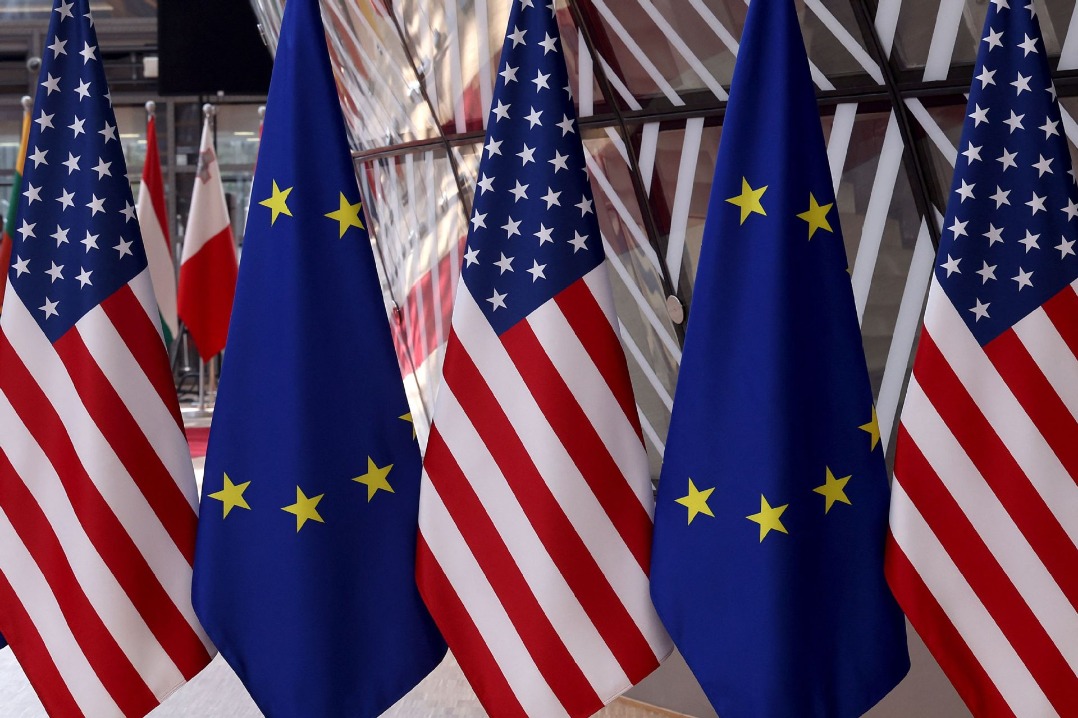
The third prong is a coordinated global response. Although it is antithetical to Trump's idea of "America First," a multilateral response to pandemics is obviously in America's national interest. The US needs to lead on issues where cooperation clearly has advantages over national-level policies. The US should support global mechanisms to identify and monitor emerging pathogens; coordinate a special force of health workers that can immediately deploy to epidemic sites; create new financing facilities (such as global epidemic insurance) that can quickly mobilize resources for emergency response; and develop and stockpile vaccines.
Here, the first step is for governments to increase funding for CEPI, which was created after the 2014 Ebola epidemic to develop and deploy vaccines. The agency's initial funding, provided by a coalition of governments and foundations, totaled only $500 million, or about half the cost of a single stealth bomber. Its budget should be far, far larger.
In the arms race with pathogens, there can be no final peace. The only question is whether we fight well or poorly. Fighting poorly means allowing pathogens to cause massive periodic disruptions and impose huge burdens in the form of lost economic productivity. Fighting well means investing appropriately in science and technology, funding the right people and infrastructure to optimize strategic preparedness, and assuming leadership over coordinated global responses.
It is only a matter of time before we are confronted with a truly lethal pathogen capable of taking many more lives than even the worst of our human wars. We are intelligent enough as a species to avoid that fate. But we need to use the best of our knowledge, talent, and organizational capacity to save ourselves. And we need to focus on responsible preparation now.
The author is, a former director of the Gates Foundation's Strategic Investment Fund, is a co-founder and Managing Director of Biomatics Capital Partners.
Project Syndicate
The views don't necessarily reflect those of China Daily





Today's Top News
- Xi chairs CPC leadership meeting on Party conduct, anti-corruption work
- Why Hainan Free Trade Port stands out
- Rule of law strengthens business environment
- Documents affirm one-China principle
- Central SOEs urged to push upgrading
- Agreement boosts ocean governance