Economic fight against epidemic must be won









The novel coronavirus outbreak in Wuhan, Hubei province, has spread across the country and beyond its borders, leaving governments at all levels in China scrambling to limit further person-to-person transmission of the virus, now known as COVID-19.
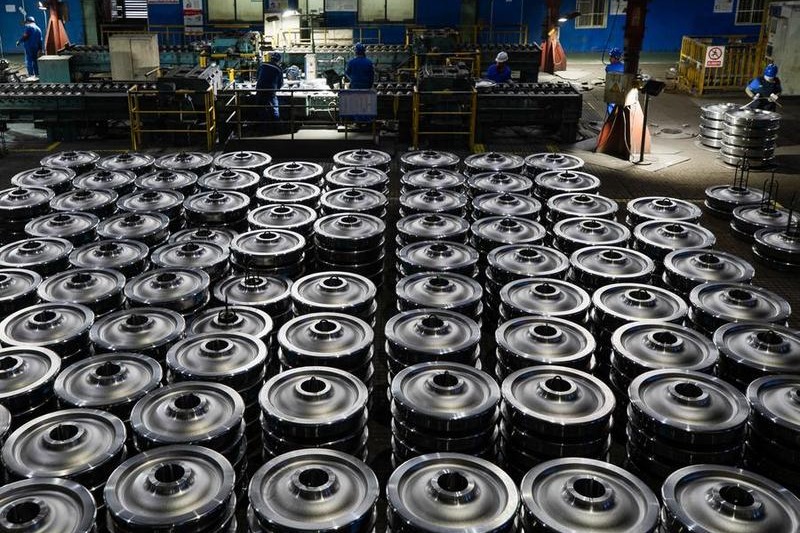
Wuhan, with a population of 11 million, is under lockdown. Many provinces have postponed the resumption of work at non-essential enterprises following the Chinese New Year holiday, with residents staying indoors. Inter-city and inter-provincial transportation have been reduced. And some local governments have established special checkpoints to prevent vehicles carrying industrial products and materials from entering areas under their jurisdiction that contain factories.
The epidemic and the extraordinary measures to contain it have hit China's economy hard. No one knows when the epidemic will be contained and what the eventual cost to the economy will be. But the Chinese people have, once again, shown courage and solidarity in the face of a national emergency. And there is no doubt that China will win the battle against the virus.
When the severe acute respiratory syndrome (SARS) outbreak hit the Chinese economy in 2002-03, everyone initially was pessimistic about the outbreak's likely economic impact. But as soon as the epidemic was contained, the economy rebounded strongly, and ultimately grew by 10 percent that year. However, China may not be that lucky this time, given unfavorable domestic and external economic conditions. So, with the novel coronavirus still on the rampage, the Chinese authorities must prepare for the worst.
Hope for the best, prepare for the worst
Chinese policymakers should respond to the current crisis in three ways. Their first priority must be to rein in the epidemic no matter what the cost. Because markets cannot function properly in emergencies, the country's leadership must play the decisive role. Fortunately, China's administrative machinery is functioning effectively.
At the moment, one of the most serious economic obstacles is the interruption to transport caused by local governments. While recognizing local officials' legitimate concerns about preventing the further spread of the virus, the central government must now intervene to facilitate smooth flows of people and materials, thus minimizing supply-chain disruptions.
Second, the government should devise ways to help businesses survive the crisis, focusing in particular on small and medium-sized service companies. While being careful not to create undue moral hazard, the government should cut taxes, reduce charges and compensate hard-hit enterprises. It should also consider establishing epidemic insurance funds so that society as a whole can bear businesses' virus-related losses.
Moreover, commercial banks should strive to ensure that there is no shortage of liquidity, including by rolling over loans to troubled enterprises and allowing them to postpone repayment. In addition, policymakers may need to resort to market-unfriendly measures such as targeted lending and moral suasion to steer the allocation of financial resources, as well as possibly loosening some financial regulations.
Third, the authorities should pursue more expansionary fiscal and monetary policies, even if such measures per se are not aimed at offsetting the negative impacts of supply-side shocks. The People's Bank of China, the country's central bank, should continue to lower interest rates as much as possible and inject enough liquidity into the money market. Although inflation has risen as a result of supply-chain disruptions and may yet climb further, tightening macroeconomic policy at this point would be counterproductive.
Likewise, although the government is unlikely to launch large-scale infrastructure investment projects before the virus is contained, the general budget deficit may nonetheless grow, owing to the epidemic-related increase in spending and decrease in tax revenues. And in its fight to control the virus's spread, the government should not worry too much about whether the budget deficit exceeds 3 percent of GDP.
GDP target could be reconsidered
The battle against the novel coronavirus epidemic will be very costly, and will reverse some of the Chinese authorities' recent achievements in reining in financial risks. For now, however, any potential problems related to debt, inflation or asset bubbles are secondary. Policymakers can worry about them once the situation has calmed down.
Late last year, I sparked a heated debate among Chinese economists by arguing that the country's policymakers should not allow annual GDP growth to slip below 6 percent, because expectations of a slowdown are self-fulfilling. In the light of the novel coronavirus outbreak, I concede that the 6 percent growth target must be reconsidered. But even if the epidemic lowers growth in 2020 by, say, one percentage point, this probably would not negatively affect people's expectations, because the slowdown would be the result of an external shock rather than some inherent weakness in the economy.
Chinese policymakers' most urgent challenge is no longer how to stimulate aggregate demand, but rather how to ensure that the economy functions as normally as possible without compromising the fight against the virus. Sooner or later, however, the epidemic will be conquered, and the Chinese economy will return to a normal growth path.
When that happens, the question of whether China needs more expansionary fiscal and monetary policies to achieve an adequate level of growth will return to the agenda. And the rationale for a looser stance will still apply. In fact, to compensate for the losses arising from the novel coronavirus outbreak, the authorities may have to adopt even more expansionary policies than I(and others) had previously suggested.
The author is a former president of the China Society of World Economics and director of the Institute of World Economics and Politics at the Chinese Academy of Social Sciences.
Project Syndicate
The views don't necessarily represent those of China Daily.




Today's Top News
- Xi congratulates Ouattara on re-election as president of Cote d'Ivoire
- Supercarrier to be put through paces
- Game changers for China's sports industry
- EU should not give platform to 'Taiwan independence' separatists
- Nation drives global energy transition
- Tariff-troubled US fears not-so-happy holidays