Wai not? It may be time to adopt Asian greetings









After growing up in socially conservative small towns in the United States, I was surprised and delighted by many of the customs I encountered in Argentina during a year of postgraduate study there.
I had young women come up and kiss my cheek in greeting. Surprised and delighted, indeed!
I also was enchanted by the custom of sharing yerba mate-a tea made from a native South American herb-that was passed around in a gourd. Everyone shared the same metal straw, called a bombilla. The communal nature of tomando mate, or drinking yerba mate, created a strong social bond.
No one really worried much about spreading germs-they assured me that the hot tea passing through the bombilla would kill any microbes.
Now, however, with the novel coronavirus spreading around the world, customs are starting to change. With the virus just starting to arrive in Latin America, recommendations to forgo sharing yerba mate as well as the customary greeting kiss are seen by some as an overreaction. People don't want to give up cherished social customs, even if there are risks.
Still, times are changing. Various forms of greeting like the elbow bump and even foot bump have been suggested as substitutes for kisses and handshakes.
Last month, the International Business Times asked in a headline: "Will the Asian alternative to handshake make headway now?"
The Western handshake can be traced to Greece in the 5th century BC, when it was used as a gesture of peace to show you weren't holding a weapon. It has spread worldwide. But, in the 21st century, often called the Asian century, the need to guard against new viruses may lead to change.
There are those who favor the Japanese bow. Others prefer the practice, common in large parts of southern Asia, of holding the palms together, fingers pointed upward in front of the chest, with the head slightly bowed. In India, this is the traditional anjali mudra, which is often accompanied by the greeting namaste. It is also called the prayer position in yoga. In Thailand, it is called the wai.
In Cambodia, my wife and I fell in love with this greeting, called the som pas there. But these greetings carry complex rules and customs not always easy for outsiders to learn.
In Japan, the deeper the bow, the more formal it is. In Thailand, similarly, there are different rules for the wai, which is not only a greeting but can be used to indicate status or respect, depending on how the head and hands are held.
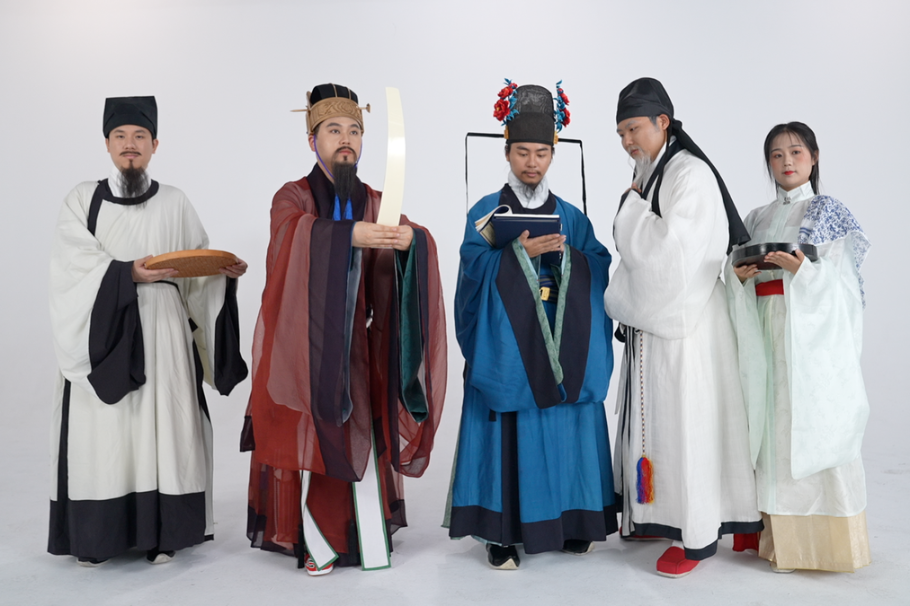
China has several traditional options to offer, including the ancient fist-and-palm salute, which is said to go back 3,000 years. In modern China, it is used on traditional occasions. Traditionally, two people would look at each other during the gesture, raising their hands to their brows and shaking them gently three times, according to an etiquette guide posted on toptravelchina.com.
Foreigners may be more familiar with the hold-fist salute from martial arts movies. In this gesture, the right hand is made into a fist and the left hand is held straight against the fist. You should not have your thumb pointed toward your body because it can mean you're arrogant.
Giving up the handshake is a major cultural change, but not preparing could put you in an awkward situation like German Chancellor Angela Merkel. She was recently pictured holding out her hand in greeting only to have her own interior minister decline it.
Some may call it cultural appropriation, and to tell you the truth, I felt like a poseur returning a som pas greeting in Cambodia. But cultures do share things, and the world has appropriated the handshake. Perhaps it's time for a change.
Contact the writer at matthewprichard@chinadaily.com.cn