World needs 'aggressive' approach to control novel coronavirus









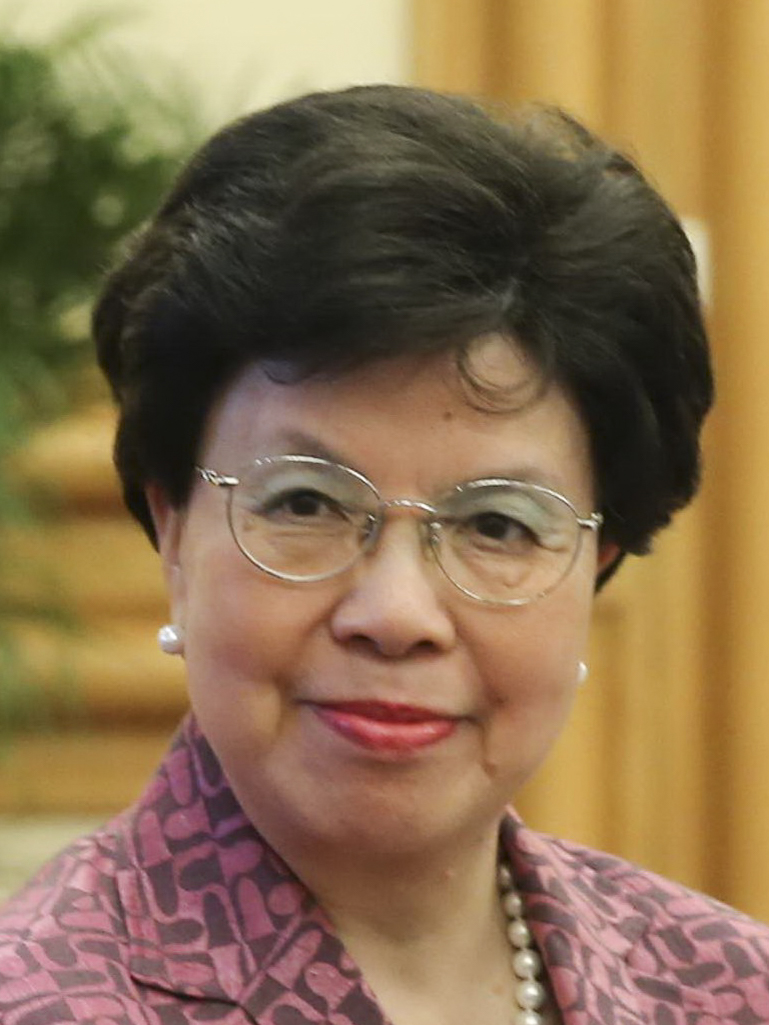
Former World Health Organization chief Margaret Chan Fung Fu-chun has called on every country to craft "timely, aggressive and decisive" measures to combat the COVID-19 pandemic despite their different political, cultural and economic backgrounds.
The veteran public health expert said it's important to learn from China's experience in implementing early detection, tracing of contacts, isolation and treatment of patients.
"Some people criticize China for taking very aggressive measures to contain the outbreak. But when you look at the situation now, many countries are enforcing similar or the same measures," she said in an interview with China Daily.
The pandemic is like a mirror, reflecting each nation's response when caught in an unexpected, large-scale crisis, she said. People around the world all look to their political leaders for protection, she added.
Chan, former director of health of the Hong Kong Special Administrative Region before she took office as director-general of the WHO in 2007, cited the case of Wuhan, capital city of Hubei province and the hardest-hit area in the country, where she said officials could have done better in the early stages by taking the advice of doctors. But she praised the "decisive measures" taken by the central government in tackling the problems, as well as the solidarity shown by the whole nation.
The steps taken included the timely lockdown of Wuhan, building temporary hospitals, deploying thousands of medical workers from across the country to Hubei and allocating billions of yuan in funds and medical resources.
Chan said China's political system allows it to take quick action to control the situation with a coordinated approach, stressing that one must understand that each country has its own political system and culture. They need to adopt different measures, and at a different pace, to suit local circumstances.
It's vital for any place to ensure by all means that hospital capacity is not overwhelmed, Chan added.
She stressed that not only the health sector, but all sectors and all countries should take time to reflect on what kind of world everyone wants to live in, and what changes must be brought forward after the novel coronavirus pandemic.
In just three months, more than 1.4 million people around the world have been infected by the coronavirus, with fatalities approaching 90,000, according to the WHO.
"It's an unprecedented health crisis," said Chan, who served as the WHO director-general for 10 years.
She attributed the rapid spread of the disease to a host of factors. They include a larger world population, aging communities, a convenient and well-linked transport network and the nature of the virus, which renders a patient infectious before symptoms appear, making it more difficult to cut the transmission chain, she noted.
Time for solidarity
She stressed that cohesive efforts worldwide are needed to combat the crisis. Countries should share information and experience in control measures and medical resources, as no one can survive the crisis alone, she said.
"We're in the same boat, whether we like it or not. If we work together, we can pull through this crisis."
The world must prevent the pandemic from developing into an economic crisis, or even a humanitarian crisis, she warned. "When many people lose their jobs, when many people have no support, it would become a humanitarian crisis."
Chan called on everyone to show understanding, empathy and solidarity instead of discriminating against each other.
Fear, anxiety and frustration are common during an epidemic caused by a new virus, which may drive some people to do unreasonable things, she said.
However, even within China, some people still discriminate against people from Wuhan or Hubei province, Chan noted.
This as well as discrimination or attacks in some foreign countries against Chinese or Asians over COVID-19 are unacceptable, she stressed.
Need to respect nature
Chan said the world also must show respect for ecological balance to help prevent the spread of disease, as more than 70 percent of new diseases in the past four decades have come from animals.
She called COVID-19 just another example of humans disrupting the ecological balance by showing no respect for wild animals and nature.
She said she believes the outbreak is closely connected with eating wild animals, and is happy to see China has passed legislation banning the consumption and abuse of wild animals.
In the past 40 years, the world has seen a growing number of new diseases, with 70 to 75 percent of them derived from animals, called zoonosis, including Ebola, SARS, MERS, and avian influenza, Chan said.
When the ecosystem's balance is disrupted, Chan said, it can give rise to the emergence of a new disease. "Disease is a constant struggle for human beings," she said
Chan said it's rather naive to hold the view that science and technology are so advanced that no new infectious disease will occur. What can be done is to minimize the impact of an outbreak and the loss of lives by investing in the public health system, she added.
That includes investment to ensure there are enough doctors, nurses and medical resources in public hospitals, a mature health surveillance system so that early warnings can be given when a new disease occurs, and investing in education to enable children to learn about personal hygiene, such as washing their hands and cough etiquette.
When confronted by an unknown virus or disease, any country must have humility and maintain vigilance, Chan said. In her view, it's not yet safe to say COVID-19 won't return in a second wave in any country."The virus will go away. It's difficult to predict when, but it will eventually go away. So, we must not give up hope."




- Chinese researchers develop advanced air quality model for pollution simulation
- Blue tap water in Guizhou residential compound linked to internal pipe network
- Duty-free sales in Sanya boom after customs operations begin
- Xizang draws nearly 70 million tourists in 11 months
- China advances urban-rural integration
- Jiangsu probes Nanjing Museum's handling of donated relics