Why the struggling property industry deserves special treatment









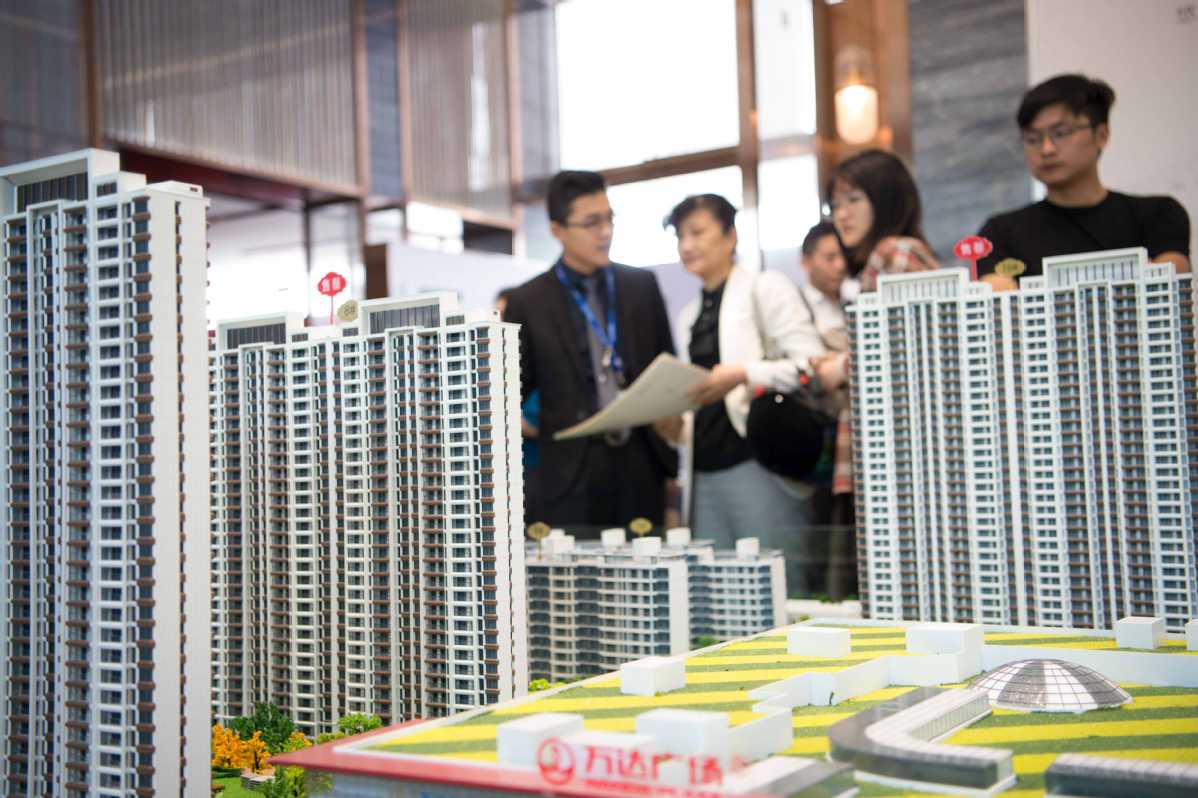
All businesses and industries have been under pressure since the start of the COVID-19 pandemic, and the real estate market is no exception. The property industry deserves special attention, given its scale, long industry chain, and its huge influence on the nation's economy, credit system, local finance, and employment.
Data in the public domain showed that residential property developers have been facing a sales standstill for a couple of months. In most cities, both new and pre-owned home transaction volumes tumbled more than 90 percent year-on-year from Jan 24 to Feb 19 compared to figures of the same lunar period of last year. It was on Jan 23 that Wuhan, capital of Hubei province and the first epicenter of the epidemic, went into a peaceful lockdown. Some of the developers have reported nil deals since then.
The 30 large and medium-sized Chinese cities Wind Info monitored reported that new home transaction volumes slumped 80.8 percent year-on-year during the week of Jan 24 to Jan 30. Worse was to follow. The figure nose-dived as much as 97.3 percent during the week of Jan 31 to Feb 6. And although a growing number of people are returning to the cities they work and live in, home sales have remained at low levels.
Whether or not home sales rise significantly in the near future will depend a lot on when the pandemic is brought under control and prevented from spreading further. Postponement of home deals for months could pose great challenges to capital flows of real estate companies. Some developers might put their residential projects on sale to ease off their credit crunch.
We believe sections of property developers may face a tight financing situation both at home and abroad, and could run the risk of a potential rupture in cash flows.
Since the tightening of housing policies in 2017, financial institutions have been reducing the size of credit lines extended to real estate enterprises, to prevent excessive capital flows into the overheated industry. Their attempts may be warranted, but what also needs to be borne in mind now is that property developers are over-pressured against a background of the ongoing pandemic.
During the period of Jan 25 to Feb 10, the debt issued by 95 typical real estate companies totaled 7.05 billion yuan ($990.8 million), plummeting 86 percent from a year ago.
This year, property developers in general are facing enormous pressures of debt repayments and rising financial costs. According to international ratings agency Moody's, about $51.3 billion worth of domestic bonds and $27.6 billion worth of foreign bonds will become due or be on sale in the 12 months since Feb 1, which means developers will have a high demand for refinancing.
Their financial expenditure is also facing a difficult scenario. According to a Ping'an Securities' report, listed property companies' capital can merely support their overhead costs for three months, while privately held enterprises may feel more pressure on their liquidity. And the procrastination in the resumption of construction activity could raise developers' financial costs further.
While sticking to the principle that homes are for living in, not for speculation, we should recognize the importance of the property industry.
First, we have to admit that real estate is important for the Chinese economy. Property investment is one of the three pillars of fixed-asset investments. In 2019, the combined 14.2-percent contribution of real estate (7 percent) and construction (of 7.2 percent) was key to China's GDP. The property sector's significance would be even higher if sectors related to the real estate industry chain are taken into consideration.
Second, the credit system and local public finance are closely connected with property. The occurrence of capital flow difficulties is a detriment to China's credit system. Taxes and fees collected from real estate account for important income for local administrations. The 1.93 trillion yuan collected from five categories of real estate-specific tax last year accounted for 19 percent of local tax revenues, and the 6.5 trillion yuan land transfer fees contributed 66.5 percent of local fiscal revenue in 2018.
Last but not least, the stability of the property industry matters to the massive number of employees working in real estate. In addition, all upstream and downstream businesses, along the industry chain, depend on the sector. About 53.6 million migrant workers were employed in the construction sector in 2018, and 4.66 million urban population work in the real estate business.
Considering the scale and importance of the Chinese property market, we suggest the following measures.
The capital flow of real estate enterprises should be stabilized first, so as to avoid considerable negative impact on the nation's economy and finance.
Local governments must be encouraged to gradually ease the sales restrictions in accordance with their local conditions, so as to promote home purchases and ease the capital pressure on property developers.
To date, the central government's macro policies and local governments' regulations have eased to some extent the difficulties the real estate business has been confronting.
We suggest more local policies for easing the credit pressure on property companies, moderate loosening of regulations and restrictions, discretional adjustments in taxation cuts and reliefs, and adequate support to real estate developers in accordance with their specific local conditions.
Deng Yangmei is a member of the China Finance 40 Forum, a non-governmental not-for-profit think tank dedicated to policy research on economics and finance. Xu Qiyuan is a researcher at the Chinese Academy of Social Sciences.