Vietnam's move weakens regional cooperation









Vietnam has sent diplomatic notes to the United Nations, asserting that it has sovereignty, sovereign rights and jurisdiction over Xisha Qundao and Nansha Qundao, and their relevant maritime zones, in the South China Sea. Since last year, Vietnam has been stirring up trouble in the South China Sea, although its claim lacks legal basis. Vietnam will not only fail to achieve the expected political gains but also vitiate the atmosphere of trust and cooperation in the region through its unlawful unilateral actions.
First, China has indisputable sovereignty over the Nanhai Zhudao-including Xisha Qundao and Nansha Qundao-and its adjacent waters, as well as sovereign rights and jurisdiction over its relevant maritime zone, which are underpinned by ample historical evidence and solid legal basis. China is the first country to have discovered, named, explored and exploited Nanhai Zhudao and its relevant waters, and the first to have continuously, peacefully and effectively exercised sovereignty and jurisdiction over them, thus well establishing sovereignty over Nanhai Zhudao and the relevant rights and interests in the South China Sea.
In fact, Vietnam, on different occasions including bilateral talks, diplomatic notes and official publications, has recognized clearly and expressly China's sovereignty over Xisha Qundao and Nansha Qundao. In particular, on Sept 14, 1958, the diplomatic note sent by then Vietnamese premier Pham Van Dong to Chinese premier Zhou Enlai provides clear historical and legal evidence to that effect. Regrettably, Vietnam has "blown hot and cold" by adopting an inconsistent position at the UN and taking unilateral actions in the South China Sea, which have not only undermined Vietnam's credibility in the international community, but also violated the principle of estoppel, a firmly established principle of international law.
Second, two aspects of territorial sovereignty and maritime rights are indivisible and interdependent in the dispute. The territorial sovereignty is, by its very nature, at the heart of the dispute, while the associated maritime rights result from territorial sovereignty.
This means that, if one leaves the dispute's territorial aspect untouched or unresolved, no matter what legal or litigation techniques are used, it would be difficult to resolve the dispute on the aspect of its associated maritime rights, and relevant practices would be pointless. And any attempt to address the maritime rights aspect in isolation, without taking into account all aspects including territorial sovereignty which is at the core of the dispute, would leave the dispute unresolved and vitiate the overall atmosphere of maritime cooperation, even undermine the prospects for peace, security and stability in the region.
China has indisputable sovereignty over Xisha Qundao and Nansha Qundao. Abundant historical evidence show that all the component features of Xisha Qundao and Nansha Qundao were, and still are, closely linked. Therefore, China's Xisha Qundao and Nansha Qundao should be addressed as a whole, rather than separately, and the corresponding maritime rights stemming from there for China must be respected under international law.
Third, it is essential to enhance awareness about and respect for the limitation on the scope of application of the 1982 United Nations Convention on the Law of the Sea, and the existence of the matters not regulated by UNCLOS. Although UNCLOS has established a comprehensive legal framework of the oceans and seas, one cannot conclude that it governs all marine and maritime issues. From the legal perspective, China's sovereignty over Nanhai Zhudao, including Xisha Qundao and Nansha Qundao, is governed by the law of territory, rather than the law of the sea.
Moreover, UNCLOS affirms, in its preamble, that the matters not regulated by UNCLOS continue to be governed by the rules and principles of general international law. Falling within the scope of the matters not regulated by UNCLOS, China's historic rights in the South China Sea are well established and should be respected under international law.
The South China Sea issue is highly complex and sensitive in nature, and its satisfactory resolution will test the political wisdom of the claimants. The issue not only touches on a multiplicity of different factors, ranging from geographical, historical, political, legal, economic and military factors to emotional factors, but also involves a number of claimant countries.
Furthermore, several countries outside the region, such as the United States, have conducted military activities under the guise of "freedom of navigation" there to foment trouble. In the South China Sea issue, relevant maritime claims overlap each other, territorial sovereignty and maritime rights are inextricably linked, and the claimants' interests are closely entwined. In such a complicated situation, the South China Sea dispute can be genuinely resolved only through joint efforts in good faith and creative use of political wisdom by all the claimants.
Unilateral actions that undermine cooperation in the South China Sea will not only be unhelpful in resolving the South China Sea disputes but also nullify all the claimants' cooperation efforts. It is time for Vietnam to realize that dialogue and consultation is the only ways to resolve the South China Sea issue, and that cooperation, rather than confrontation, is the only way forward to peace, security and stability in the region.
Therefore, Vietnam should withdraw the claims running counter to historical facts and the international law, and stop taking unilateral actions to expand its unlawful claims in the South China Sea. And it would be politically wise for Vietnam to implement in good faith bilateral agreements, particularly the Sino-Vietnamese Agreement on Basic Principles Guiding Settlement of Sea-related Issue signed on Oct 11, 2011, to resolve the South China Sea issue through negotiation and friendly consultation, and to play a constructive role in promoting Code of Conduct consultation.
The author is research fellow at the China Institute for Marine Affairs. The views don't necessarily reflect those of China Daily.





Today's Top News
- China to apply lower import tariff rates to unleash market potential
- China proves to be active and reliable mediator
- Three-party talks help to restore peace
- Huangyan coral reefs healthy, says report
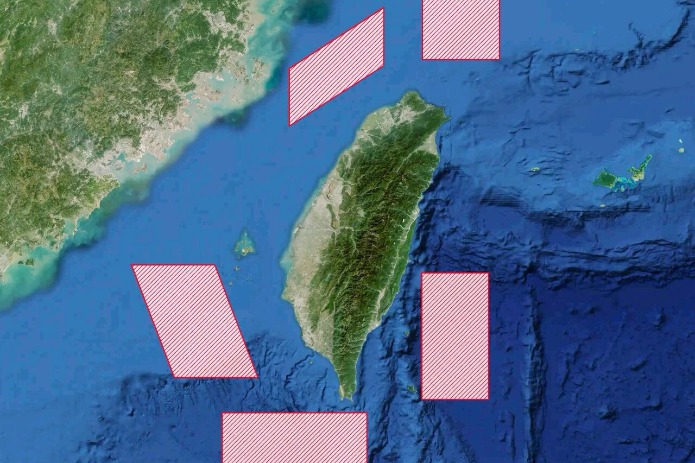
- PLA conducts major drill near Taiwan
- Washington should realize its interference in Taiwan question is a recipe it won't want to eat: China Daily editorial